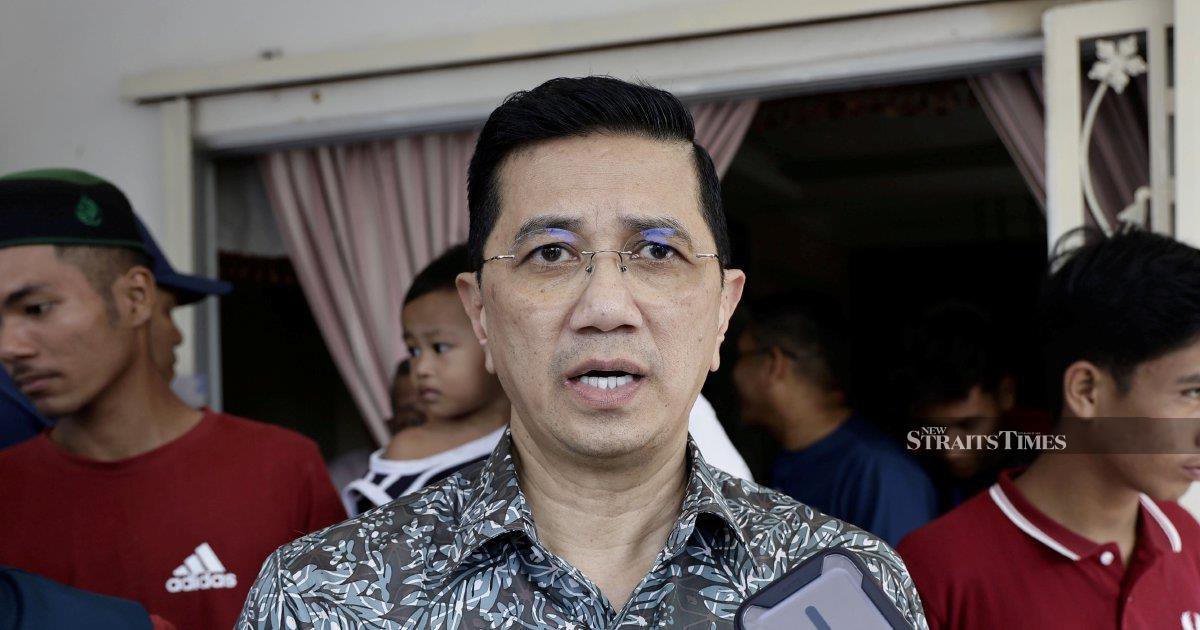
Prime Minister Datuk Seri Anwar Ibrahim has responded dismissively to Datuk Seri Mohamed Azmin Ali's declaration that he will not be rejoining PKR, suggesting through his remarks that such an overture was never seriously extended. Speaking in Kuala Lumpur today, Anwar appeared to downplay the significance of Azmin's statement by questioning whether an invitation had ever been formally offered in the first place, a rhetorical gesture that underscores the depth of the political rupture between the two former allies.
The exchange marks another chapter in the fractious relationship between Anwar and Azmin, whose political partnership fractured dramatically in the years leading up to and following the 2022 general election. Both men had been instrumental in building PKR into a major opposition force, with Azmin serving as the party's deputy president before their working relationship deteriorated over policy disagreements, leadership ambitions, and broader factional tensions within the party's leadership structure.
Azmin's decision to formally rule out a PKR comeback represents a definitive statement on a question that has lingered in Malaysian political circles. Throughout the intervening years, speculation has periodically surfaced about the possibility of reconciliation and Azmin's return, particularly during moments when PKR faced internal challenges or when coalition politics created new opportunities for realignment. By categorically closing that door, Azmin has signalled that his political future lies in a different direction entirely.
Anwar's dismissive response carries significant weight given his position as Prime Minister and PKR president. His insinuation that no such invitation was forthcoming suggests that PKR's leadership has moved past any serious consideration of bringing Azmin back into the fold. This positioning allows Anwar to maintain that PKR remains cohesive and sufficient without its former deputy president, even as Azmin's continued political prominence elsewhere could be viewed as a potential long-term competitive threat.
The timing of this public exchange is noteworthy within Malaysia's political calendar. PKR has been working to consolidate its position within the broader coalition government, and any hint of internal divisions or unresolved tensions with prominent figures like Azmin could complicate that message. Anwar's approach—treating Azmin's statement as almost incidental rather than consequential—appears designed to communicate that the party leadership remains focused on forward momentum rather than dwelling on past ruptures.
For Malaysia's political observers, this incident illuminates the enduring complexity of PKR's internal dynamics and the personalities that have shaped the party's trajectory. Azmin retains a meaningful political presence through his involvement with other political platforms and his continued involvement in parliamentary affairs, ensuring that questions about intra-coalition relationships and the balance of power remain live issues for Malaysian politics and governance.
The broader implications for Malaysian politics are multifaceted. PKR remains a crucial component of the coalition government's parliamentary majority, and any suggestion of internal instability could have ramifications for government stability. Conversely, the public willingness of both Anwar and Azmin to engage in pointed exchanges suggests that concerns about such instability, at least in the short to medium term, are manageable and that both parties have sufficient political flexibility to weather occasional public friction.
Azmin's continued separation from PKR has also allowed him to carve out an alternative political space within Malaysia's competitive landscape. His involvement in other political groupings means that the question of PKR's internal cohesion is not entirely dependent on his presence or absence from party structures. This distribution of political talent and ambition across different platforms reflects the increasingly complex nature of Malaysian coalition politics, where individual political brands can retain relevance independent of party affiliations.
The exchange between Anwar and Azmin also serves as a reminder that Malaysian politics continues to be shaped significantly by the personal relationships and ruptures between key political figures. Their earlier partnership had been consequential for the opposition and subsequently for government formation, making their current separation noteworthy. The public tenor of their interactions—marked by Anwar's apparent dismissiveness—suggests that any pathway to future reconciliation remains distant and that both men are content to maintain their separate political trajectories.
Anwar's comments implicitly reinforce his authority within PKR and his ability to shape narratives around party membership and leadership decisions. By treating Azmin's statement as nearly irrelevant, Anwar seeks to project an image of unquestioned control and forward momentum. Whether this posture reflects genuine confidence about PKR's internal stability or represents a strategic communication choice designed to project such confidence remains a question for Malaysian political observers.
Looking ahead, the relationship between Anwar and Azmin will likely continue to influence discussions about coalition dynamics, parliamentary management, and the potential reconfiguration of political alliances. For Malaysian voters and stakeholders following national politics, the divergent paths of these two former allies underscore the fluid and often unpredictable nature of political relationships in Southeast Asia's largest democracy.

