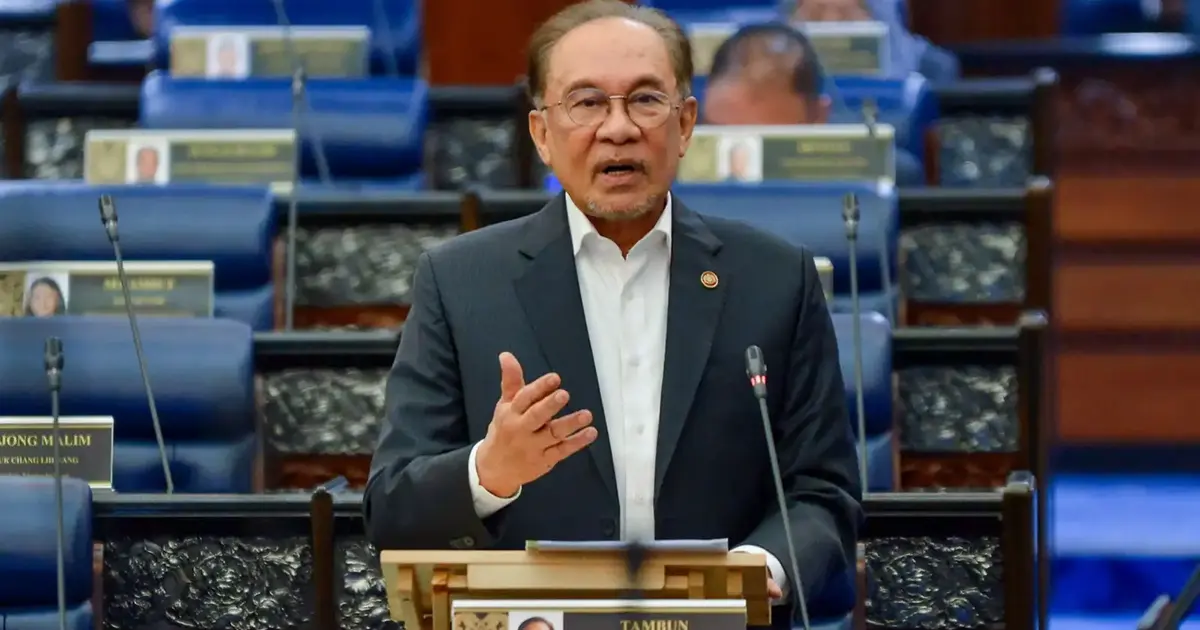
Prime Minister Anwar Ibrahim has reiterated his administration's position that the federal government requires adequate time to execute its electoral mandate, firmly rejecting renewed pressure to call a snap election. In remarks that underline the coalition's commitment to its current term, Anwar argued that Malaysian citizens are more invested in tangible economic improvements and political stability than in perpetual campaign cycles.
The Prime Minister's latest statement addresses a recurring tension in Malaysia's current political landscape, where speculation about election timing has persisted since the government's formation. By framing early elections as contrary to public interest, Anwar attempts to reset expectations about when voters might next go to the polls, signalling that the administration intends to govern through its full constitutional term.
Anwar's remarks reflect a deeper calculation about Malaysia's economic position and the government's legislative priorities. After decades of institutional instability and frequent political disruptions, the coalition appears to believe that demonstrating sustained governance capacity offers greater electoral advantage than confronting voters again prematurely. This approach suggests confidence in the government's ability to deliver measurable outcomes in infrastructure, employment, and fiscal management before facing another mandate test.
The rejection of early election calls also carries implications for the government's economic agenda. Major policy initiatives—including structural reforms, budget implementation, and foreign investment attraction—typically require political predictability. Businesses and foreign investors historically hesitate to commit resources when electoral uncertainty looms. By publicly committing to the full term, Anwar signals that Malaysia remains open for sustained economic development without the distractions of campaign politics.
For Southeast Asia's broader investment climate, Malaysia's political stability matters considerably. The region competes intensely for capital flows and manufacturing relocations from China and other Asian economies. Nations perceived as politically fractious face disadvantages in attracting multinational corporations, technology hubs, and financial services operations. Anwar's insistence on electoral stability thus serves a purpose extending beyond domestic political management.
The timing of these comments also reflects internal coalition dynamics. Malaysia's governing partnership remains complex, comprising multiple parties with distinct constituencies and agendas. Frequent elections risk destabilizing this coalition structure, potentially allowing opposition forces to exploit fragmentation. By emphasizing the government's commitment to completing its term, Anwar provides reassurance to coalition partners that the administration will weather ordinary political pressures without resorting to electoral gambles.
Public sentiment regarding election frequency deserves scrutiny here. While Anwar claims voters prefer stability over campaigns, Malaysian electoral behaviour suggests nuance. Voter fatigue from multiple polls in recent years may indeed have created openness to extended governance periods. Simultaneously, opposition parties and dissatisfied constituencies may view delayed elections as strategies designed to entrench incumbent advantages. The gap between Anwar's characterization of public sentiment and actual voter preferences remains contested terrain.
The economic argument underpinning the rejection of early elections carries practical weight. Malaysia faces headwinds including global supply chain volatility, energy transition costs, and intensifying regional competition for manufacturing investment. Recovery from pandemic-era disruptions remains incomplete. Sustained policy implementation typically outperforms frequent electoral interruptions in addressing such structural challenges. Anwar appears to be betting that voters will credit the government with economic competence if given sufficient implementation time.
Historically, Malaysian governments have used their parliamentary majorities to secure their positions against electoral pressure. The current administration's coalition commands sufficient numbers to govern through a full term without immediate threats of no-confidence votes or dissolution. This parliamentary security enables Anwar to take a relaxed public posture toward election timing, contrasting sharply with weaker governments forced to scramble for political survival.
The statement also addresses opposition positioning. Democratic parties seeking to unseat the government naturally advocate for early elections, hoping that accumulated grievances or electoral realignment might favour them. By publicly dismissing such calls as economically harmful and electorally unwelcome, Anwar frames opposition election demands as self-interested rather than principled. This rhetorical move attempts to shift burden-of-proof, making opposition parties defend why disruption serves national interest.
Regionally, Malaysia's political decisions influence neighbouring nations' trajectories. Indonesia, Philippines, Singapore, and Thailand all navigate their own cycles of governance, institutional legitimacy, and electoral management. Malaysia's demonstrated commitment to completing a full term without institutional breakdown sends signals about democratic resilience in Southeast Asia—a region where democratic backsliding remains a concern. Conversely, if Malaysia experiences political instability despite Anwar's reassurances, it could undermine confidence across the region.
Looking forward, the government faces genuine challenges in converting Anwar's political messaging into voter satisfaction by election time. Economic growth must accelerate, particularly in employment and wage improvement for middle and lower-income Malaysians. Infrastructure projects require completion and visibility. Regional competitiveness in attracting investment must improve measurably. These achievements cannot be assured through rhetoric alone; they demand sustained implementation against global and domestic headwinds that remain formidable.

