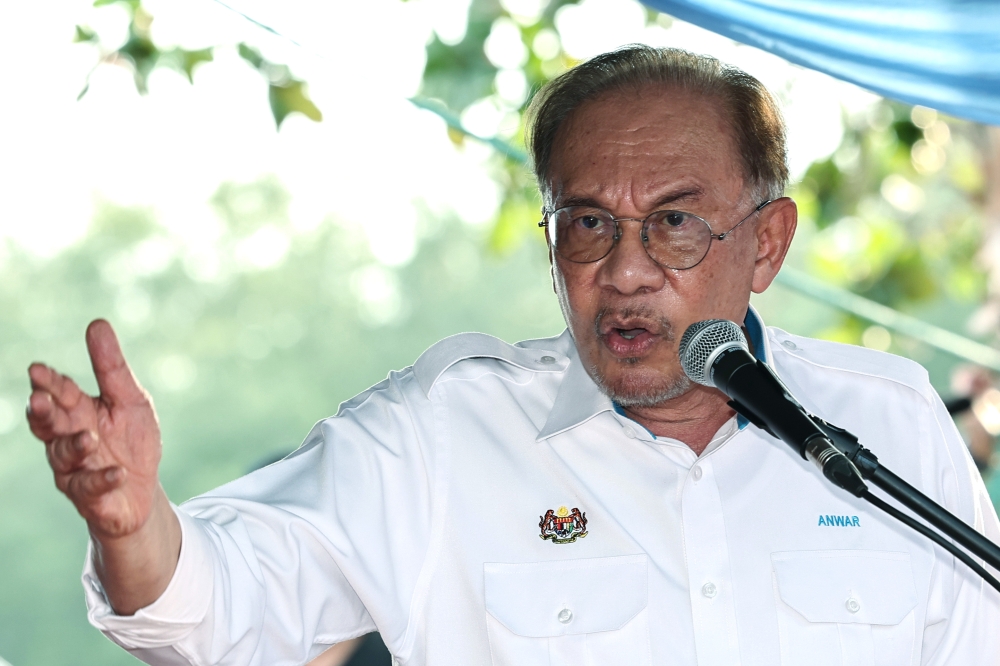
Prime Minister Datuk Seri Anwar Ibrahim mounted a vigorous defence of his government's economic management on Thursday, directly challenging opposition politicians who have questioned whether his administration has delivered on campaign commitments. Speaking in parliament, Anwar deployed comparative fuel pricing data as a key metric to demonstrate fiscal responsibility, noting that Malaysian petrol remains cheaper than what consumers pay at Saudi Arabian pumps—a striking comparison that underscores the relative stability of domestic energy costs under his watch.
The intervention comes amid sustained political pressure from opposition benches questioning whether the government has adequately addressed cost-of-living concerns that dominated electoral discourse during the 2022 general election. Anwar's deployment of international price comparisons signals a strategic rhetorical shift toward framing Malaysia's economic performance not in isolation but against regional and global reference points, a tactic designed to reset public perception of the government's financial stewardship. The prime minister's invocation of Saudi Arabian petrol prices carries particular weight given that nation's status as a major oil producer with traditionally subsidised domestic fuel costs.
This exchange reflects deeper anxieties within Malaysian politics about whether the current administration can sustain public confidence in its ability to manage inflation and household expenses. The opposition's line of attack centres on the perception that promises made during the campaign trail have not translated into tangible improvements in the purchasing power of ordinary citizens. By contrast, Anwar's parliamentary statement suggests the government intends to reframe the conversation around absolute price levels rather than year-on-year trends or purchasing power adjustments.
The petrol price comparison carries significance for Malaysian politics because fuel costs traditionally serve as a bellwether indicator of government performance in public consciousness. Any substantial increase in pump prices tends to amplify broader anxieties about economic management and can rapidly erode political support, particularly among lower-income voters who spend disproportionate shares of household income on transportation. Anwar's reference to maintaining competitive regional pricing implicitly argues that the government has successfully resisted pressures that might have forced more dramatic increases.
The government's position on fuel pricing reflects a broader challenge facing administrations throughout Southeast Asia: balancing the fiscal burden of energy subsidies against political imperatives to maintain affordable access to essential commodities. Malaysia's fuel subsidy structure has long been a contentious issue, with economists arguing that targeted assistance would be more efficient than universal price controls, while politicians recognise that visible fuel price increases carry substantial electoral consequences. Anwar's emphasis on international comparisons suggests an effort to demonstrate fiscal discipline without necessarily committing to specific subsidy reforms.
The parliamentary exchange also illuminates the tension between the government's development agenda and immediate cost-of-living pressures. While administrations typically emphasise long-term investment in infrastructure, education, and health systems, voters frequently prioritise near-term relief from daily expenses. Anwar's rhetorical strategy attempts to bridge this gap by arguing that stable fuel prices constitute a form of economic support that enables other policy objectives. The comparison to Saudi Arabia, a petroleum-rich nation with different fiscal capacities, does introduce some analytical complications, though its political utility in parliamentary debate appears clear.
Opposition politicians have maintained that broader measures of economic hardship—including housing affordability, electricity bills, and food costs—present a more comprehensive picture than individual commodity prices. This counter-argument suggests that while fuel prices may be relatively controlled, households face accumulating pressures across multiple expenditure categories. The government's selective focus on petrol comparisons, therefore, risks appearing insufficient to those facing multifaceted financial pressures in their daily lives.
Anwar's parliamentary remarks should be contextualised within the wider political landscape following the 2022 elections, which saw the emergence of a more fragmented political environment with multiple coalitions competing for voter allegiance. Maintaining support from coalition partners while delivering credible economic performance has required consistent messaging about government achievements. The invocation of fuel price competitiveness fits within this broader narrative of demonstrating tangible results.
Looking forward, the government faces continued scrutiny regarding whether fuel price stability can be sustained, particularly if global energy markets experience significant disruptions. Any future volatility would likely reignite parliamentary debates about whether current commitments have genuinely been honoured. For Malaysian voters, the question remains whether measures like fuel price control constitute adequate response to living cost concerns or represent merely one element of a comprehensive economic strategy. Anwar's parliamentary intervention suggests the government believes comparative international benchmarks constitute persuasive evidence of performance; whether the electorate concurs will likely shape political dynamics in coming months.

