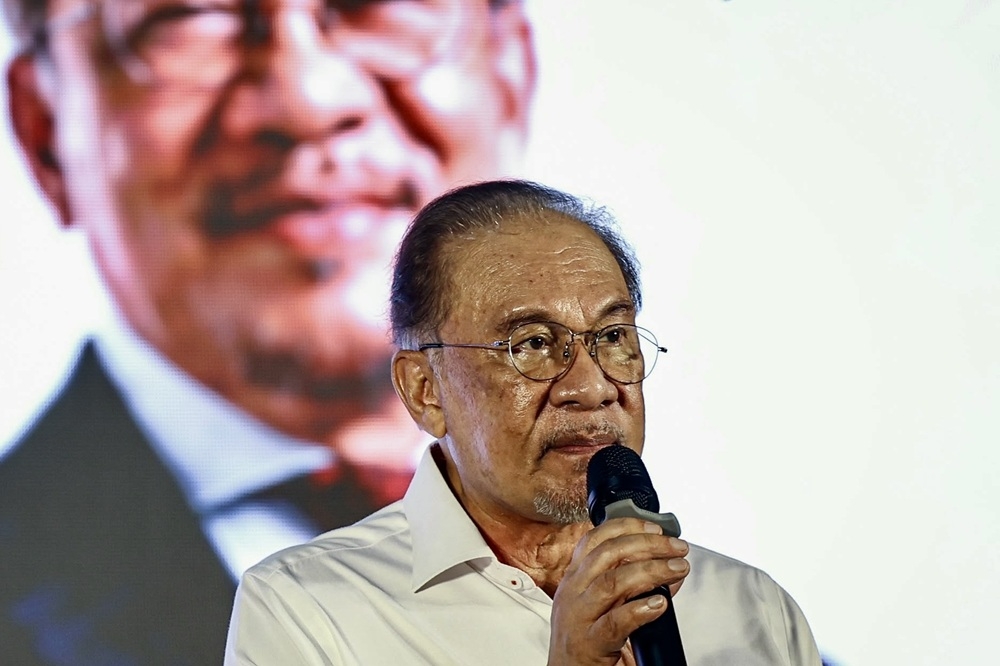
Prime Minister Datuk Seri Anwar Ibrahim indicated on July 15 that he has not yet obtained a complete briefing on the internal struggles affecting the Democratic Action Party in Melaka, but assured observers that the coalition leadership stands ready to intervene swiftly if needed. The remarks suggest that while the matter has drawn attention at the highest levels of government, a full assessment of the situation's severity and scope is still underway before formal action is taken.
The Melaka DAP situation represents a significant challenge to the stability of the Pakatan Harapan coalition, which has governed Malaysia since 2022. Internal party disputes within coalition partners can quickly escalate into broader political complications, particularly when they involve regional administrations or affect the distribution of governmental positions. The timing of Anwar's statement indicates that the government is treating the issue seriously, even if immediate details remain limited at the Prime Minister's level.
The DAP has long served as a crucial urban and Chinese-based component of Pakatan Harapan, particularly in states like Selangor and Penang where its presence is substantial. Melaka, however, presents a different context—the state saw a complex political realignment in recent years, and any disruption to DAP unity there carries implications beyond the party itself. Coalition dynamics depend on each partner maintaining internal discipline and delivering electoral performance in their strongholds. When such dynamics fray, it can create openings for opposition parties to exploit divisions.
Anwar's acknowledgement that he remains awaiting fuller particulars on the Melaka DAP fallout reflects the normal protocol whereby the Prime Minister expects to receive comprehensive briefings through official channels before making public commitments. However, the statement that Pakatan Harapan leadership will act once full information is available signals that the coalition is not taking a passive stance. This reassurance is important for maintaining confidence among coalition partners and their supporters, who might otherwise worry that internal conflicts could destabilise the government itself.
The broader context of Malaysian coalition politics shows that disputes within partner parties, if left unaddressed, can metastasize quickly. The previous Pakatan Harapan government, which collapsed in early 2020, had suffered partly due to internal contradictions that were never fully resolved. Anwar's government learned from that experience, and the explicit commitment to act on the Melaka issue—once full details emerge—suggests a determination to address problems more proactively this time around.
For readers across Southeast Asia watching Malaysian politics, the Melaka DAP situation underscores a recurring challenge in multiparty coalitions: balancing autonomy for individual parties with the need for coalition cohesion. Unlike single-party governments that can impose discipline from the top, coalition governments must negotiate among equals, which often means tolerating some degree of internal friction while seeking ways to channel it constructively. Anwar's approach of awaiting a complete briefing before committing to action reflects this delicate balance.
The statement also carries implications for how other coalition members perceive the government's commitment to fairness and evenhandedness. If Pakatan leadership is perceived as taking sides in internal party disputes without understanding all facts, it risks accusations of partiality. Conversely, if the coalition appears too reluctant to address legitimate problems, parties may feel unsupported. Anwar's measured response appears calibrated to navigate between these concerns.
In the Malaysian context, where states and federal levels of government often involve complex power-sharing arrangements, problems in Melaka can quickly affect broader coalition relationships. The DAP's performance in state and local politics feeds back into its status within the national coalition. Weakening the DAP's position in any state, therefore, has ripple effects for the entire Pakatan Harapan arrangement and for Anwar's federal government's political base.
The Prime Minister's commitment that Pakatan Harapan leadership will take action also signals that the coalition does possess mechanisms and willingness to intervene when necessary. Whether through mediation, restructuring of local arrangements, or other corrective measures, the leadership is not signalling indifference. This should reassure internal party members who worry that coalition-level governance might dilute responsiveness to specific regional concerns.
As the full briefing proceeds through normal governmental and political channels, observers should watch for signs of what specific issues are driving the Melaka DAP fallout. Understanding whether the dispute centres on personnel, policy, resource allocation, or structural matters will indicate what kind of intervention might be appropriate. Different root causes require different solutions, and Anwar's patience in gathering complete information before acting reflects recognition of this complexity.
The timeline for resolution remains unclear, but the Prime Minister's indication that action will follow once briefing is complete suggests the matter will not be left indefinitely unresolved. In coalition politics, sustained ambiguity itself becomes a destabilising force. Stakeholders are likely watching closely for signals about when fuller details might be available and when Pakatan Harapan leadership intends to move toward decisive steps. The government's handling of the Melaka DAP situation will send important signals about coalition governance in the months ahead.

