Prime Minister Datuk Seri Anwar Ibrahim has indicated he will hold off from making any formal statements regarding the Federal Land Development Authority until he receives the full findings from an ongoing Special Task Force investigation into the agency's operations and governance structures.
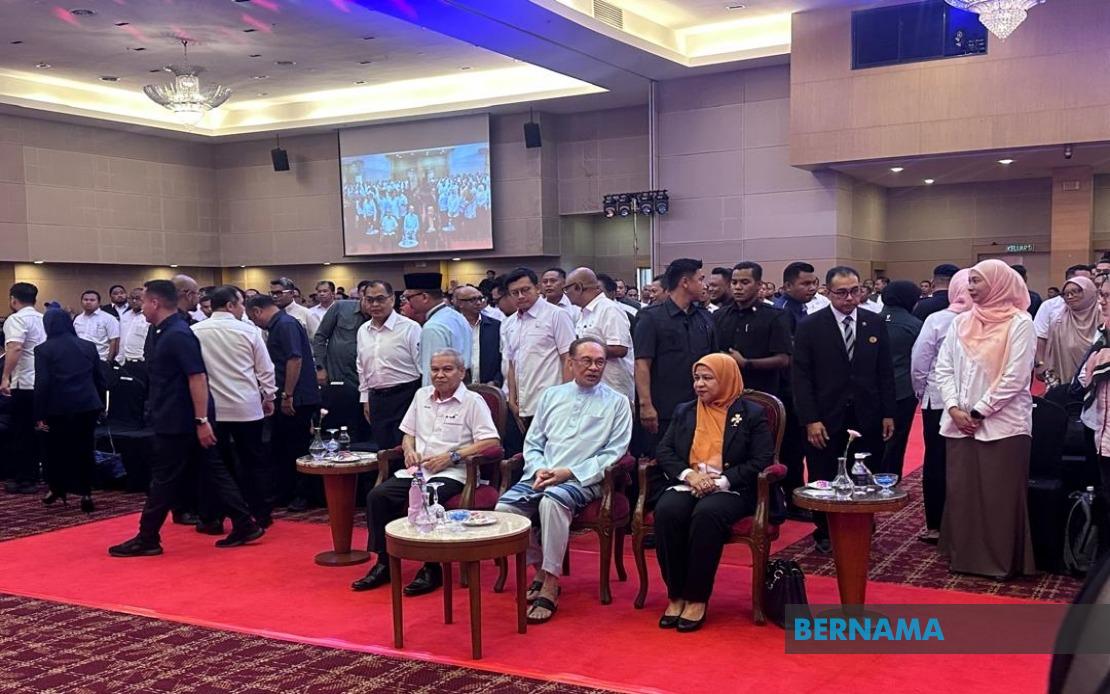
Speak at a gathering with senior FELDA officials at Tenera Hotel in Bangi, Anwar emphasised that the investigative body has already commenced its examination and anticipated that a comprehensive report would emerge in the coming months. The timeline suggests authorities are conducting a thorough review rather than rushing toward hasty conclusions about the state-owned enterprise that manages one of Malaysia's most significant agricultural and land development schemes.
The Prime Minister elaborated on the scope of the inquiry, clarifying that while the investigation will necessarily examine historical management lapses and institutional shortcomings, the primary focus extends toward assessing current operational frameworks and charting a constructive path forward for FELDA. This dual emphasis reflects an understanding that identifying past missteps serves less as an exercise in accountability for its own sake and more as a diagnostic tool for institutional reform.
Anwar drew an implicit parallel to the Royal Commission of Inquiry report on Tabung Haji, suggesting that once completed, the FELDA investigation findings would be released in their entirety for public scrutiny rather than presented in redacted or sanitised form. This approach indicates an intention toward transparency, allowing stakeholders—including smallholders, investors, and the general public—to independently assess the Task Force's conclusions and recommendations.
The Special Task Force's establishment represents part of a broader governmental effort to strengthen oversight of statutory bodies and government-linked companies, particularly those managing substantial national resources and affecting rural livelihoods. FELDA, which oversees settler schemes and land development programmes across the peninsula, has faced periodic scrutiny regarding administrative efficiency and financial stewardship over recent years.
Participating in the Bangi session were FELDA Chairman Tan Sri Ahmad Badri Mohd Zahir and Director-General Datuk Dr Suzana Idayu Wati Osman, suggesting that the agency's leadership has been engaged in dialogue with the Prime Minister's office regarding the investigation's parameters and expected outcomes. Such high-level consultation indicates that the process is being treated as a significant institutional review rather than a routine audit.
The decision to withhold formal announcements until the investigative machinery completes its work reflects standard protocol for major inquiries, preventing premature public statements that could prejudice the investigation or invite speculation about potential findings. Nevertheless, the several-month timeframe adds to uncertainty for FELDA stakeholders who may be awaiting clarity on governance structures, financial management, or operational direction.
FELDA's status as a critical institution in Malaysia's rural development framework ensures that any findings will carry substantial implications for the settlers it serves and the broader agricultural sector. The agency oversees hundreds of thousands of hectares and manages schemes that continue to employ significant numbers of rural workers, making institutional health directly relevant to rural household incomes and food security considerations.
The reference to examining both historical problems and future trajectories suggests the Task Force is not narrowly focused on attributing blame but rather on formulating recommendations that enhance FELDA's effectiveness and sustainability. This constructive orientation aligns with contemporary governance approaches that prioritise solutions-oriented reform over retrospective recrimination, though the investigation may well uncover instances where accountability measures become warranted.
Anwar's statement also carries implications for public confidence in governance institutions more broadly. By committing to full public disclosure of findings—following the Tabung Haji precedent—the government is signalling willingness to subject prominent agencies to scrutiny and open debate. This approach can enhance institutional legitimacy by demonstrating that no organisation operates beyond public oversight, particularly where public resources are at stake.
The timing of the announcement, combined with the broader context of governance reforms underway across multiple Malaysian institutions, suggests a strategic effort to address structural weaknesses that may have accumulated over previous administrations. FELDA's case may well set expectations for similar examinations of other significant statutory bodies, establishing a template for investigative scope and public accountability.
As FELDA stakeholders await the Task Force's conclusions, the investigation period offers opportunity for the agency's management to implement preliminary improvements and prepare for potential recommendations. The engagement with senior officials during the Bangi session likely provided a forum for discussing expectations and organisational readiness for whatever corrective measures may be recommended once the full report emerges and enters the public domain.

