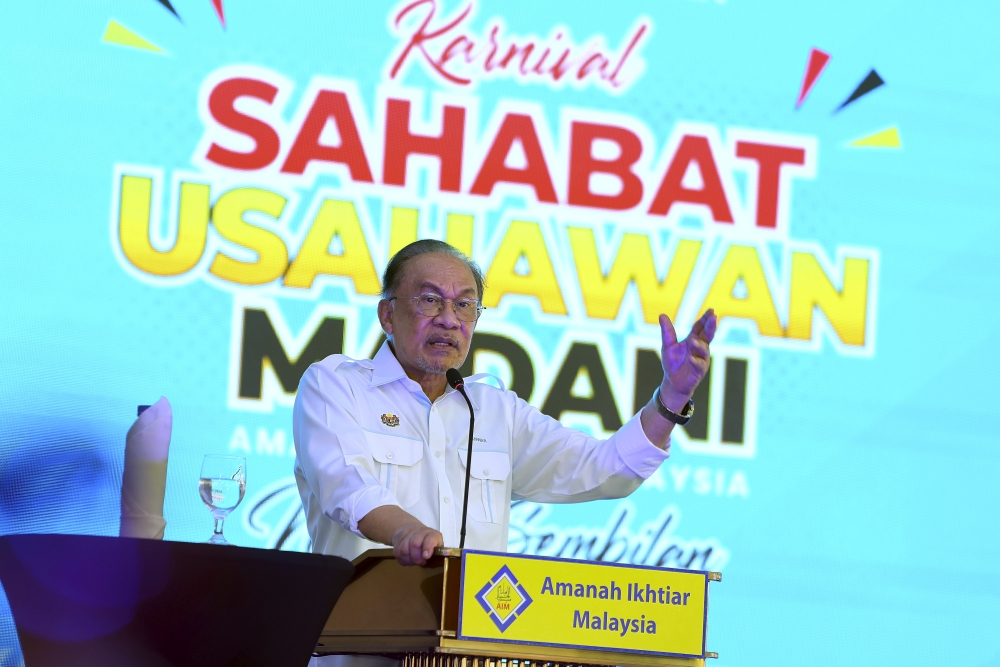
Prime Minister Datuk Seri Anwar Ibrahim moved to dispel concerns about the Cabinet's commitment to Malay and Islamic community welfare on Thursday, asserting that his government has uniformly backed initiatives designed to benefit these constituencies. Speaking in Jempol, a constituency with significant Malay-Muslim demographics in Negeri Sembilan, Anwar underscored the administration's unwavering dedication to programmes serving these communities, preempting what appears to be growing anxiety within constituency organisations about potential policy obstacles.
The Prime Minister's statement carries particular weight given Malaysia's delicate political landscape, where support from Malay-Muslim voters remains foundational to electoral success. By emphasising the Cabinet's lack of objections to community-focused proposals, Anwar sought to neutralise narratives suggesting that his government—particularly given its ethnically diverse coalition composition—might deprioritise traditional Malay-Muslim interests. Such reassurance proves especially important in constituencies like Jempol, where concerns about representation and community-specific benefit distribution can swing voting patterns.
Anwar's comments implicitly acknowledge the sensitivities surrounding multicultural governance in Malaysia. The framing of Cabinet unity on this issue suggests an attempt to build consensus around the notion that advancing Malay and Muslim welfare programmes does not conflict with broader national development objectives or the inclusive policy framework his administration espouses. This balance represents a critical challenge for the Prime Minister, whose coalition includes non-Malay, non-Muslim parties whose electoral bases demand different policy emphases.
The visit to Jempol itself signals strategic outreach. Negeri Sembilan, while constitutionally significant as the royal state and seat of the Conference of Rulers, has experienced shifts in voter sentiment in recent electoral cycles. By directly addressing community concerns in person rather than through ministerial surrogates or written statements, Anwar demonstrated the political importance he attaches to retaining confidence among Malay-Muslim constituency associations, which serve as grassroots mobilisation channels during campaign periods.
This reassurance also emerges against a backdrop of ongoing discussions about resource allocation within the federal budget. Previous Malaysian administrations faced periodic criticism from specific communities regarding perceived imbalances in development spending or programme accessibility. By proactively confirming Cabinet alignment on community-benefiting initiatives, Anwar appears to preempt potential accusations that his government either delays approvals or conditions support on unacceptable prerequisites.
The statement's emphasis on Cabinet consensus rather than isolated Prime Ministerial support carries strategic meaning. It suggests that consensus exists across political parties within the ruling coalition regarding the legitimacy and necessity of programmes targeting Malay and Muslim communities. Such framing attempts to depoliticise what might otherwise become partisan ammunition—the notion that specific coalition partners might resist particular community initiatives. By anchoring the position in Cabinet-wide agreement, Anwar distributed responsibility and reduced vulnerability to charges that he personally champions inclusive agendas at the expense of traditional constituencies.
For Malaysian policymakers and civil society observers, this statement reflects persistent tensions in post-colonial Malaysian governance around ethnic and religious identity in national resource distribution. Despite decades of nation-building, questions about equitable benefit-sharing between communities continue surfacing, particularly during periods of economic uncertainty or when coalition governments comprise parties with divergent electoral bases. Anwar's intervention suggests his administration remains acutely aware of these historical sensitivities.
The Prime Minister's remarks also carry implications for future programme implementation. By publicly committing to Cabinet support for Malay-Muslim initiatives, Anwar potentially elevated expectations within these communities regarding acceleration of pending projects or expansion of existing benefit schemes. Failure to deliver tangible improvements in such programmes could resurrect scepticism about government intentions, making follow-through on this rhetorical commitment politically essential.
Moreover, the statement addresses a broader anxiety within certain political circles about perceived shifts in Malaysia's affirmative action frameworks. While the constitutional Articles 153 provisions remain intact, periodic debates emerge about programme efficiency, accessibility, and alignment with contemporary development needs. By affirming Cabinet support, Anwar positioned his government as a custodian of constitutional commitments rather than an agent of transformation that might diminish traditional protections.
Regionally, Malaysia's approach to balancing ethnic-religious community interests within democratic systems continues attracting academic and policy attention. Anwar's statement reflects the ongoing negotiation required in plural societies where electoral competition, constitutional provisions, and coalition governance create competing pressures. His reassurance demonstrates how Malaysian political leaders continue calibrating messaging to address community-specific concerns while maintaining coalition coherence.
As Anwar's government approaches potential mid-term reviews of legislative achievements and resource allocation, such direct engagement with constituency concerns becomes increasingly important. The Jempol visit served both immediate reassurance functions and broader signalling that the Prime Minister remains responsive to Malay-Muslim community perspectives. Whether this translates into accelerated programme implementation or expanded resource commitments will significantly influence perceptions of the government's credibility on community welfare issues.

