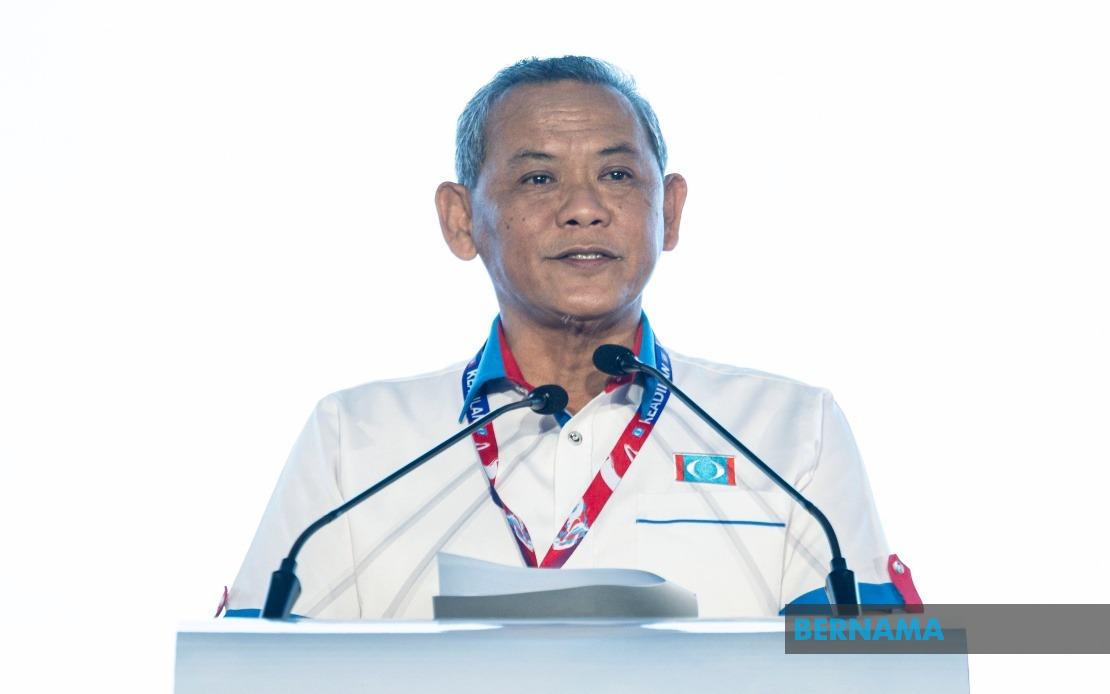
Datuk Seri Aminuddin Harun, the former Menteri Besar of Negeri Sembilan, has publicly signalled his preparedness to step aside from his position as chairman of the Parti Keadilan Rakyat's Negeri Sembilan State Leadership Council in the aftermath of the state's recent electoral disappointment. Speaking during his closing address at PKR's National Congress held at Melaka International Trade Centre on August 16, Aminuddin acknowledged the mounting pressure from party grassroots and indicated he would accept whatever decision the party leadership ultimately reaches regarding his future in the post.
The political shift comes in response to PKR's unexpectedly poor electoral performance on August 1, when the party managed to retain only two state assembly seats out of the fifteen it contested across Negeri Sembilan. This outcome prompted six branch leaders within the state party structure to formally call for a reassessment of the party's strategic direction and leadership, with explicit calls for Aminuddin to assume responsibility for the defeat. Rather than deflect blame or fight the criticism, Aminuddin moved to align himself with these demands, viewing the pressure as a legitimate expression of concern from the party rank-and-file.
In his remarks, Aminuddin demonstrated a notably gracious approach to accountability by explicitly accepting the criticisms levelled against him. He stated that he would not shy away from bearing the consequences of the electoral loss and rejected any suggestion that he might attempt to evade responsibility through convenient excuses or diversions. This stance represents a deliberate choice to embrace rather than contest the party's internal reckoning, a posture that stands in contrast to the defensive reactions sometimes seen from political leaders facing similar circumstances. By framing his potential departure as a service to the party's broader interests, Aminuddin sought to elevate the discussion beyond personal political survival.
Central to Aminuddin's narrative was a distinction between accepting defeat and abandoning the broader struggle. While acknowledging the severity of the electoral setback, he emphasised that PKR should view this result not as a terminal verdict but as a catalytic moment for institutional reform and renewed strategic thinking. He positioned the party's poor showing as a necessary juncture that could prompt deeper reflection on organisational weaknesses, messaging effectiveness, and candidate selection processes. This framing allowed him to accept personal accountability while simultaneously opening space for systemic improvements that might benefit the party beyond just a change of leadership in one state.
Aminuddin's personal electoral experience underscored the magnitude of the challenge facing PKR in the state. Contesting the Linggi state seat, he suffered a significant defeat, receiving 6,163 votes against Barisan Nasional incumbent Datuk Mohd Faizal Ramli's 9,139 votes in a three-way contest that also included Bersatu candidate Datuk Zamri Md Said, who garnered 391 votes. The margin of 2,976 votes represented not merely a personal loss but also a symbolic marker of the difficulty PKR encountered in penetrating traditional support bases in Negeri Sembilan, a state where BN retains considerable organisational strength and voter loyalty.
The preservation of only the Chuah and Sri Tanjung seats reflected the narrowness of PKR's remaining foothold in the state legislature. This dramatic contraction from what party members might have hoped for revealed underlying structural challenges in voter mobilisation, message resonance, or possibly candidate quality in several constituencies. For a party that has positioned itself as an alternative force in Malaysian politics, the Negeri Sembilan result demonstrated the uneven nature of its progress across different states and the persistent difficulty of dislodging entrenched political incumbents at the state level.
Aminuddin's approach of deferring final decision-making authority to the broader party leadership rather than fighting to retain his position reflects an understanding of PKR's internal dynamics and the political capital he would expend in resisting the branch leaders' demands. By ceding the decision to the party hierarchy, he simultaneously demonstrates deference to collective party structures while also ensuring that any final move would carry the imprimatur of formal party processes rather than appear as a consequence of internal pressure alone. This strategy preserves his standing within PKR even if he departs from the Negeri Sembilan chairmanship.
The electoral result in Negeri Sembilan also carries broader implications for PKR's position in the Malaysian political landscape. As part of the governing Pakatan Harapan coalition, the party's struggles in state-level contests raise questions about its organisational effectiveness and voter appeal outside its traditional strongholds. The contrast between PKR's relatively stronger parliamentary presence and weaker state-level performance suggests that the party may be more dependent on specific personality-driven campaigns or coalition dynamics than on deep grassroots organisational structures. Strengthening state-level operations and developing more durable local party machinery has thus become a critical concern.
From a Malaysian political perspective, Aminuddin's willingness to accept responsibility for electoral defeat represents a notable moment in how opposition parties handle internal accountability. Unlike scenarios where leaders attempt to externally blame coalition partners or national factors, Aminuddin's approach suggests a degree of self-critical capacity within PKR, even if it remains to be seen whether such accountability translates into concrete strategic adjustments. The party's ability to learn from the Negeri Sembilan experience and implement meaningful changes could determine whether this state becomes a platform for recovery or marks the beginning of a longer-term erosion of its state-level presence in a key Malaysian region.

