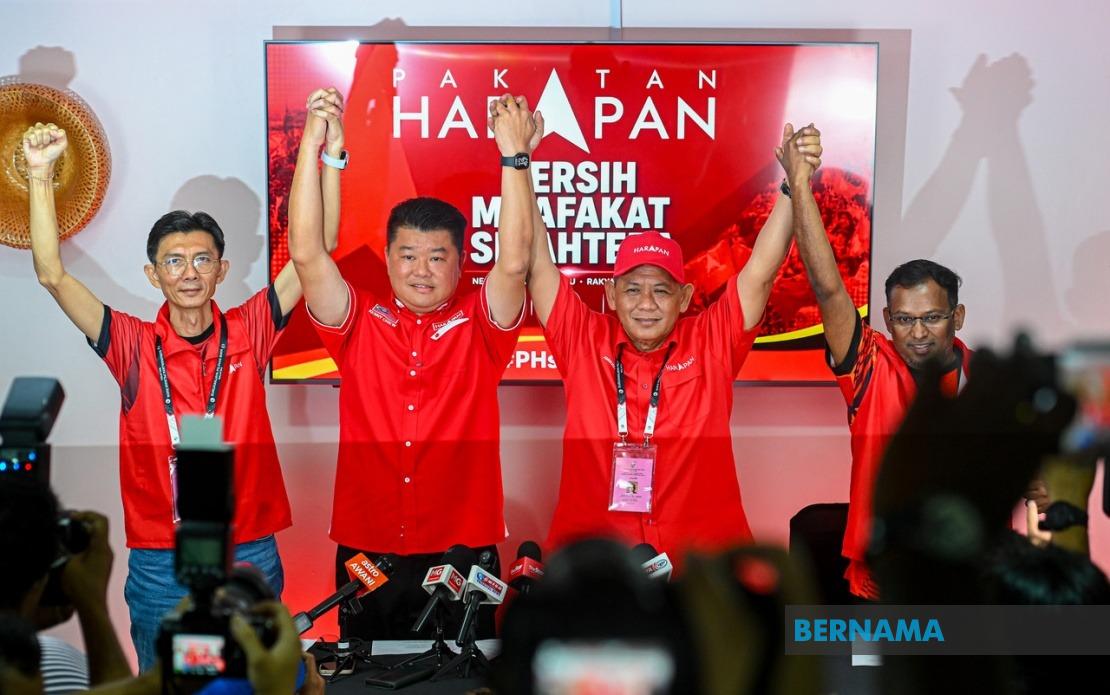
Negeri Sembilan's Pakatan Harapan coalition dismissed suggestions of leadership tensions on Saturday, with State Chairman Datuk Seri Aminuddin Harun reassuring party members and voters that the alliance remains unified as campaigning intensifies across Port Dickson's five state seats ahead of polling day.
The menteri besar rejected claims circulating on social media of discord within PH's organizational structure, particularly regarding the nomination process for the Chuah state constituency. Aminuddin characterized such speculation as a deliberate attempt by rival political forces to undermine public confidence in the coalition's electoral prospects and internal governance, rather than reflecting genuine party dysfunction.
Central to the recent chatter was Port Dickson PKR deputy division chief Datuk Kenny Chiew Chi Kin, who had expressed reservations about the re-nomination of incumbent Chuah representative Datuk Yew Boon Lye. Aminuddin indicated this matter had been resolved through internal dialogue and that Chiew had subsequently pledged his commitment to supporting all PH candidates competing across the five constituencies—Chuah, Lukut, Sri Tanjung, Bagan Pinang, and Linggi—that fall within the Port Dickson parliamentary boundary.
Aminuddin praised Chiew for his dedication to party building and grassroots strengthening, acknowledging his contributions despite not securing nomination as a candidate this time. The remarks suggest the party viewed Chiew's earlier concerns as legitimate internal party business rather than insubordination, and that persuading him to campaign actively for other contenders was achievable through dialogue rather than formal discipline.
The reassurance carries particular significance for Negeri Sembilan, where PH's performance in 2023 demonstrated its electoral strength. Yew Boon Lye's retention of the Chuah seat involved a commanding 6,298-vote majority over Perikatan Nasional's Tang Jay Son, illustrating the coalition's local appeal in what remains a closely contested state politically. However, this year's contest has shifted dynamics somewhat; Yew faces a fresh challenger in Barisan Nasional's Pau Jeou Ching, introducing a different competitive landscape that may complicate PH's defense of the seat.
As Negeri Sembilan's menteri besar and PKR state chairman, Aminuddin carries dual responsibility for both government performance and party coherence—roles that frequently generate internal pressure during election periods. His personal candidacy in the Linggi state seat adds another dimension to the state election narrative, making his public statements about party unity carry implicit weight about his own electoral confidence and the broader momentum PH believes it possesses.
The coalition's emphasis on unified messaging reflects awareness that in Malaysia's federal system, state elections often hinge on local perceptions of governance effectiveness combined with national political sentiment. Negeri Sembilan, as a Klang Valley-proximate state with significant commuter populations, benefits from urban voters exposed to multiple information sources and susceptible to narratives about internal party management. Dismissing rift claims head-on thus becomes a strategic necessity beyond mere damage control.
For voters in the five constituencies, the reassurance addresses a legitimate concern: whether campaign resources and organizational focus would be diluted by internal party disputes. Political observers note that nomination disagreements frequently foreshadow deeper factional tensions that can affect on-ground mobilization, volunteer morale, and ultimately electoral performance. Aminuddin's public backing of the resolution and Chiew's commitment suggests PH intends to prevent such spillover effects.
The timing of Aminuddin's statement—roughly ten days before early voting and eleven days before polling—reflects standard electoral cycle dynamics. Negative narratives gain traction most acutely in the fortnight preceding voting, when undecided voters solidify preferences. Addressing coalition unity concerns at this juncture allows PH to reset the conversation toward its policy message and away from internal governance questions that complicate voter decision-making.
Meanwhile, PH's strategy of competing across all five Port Dickson-linked constituencies suggests confidence in organizational capacity despite any recent tensions. This contrasts with previous electoral cycles where the coalition sometimes negotiated seat allocations with smaller parties or withdrew from certain contests. The decision to contest all five seats signals an assessment that PH possesses sufficient ground machinery and candidate caliber to compete simultaneously across multiple fronts without diluting electoral competitiveness.
Election observers emphasize that sustained party unity through the final campaign week and polling day remains critical for translating organizational advantage into actual seat gains. Historical patterns in Malaysian state elections show that coalition arrangements withstanding late-stage defections or public disputes significantly improve winning probabilities. Conversely, visible internal disagreements tend to depress turnout among allied parties' supporters and encourage split voting.
With early voting scheduled for July 28 and general voting on August 1, the political landscape in Negeri Sembilan remains fluid despite Aminuddin's reassurances. The State remains competitive across most seats, and both PN and BN have demonstrated organizational capacity in recent electoral cycles. How effectively PH converts its leadership unity narrative into actual grassroots coordination will substantially determine whether the coalition retains or loses ground in constituencies like Chuah, where incumbency advantage and vote margin both matter significantly.

