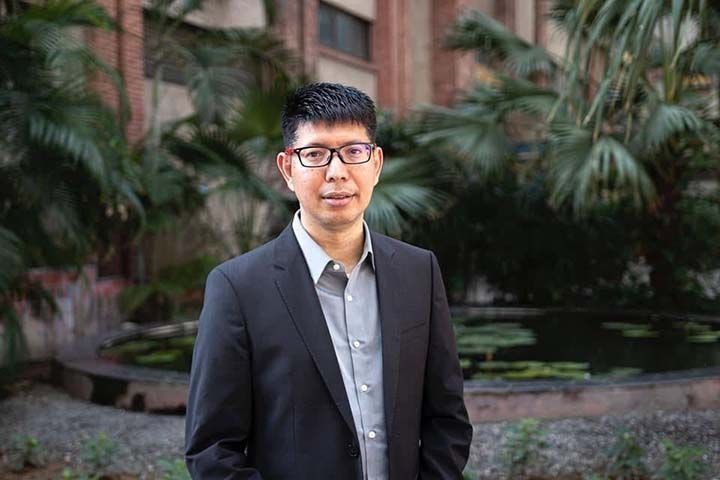
An American scholar studying Myanmar affairs detained in China during early June was there solely to participate in an academic workshop, according to the think tank he established, which issued an urgent call for his release this week. The arrest of Min Zin, who heads the Institute for Strategy and Policy (ISP) - Myanmar, has escalated tensions surrounding international scholarship on the Southeast Asian nation, at a delicate moment in China-Myanmar relations.
China's foreign ministry confirmed last week that it had taken Min Zin into custody in Kunming, a major city in Yunnan province bordering Myanmar, on suspicion of conducting espionage and posing threats to national security. The timing of the detention has raised eyebrows among observers familiar with Myanmar's political crisis, coming just weeks before a state visit by Myanmar's junta leader Min Aung Hlaing to China—a strategic ally whose support remains critical to the military regime's survival.
ISP-Myanmar released a statement firmly rejecting what it characterizes as baseless charges against its detained executive director. The institute emphasised that Min Zin travelled to Kunming with a singular, transparent purpose: to attend a scheduled academic workshop. The statement underscores the organisation's position that scholarly exchange and research activities should not be treated as suspicious or criminal conduct, particularly when they occur in connection with legitimate professional events.
The United States has moved swiftly to support its citizen and contest Beijing's framing of the case. A State Department spokesperson confirmed that American consular officers have already visited Min Zin while in detention, and that Washington is actively engaging Chinese authorities to secure his release and ensure appropriate consular assistance. The official statement explicitly rejected the espionage allegations, signalling that the US views the detention as potentially politically motivated rather than based on credible security concerns.
China's foreign ministry has maintained its position, reiterating to international media that Min Zin faces legitimate espionage accusations and reaffirming that the case will be handled through proper legal channels. This measured official response masks potential underlying anxieties about the research ISP-Myanmar conducts and the scholar's influence within international policy circles focused on Myanmar's political and security developments.
Min Zin's background illuminates why his detention carries symbolic weight beyond the individual case. A veteran of Myanmar's pro-democracy movement in 1988, he completed graduate studies in political science at the University of California, Berkeley, before co-founding ISP-Myanmar. The institute initially operated within Myanmar but relocated operations abroad following the military's February 2021 coup that ousted the democratically elected government of Aung San Suu Kyi, an event that fundamentally restructured Myanmar's political landscape and triggered extraordinary instability across Southeast Asia.
The 2021 coup sparked massive public resistance that evolved from peaceful demonstrations into organised armed insurgency. Pro-democracy militia groups have coalesced with Myanmar's long-established ethnic armed organisations to mount a sustained military challenge to the junta's rule. This ongoing conflict has displaced hundreds of thousands of civilians and destabilised border regions affecting Thailand, Laos, and Bangladesh. ISP-Myanmar has positioned itself as a critical source of analysis and documentation regarding this unfolding conflict and Myanmar's deteriorating economic conditions.
The institute's research agenda covers interconnected dimensions of Myanmar's crisis: the armed struggle between military forces and opposition groups, trajectories of political transition and potential constitutional arrangements, economic collapse and humanitarian consequences, and the crucial bilateral relationship between Myanmar and China. These topics are politically sensitive in Beijing, which views Myanmar as falling within its sphere of influence and prioritises stability and control over the narrative surrounding internal Myanmar developments. Scholarship examining China's Myanmar investments, strategic interests, or Beijing's relationship with the junta can be perceived as threatening to the state's preferred messaging.
ISP-Myanmar's relocation overseas was a direct consequence of the post-coup repression, reflecting how the military's seizure of power has forced dissident intellectuals and independent analysts into exile. The institute's continued ability to publish research, host events, and convene international dialogue about Myanmar has made it a valuable institutional presence for policymakers, journalists, and analysts worldwide seeking credible information about a country increasingly opaque to outside observation. This influence may have drawn unwanted attention from Chinese authorities concerned about negative coverage or analysis of Beijing's strategic position in Myanmar.
The detention raises troubling questions about the space available for legitimate academic inquiry into contentious geopolitical issues. International scholars conducting research on sensitive topics face mounting pressure in various jurisdictions, but targeting someone merely for attending a conference represents an escalation that could have chilling effects on scholarly exchange throughout the region. Universities, think tanks, and research institutions throughout Southeast Asia depend on the capacity to host international visitors and participate in cross-border intellectual collaboration without fear of arbitrary detention.
For Malaysia and other Southeast Asian nations closely monitoring Myanmar's trajectory, Min Zin's case underscores the constraints on independent analysis and the risks faced by those documenting the region's most significant ongoing conflict. It also illustrates how external powers leverage detention and legal pressure to influence scholarship and shape narratives about disputed territorial and geopolitical matters affecting the region's stability and development.
The case remains unresolved, with Min Zin's legal status unclear and international attention focused on whether Beijing will proceed with formal charges or release him quietly to defuse diplomatic complications. The outcome will likely signal whether China intends to increase pressure on international researchers examining Myanmar affairs, or whether diplomatic representations from Washington and potential solidarity from the international academic community can persuade Beijing to reconsider its approach to what appears to be ordinary scholarly activity.