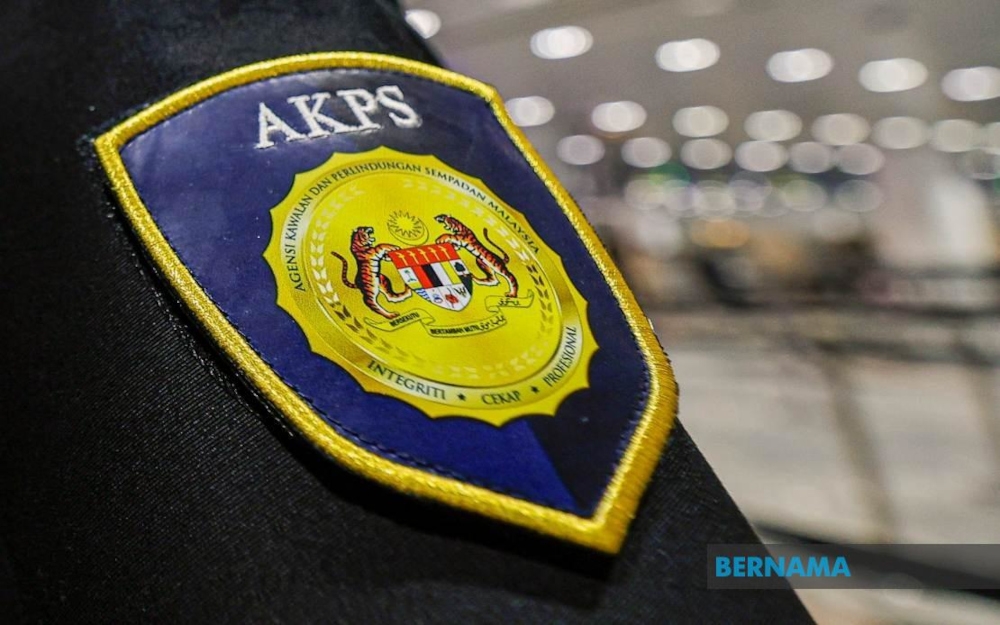
The Malaysian Border Control and Protection Agency (AKPS) has begun a formal internal inquiry into claims that a traveller transferred RM100 to an officer at Kuala Lumpur International Airport 2 (KLIA 2) via a personal quick response code, marking another potential integrity breach at one of Southeast Asia's busiest travel facilities. The allegation, which surfaced in mid-July, centres on the use of a private digital payment method rather than official channels, a practice that circumvents institutional oversight mechanisms and raises systemic vulnerabilities within border management operations.
The incident underscores persistent challenges facing Malaysia's customs and immigration infrastructure, where technological advancement and the proliferation of digital payment platforms have created new avenues for potential misconduct. Unlike traditional cash transactions or official payment systems that leave documentary trails, personal QR codes enable direct transfers that operate outside institutional records, making them particularly attractive to individuals seeking to obscure financial movements. This form of informal payment arrangement, while seemingly modest in quantum, reflects a troubling pattern of boundary-line corruption that can normalise larger irregularities over time.
KLIA 2, which processes over 70 million passengers annually across its terminals, has long been a focal point for corruption concerns within Malaysia's border agencies. The airport's high passenger throughput, combined with the repetitive nature of document verification and customs clearance procedures, creates numerous interaction points where officers might exploit their authority. Previous incidents have involved baggage inspections, duty-free allowance determinations, and travel document validity assessments—areas where discretionary decision-making provides opportunities for illicit demands. The emergence of digital payment methods adds a contemporary dimension to these longstanding vulnerabilities.
The use of personal QR codes as a collection mechanism represents a significant departure from the informal cash exchanges that have historically characterised low-level corruption in travel hubs. By leveraging digital infrastructure ostensibly designed for convenience and efficiency, such arrangements provide a veneer of legitimacy while fundamentally obscuring the transactional nature of the exchange. The officer in question could potentially argue that the payment was a voluntary donation or unsolicited transfer, complicating investigative processes. This technological sophistication suggests either spontaneous opportunism or potentially coordinated schemes involving multiple officers using similar methods.
AKPS's decision to launch a formal investigation signals organisational awareness that such incidents threaten institutional credibility and Malaysia's reputation as a secure travel destination. For international airlines, tourism boards, and business travellers, corruption at border checkpoints represents a significant operational and reputational risk. Multinational corporations planning regional headquarters or supply chain operations specifically factor in the integrity of border administration when making location decisions. Southeast Asian competitors including Singapore, Thailand, and Indonesia have invested substantially in digitising and strengthening their customs frameworks, partly to position themselves as corruption-resistant alternatives.
The investigation will likely examine whether the officer acted individually or as part of a broader scheme. Authorities must determine whether the traveller initiated the payment voluntarily or responded to explicit or implicit pressure. Digital forensics could reveal the officer's personal banking history, transaction patterns, and connections to other individuals, potentially exposing organised networks. Additionally, investigators should establish whether similar QR code arrangements exist among other KLIA 2 personnel, as isolated incidents often indicate systemic problems rather than individual lapses in judgment.
This development carries implications for Malaysia's broader anti-corruption agenda. The government has positioned itself as committed to combating graft, with high-profile prosecutions of former leaders and establishment of the Malaysian Anti-Corruption Commission (MACC). However, frontline corruption at major public facilities persists, suggesting that institutional reforms have not uniformly cascaded through operating agencies. The incident illustrates that technology adoption alone cannot substitute for robust oversight mechanisms, rigorous staff vetting, and credible consequences for misconduct.
For business and leisure travellers, such allegations create uncertainty about transaction safety at border points. Travellers face pressure to facilitate clearance procedures, and allegations that officers solicit payments—even modestly via QR codes—undermine confidence in official processes. This is particularly concerning for Malaysian tourism competitiveness, where border experiences significantly influence visitor satisfaction and repeat travel decisions. Regional airlines have noted that seamless, corruption-free airport operations constitute essential infrastructure for maintaining flight frequencies and competitive pricing.
Moving forward, AKPS should implement structural reforms including mandatory integration of all officer transactions into institutional payment platforms, strict restrictions on accepting private payments for any services, and regular audits of officer digital activity. Training programmes should emphasise that accepting payments through personal channels violates professional standards regardless of amount. Additionally, establishing clear reporting mechanisms for travellers who encounter such demands could generate intelligence on systemic vulnerabilities.
The investigation's outcome will signal whether Malaysian authorities can enforce accountability among border personnel or whether institutional inertia permits such behaviour to continue. As digital payment methods proliferate across Malaysian society, border agencies must proactively establish clear protocols preventing misuse of these systems. Without decisive action, incidents like this will accumulate, gradually eroding public confidence in Malaysia's capacity to maintain professional standards at critical infrastructure points and potentially disadvantaging the country's competitive position within Southeast Asia's increasingly connected travel ecosystem.

