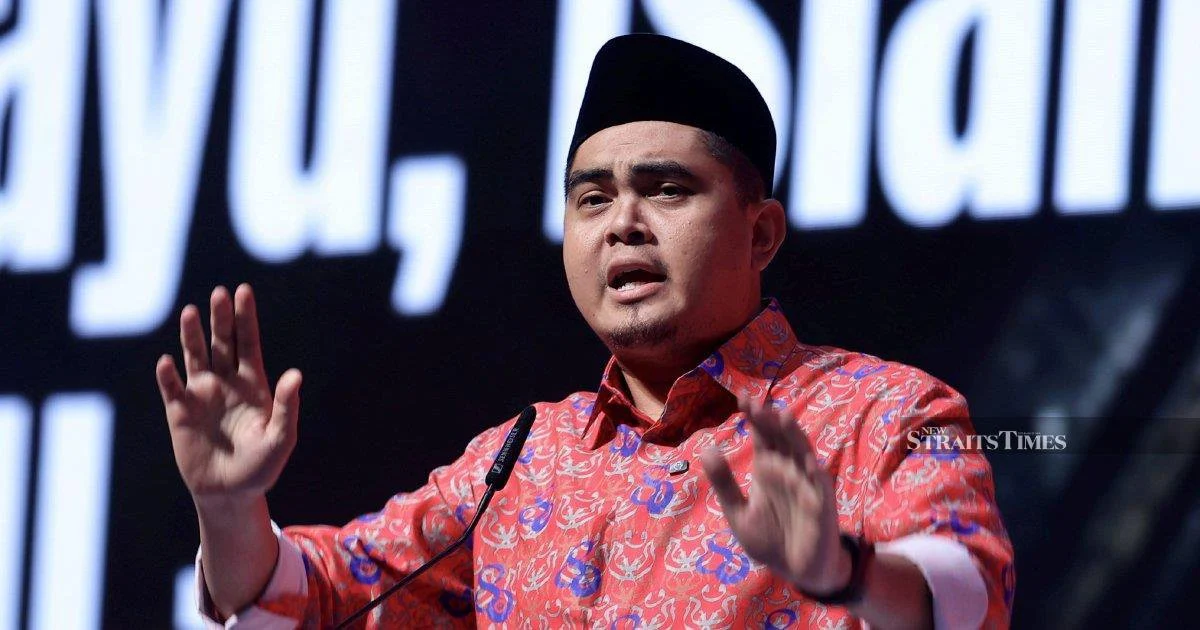
In a pointed critique delivered in Johor Baru, UMNO Youth chief Datuk Dr Akmal Saleh has escalated pressure on DAP deputy chairman Nga Kor Ming to follow through with a previous public commitment to step down following Barisan Nasional's decisive victory in the recent Johor state election. The challenge, delivered with characteristic bluntness, reflects deepening partisan tensions in Malaysia's political landscape and underscores the charged rhetoric surrounding the outcome of the state-level electoral contest.
Akmal's intervention signals intensifying pressure on opposition figures to take personal responsibility for electoral defeats. By invoking Nga Kor Ming's earlier pledge, the UMNO Youth leader has sought to transform a party-political defeat into a matter of personal accountability and honour, a framing that carries particular weight in Malaysian political culture. The rhetorical move attempts to bind the DAP deputy chairman to his words, converting a conditional statement into an immediate obligation.
The context surrounding this challenge extends beyond a simple partisan jab. Barisan Nasional's landslide outcome in Johor represented a significant reversal of fortunes for the coalition at the state level, marking a notable improvement in the traditional BN stronghold. For opposition figures like Nga Kor Ming, the result imposed considerable political costs, making questions of leadership accountability and electoral responsibility particularly acute within DAP circles.
Akmal's offer to personally draft a resignation letter, while undoubtedly intended as sarcasm, carries an unmistakable taunt. Such language demonstrates how Malaysian political discourse frequently operates through layers of rhetorical excess, where literal meanings matter less than the underlying challenge to credibility and consistency. The theatrical quality of the exchange reflects the performative dimensions that characterise modern political competition in Malaysia, where public statements and social media amplification shape narrative and perception as much as substantive policy arguments.
The focus on individual resignation pledges rather than systemic electoral analysis raises questions about where responsibility for electoral outcomes actually lies in Malaysian politics. While DAP and its broader opposition coalition undoubtedly face questions about campaign effectiveness and messaging, the emphasis on personal accountability versus organisational learning reflects different philosophical approaches to managing political failure. Akmal's approach privileges symbolic gestures and public honour over institutional reflection.
Former political figures in Malaysia have occasionally fulfilled resignation pledges following major electoral setbacks, though such instances remain relatively uncommon in recent years. The norms surrounding personal responsibility versus organisational continuity remain contested, with different parties and leaders applying varying standards depending on circumstances and political expediency. Nga Kor Ming's response to Akmal's challenge will likely signal DAP's positioning on these questions of political accountability and leadership stability.
The Johor result carries broader implications for opposition coalition dynamics heading toward federal-level considerations. DAP's performance in the state, alongside that of other opposition partners, influences calculations about viability, strategy, and coalition partnerships. For the ruling Barisan Nasional, the outcome strengthens negotiating positions and provides momentum that extends beyond Johor's borders, affecting how other state governments and federal-level arrangements might evolve.
Regional observers note that Malaysia's opposition landscape remains fragmented across multiple parties with different organisational structures, regional bases, and strategic priorities. DAP's particular challenge stems partly from its positioning as the largest Chinese-majority party in a context where ethno-religious divisions continue to shape electoral mathematics and coalition possibilities. The party's electoral reversal in Johor thus carries implications beyond its own organisational boundaries.
The rhetorical escalation involving Akmal and Nga Kor Ming also reflects UMNO Youth's broader positioning within the broader political ecosystem. As the youth wing of Malaysia's historically dominant party, UMNO Youth maintains particular responsibility for aggressive partisan messaging and youth mobilisation. Akmal's challenge functions simultaneously as literal political criticism and as communication targeted toward UMNO's base and the broader non-Malay constituency that UMNO seeks to influence through rhetorical assertiveness.
Political analysts suggest that such exchanges, while seemingly focused on personalities and individual honour, ultimately serve to frame broader narratives about electoral mandates and leadership legitimacy. Barisan Nasional's victory provides political capital that extends beyond policy implementation to include the ability to define terms of post-election discourse and to establish expectations for opposition responses. How opposition leaders navigate such challenges affects both immediate perceptions and longer-term calculations about coalition sustainability and electoral viability.
The unresolved question of whether Nga Kor Ming will address Akmal's challenge directly or allow it to fade from media attention carries its own political significance. Either response—direct engagement or strategic silence—communicates something about DAP's assessment of the challenge's importance and about the broader opposition's approach to managing post-election accountability and positioning. The coming weeks will reveal how different opposition figures navigate the political aftermath of Johor's result and what standards of responsibility and accountability ultimately prevail within Malaysia's competitive political system.

