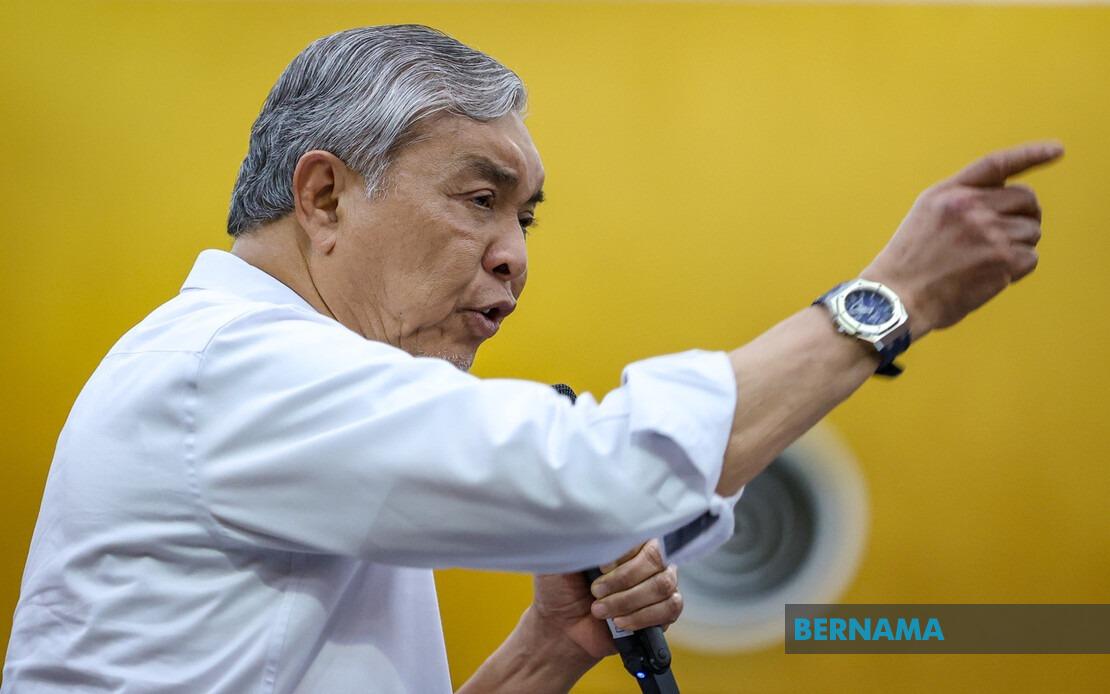
Deputy Prime Minister Datuk Seri Dr Ahmad Zahid Hamidi has unveiled a proposal to equip student leaders across Malaysian higher education institutions with formal training in democratic principles and political awareness. Speaking in Johor Bahru on July 9, the Barisan Nasional chairman suggested that Student Representative Councils, commonly known as MPPs, should participate in structured educational programmes designed to deepen their comprehension of how Malaysia's political system functions and the contemporary issues shaping the nation's trajectory.
The initiative reflects a broader concern among senior government figures about ensuring young leaders possess sufficient grounding in civic matters before taking on representative roles. Ahmad Zahid framed the proposal as an investment in national capacity-building, arguing that well-informed student representatives are essential to cultivating a more sophisticated generation of youth who can navigate complex political terrain with maturity and foresight. Such exposure, he suggested, would empower these young leaders to contribute meaningfully to shaping Malaysia's political future by fostering informed dialogue on campus and beyond.
Crucially, Ahmad Zahid indicated that the government stands ready to underwrite the costs of these programmes across all Student Representative Councils nationwide, conditional upon approval from Higher Education Minister Datuk Seri Dr Zambry Abd Kadir. This financial commitment signals serious intent to move beyond rhetoric towards concrete implementation, removing potential barriers related to institutional budgeting constraints. The proposal acknowledges that access to quality leadership training should not be determined by a university's financial capacity, ensuring equitable opportunity across Malaysia's diverse higher education landscape.
The Deputy Prime Minister was careful to clarify that his vision does not mandate political engagement for all young people. Rather, Ahmad Zahid distinguished between active involvement in political parties and the civic responsibility to remain informed about political developments. He drew on his own experience as a student leader at Universiti Malaya, noting that personal political activism emerged from exposure to the broader political environment rather than as a prerequisite for leadership roles. This nuanced position acknowledges the diversity of career paths and personal preferences among Malaysian youth.
Ahmad Zahid emphasised that understanding politics represents a fundamental aspect of citizenship, separate from the choice to pursue formal party membership or electoral candidacy. First-time voters and 18-year-old citizens need not become politicians, he argued, but should possess sufficient knowledge to make deliberate, informed choices when casting ballots. This reasoning treats political literacy as a public good similar to other forms of education, essential to the functioning of a healthy democracy regardless of individual career ambitions.
The Deputy Prime Minister stressed the pivotal significance of youth voter participation and the weight carried by individual votes in determining both leadership selection and the strategic direction of political organisations. He cautioned against treating electoral participation as a trivial obligation, instead positioning voting as a consequential act that shapes governmental priorities and institutional agendas. In articulating this perspective, Ahmad Zahid appeared to address reported voter apathy among younger demographics, arguing that informed abstention differs fundamentally from uninformed non-participation.
The timing of Ahmad Zahid's announcement coincides with significant electoral activity in Johor, where voters were preparing for state-level polling scheduled for the following Saturday. The election would determine the distribution of 56 contested state assembly seats, making it a critical test of political sentiment in one of Malaysia's most economically significant states. Against this backdrop, the Deputy Prime Minister's remarks on youth political awareness and engagement acquired particular resonance, potentially signalling heightened attention to youth mobilisation strategies during election cycles.
This proposal carries implications for how Malaysian universities approach civic education and student governance. Currently, many institutions provide limited formal instruction on democratic systems and political processes to their elected student representatives, despite these individuals wielding considerable influence over campus policies affecting thousands of peers. Professionalising this aspect of student leadership development could elevate the quality of student governance and foster more sophisticated institutional debates on governance matters.
For Malaysian readers and observers across Southeast Asia, Ahmad Zahid's initiative reflects ongoing efforts by regional governments to manage youth political engagement in an era of rapid information flows and evolving democratic expectations. The proposal represents a middle path between encouraging youth participation and maintaining institutional stability—seeking to channel youthful energy through structured frameworks rather than confronting it directly. Whether implemented effectively, the initiative could serve as a model for other regional nations grappling with similar questions about youth civic education and democratic participation.

