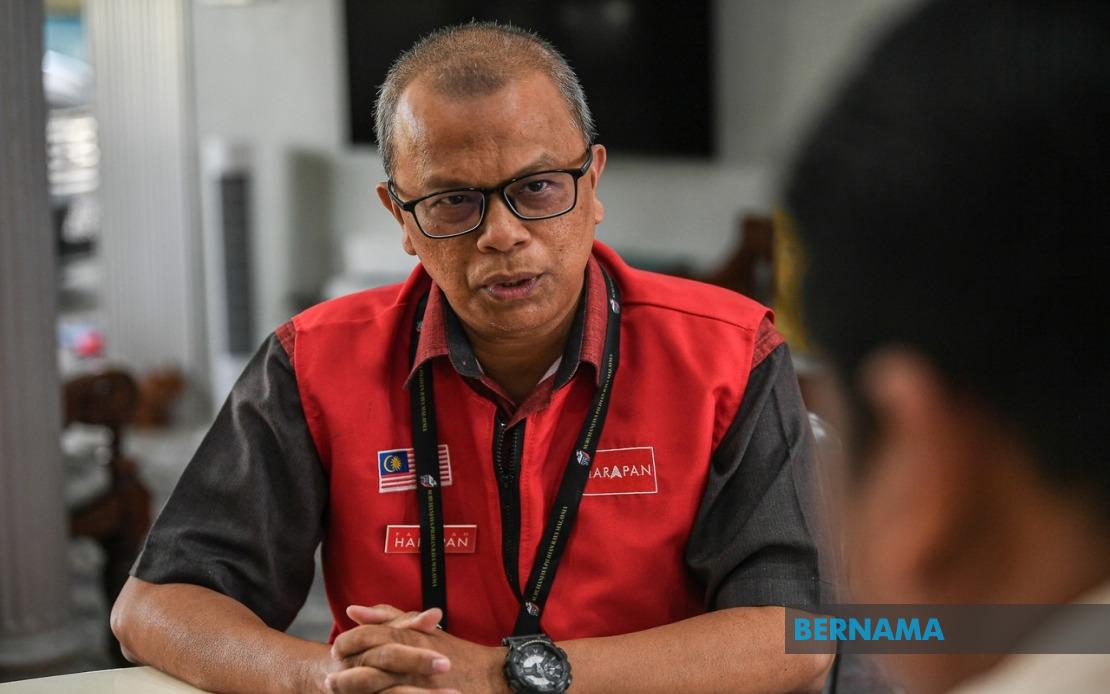
Ahmad Daniel Sharudin, the Pakatan Harapan candidate for the Panti state seat, is banking on eco-tourism development as his flagship policy to unlock economic opportunities in a constituency long overshadowed by better-known attractions in the wider Kota Tinggi district. The 54-year-old civil engineer believes that transforming Panti's natural landscape—particularly the rapids at Kampung Temenin—into a world-class recreational destination could revitalise a region that has struggled to generate meaningful employment and investment. His proposal comes as the Johor state election looms, with polling set for July 11, and represents a departure from conventional development narratives that have dominated rural constituency campaigns.
The potential of Panti's natural heritage has remained largely dormant despite its proximity to Kota Tinggi, a district internationally recognised for its spectacular waterfalls and cascading streams. Ahmad Daniel contends that the constituency possesses equally compelling geological features that could appeal to both domestic tourists seeking weekend getaways and international visitors exploring Johor's southern interior. What distinguishes his approach is an explicit commitment to preserve the original ecosystem while upgrading infrastructure—a nuanced position that acknowledges growing environmental consciousness among Malaysian voters and the finite nature of natural resources. The strategy reflects broader recognition that sustainable tourism, rather than extractive industries, may offer the most viable long-term economic model for rural Malaysian communities.
Beyond the tourism dimension, Ahmad Daniel frames eco-tourism development as a vehicle for addressing structural unemployment affecting Panti's youth population. The constituency has witnessed gradual outmigration as younger residents pursue opportunities in urban centres and even across the Causeway in Singapore, a pattern that has drained the locality of entrepreneurial energy and human capital. His vision of downstream industries—homestays, restaurants, guide services, and hospitality operations—represents an attempt to create a diversified employment ecosystem that could retain talent locally. This multi-sectoral approach acknowledges that single-industry development rarely sustains long-term economic resilience, particularly in communities where skills and educational profiles vary.
Ahmad Daniel's background as a former Kota Tinggi District Council member provides administrative experience, though his tenure offers limited public record of major development initiatives. His current role as Amanah's state Syariah and Dakwah Bureau director signals deeper integration within the Pakatan Harapan coalition apparatus, potentially facilitating bureaucratic access and resource allocation should his party secure the seat. His assertion that alignment with the federal government administration constitutes an advantage reflects the reality that state-level representatives gain significantly from harmonised governance structures, enabling smoother fund flows and coordinated policy implementation across administrative tiers.
The three-cornered contest Ahmad Daniel faces includes Dr Muhammad Naqib Md Ghazali representing Barisan Nasional and Alias Rasman flying the Perikatan Nasional flag. This three-way dynamic mirrors broader fractionalisation affecting Malaysian electoral contests, complicating campaign calculations and potentially benefiting candidates with consolidated grassroots organisation. Ahmad Daniel's team claims to have conducted face-to-face outreach across nearly 80 per cent of the constituency, though he acknowledges that Panti's vast geographical expanse presents logistical challenges with only days remaining before polling. The reliance on social media for final messaging—particularly targeting younger, digitally connected voters—reflects a recognition that traditional door-to-door campaigning cannot comprehensively cover dispersed rural populations.
Panti's eco-tourism positioning warrants contextualisation within Johor's broader development trajectory and regional competition among Southeast Asian destinations. Malaysia has invested significantly in positioning itself as a competitive tourism hub, yet rural constituencies often struggle to attract visitor investment compared to major urban centres or established beach resorts. Panti's proximity to Kota Tinggi creates both opportunity and challenge: geographical nearness enables clustering of tourist facilities and reduces infrastructural duplication, yet also risks visitor volume concentration at existing major attractions. Ahmad Daniel's strategy implicitly assumes that market research has identified sufficient latent demand for additional eco-tourism offerings, though the campaign materials provide limited empirical foundation for this assumption.
Beyond tourism, Ahmad Daniel's manifesto encompasses affordable housing provision, industrial employment creation, and ageing infrastructure renewal—policy commitments broadly consistent with Pakatan Harapan's platform across multiple state elections. The ordering and emphasis, however, reveal campaign priorities: eco-tourism receives primary narrative prominence, suggesting the candidate perceives it as offering greatest differentiation and voter appeal. Housing affordability resonates across Malaysian constituencies regardless of urban-rural location, while infrastructure decay affects quality of life metrics that voters across demographic groups notice daily. This bundled approach attempts to construct a comprehensive development vision rather than single-issue campaigning.
The 16th Johor state election encompasses 56 seats contested by 172 candidates competing for the support of 2.7 million eligible voters, making it a consequential exercise in determining both state government composition and factional strength within peninsular opposition politics. Panti, as a rural constituency with limited urban centres, likely reflects broader demographic trends affecting rural Malaysia—ageing populations, youth outmigration, and economic sectors under structural pressure. Ahmad Daniel's eco-tourism proposal, whether ultimately successful, represents an attempt to reframe rural development around renewable natural capital rather than resource extraction or light industrial clustering, signalling evolving policy thinking within opposition coalitions.
The feasibility of Ahmad Daniel's vision depends substantially on factors beyond his direct control: state government financing priorities, federal cooperation on tourism infrastructure, private sector investment willingness, and market dynamics affecting regional tourism demand. The covid-19 pandemic exposed vulnerabilities in tourism-dependent economies, a lesson likely informing some voter scepticism toward candidates proposing tourism-led development. Conversely, tourism's labour intensity and relatively accessible entry requirements for small business operators address genuine economic constraints in rural constituencies where capital availability and manufacturing competitiveness present significant barriers. Ahmad Daniel's campaign ultimately represents a wager that Panti voters perceive eco-tourism development as sufficiently credible and beneficial to warrant mandating his candidacy.

