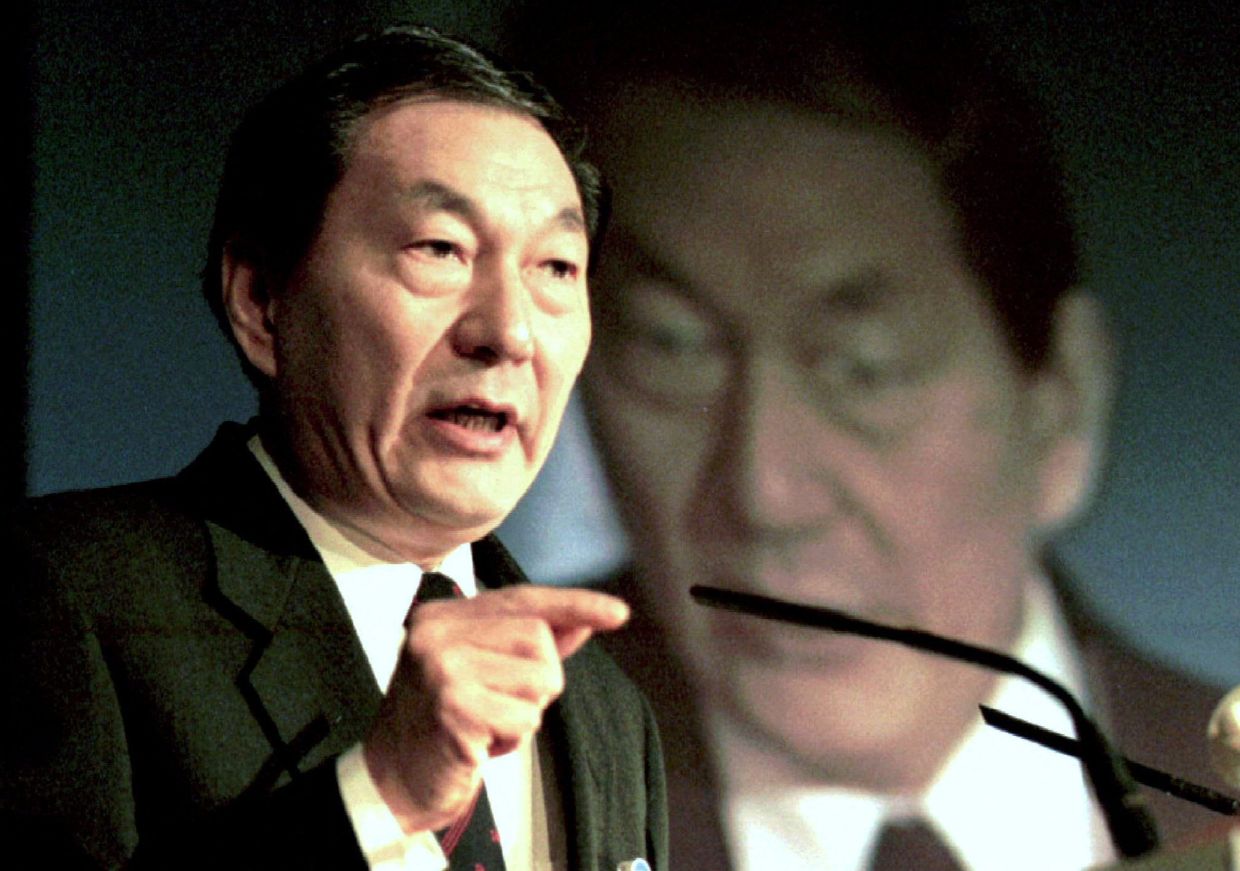
Zhu Rongji, the transformative Chinese premier whose tenure fundamentally restructured China's economic landscape through sweeping state enterprise reforms and facilitated the nation's integration into global trade structures, passed away in Beijing on Wednesday, August 12, at the age of 98. The Xinhua News Agency confirmed his death following an undisclosed medical condition. His passing marks the end of an era of bold economic experimentalism that reshaped one of the world's largest economies during a pivotal period of global integration.
During his five years as premier from 1998 to 2003, Zhu orchestrated a comprehensive overhaul of China's bloated state-owned sector that fundamentally altered the employment landscape. Tens of millions of workers lost their positions as he systematically shuttered thousands of inefficient state enterprises spanning telecommunications, banking, oil production, and manufacturing. This radical restructuring was undertaken to address mounting debt burdens and catalyse growth through private sector development. The human cost was staggering, yet Zhu remained committed to these reforms even as they displaced vast populations, viewing them as essential medicine for an ailing economy.
Zhu's stewardship extended across multiple economic crises that tested China's resilience during the 1990s and early 2000s. He navigated the country through the devastating 1997 Asian financial crisis while simultaneously combating double-digit inflation that threatened macroeconomic stability. As China's chief economic strategist before ascending to the premiership, he accumulated considerable expertise in managing complex financial challenges. His track record as governor of the People's Bank of China from 1993 to 1995 demonstrated his commitment to opening the financial sector to foreign participation through pilot programmes and experimental zones that gradually expanded international access to Chinese markets.
One of Zhu's most consequential achievements was orchestrating China's entry into the World Trade Organization in 2001, a landmark moment that fundamentally altered global trade dynamics. In 2000, he met with European Union Trade Commissioner Pascal Lamy to resolve critical negotiating impasses that had stalled China's accession. This diplomatic breakthrough paved the way for China's formal admission the following year, unleashing rapid economic expansion that has since elevated the nation to the world's second-largest economy. China's gross domestic product has expanded more than elevenfold since accession, though this growth came alongside persistent complaints from trading partners regarding intellectual property theft, subsidisation of state enterprises, and non-tariff barriers to imports.
Zhu demonstrated remarkable prescience in addressing the deteriorating balance sheets of China's major financial institutions. In 1999, he established asset-management companies designed to absorb 1.4 trillion yuan, approximately US$220 billion, in non-performing loans accumulated by the country's four leading banks. These institutions had been crippled by obligations to finance unprofitable state enterprises and lacked the mechanisms to refuse additional credit to politically-connected but economically unviable firms. By separating bad debt from the banking system, Zhu enabled comprehensive balance-sheet cleansing that permitted these banks to successfully undertake public listings beginning in 2005 and transition towards market-oriented operations.
John Thornton, former co-president of Goldman Sachs Group Inc., offered insight into Zhu's distinctive leadership style and meticulous attention to economic detail. Thornton recounted managing China Mobile Ltd's historic October 1997 Hong Kong share offering, shortly after the territory's return to mainland control. Zhu personally attended sessions in Hainan where Goldman Sachs and Deutsche Telekom AG specialists briefed China Mobile executives on establishing functional departments including finance and marketing. Rather than delegating such matters to subordinates, Zhu peppered these business leaders with searching technical questions that rivalled the scrutiny typically exercised by corporate chief financial officers. This hands-on engagement exemplified his reputation as a leader unafraid of difficult decisions.
Beyond economic restructuring, Zhu earned widespread recognition for efforts to streamline government administration and combat systemic corruption. His campaign against bureaucratic inefficiency became so renowned that colleagues nicknamed him "one-chop Zhu," referencing the official seals or "chops" traditionally employed to authenticate Chinese documents. His streamlining efforts reduced the quantity of requisite administrative approvals and governmental sign-offs, accelerating decision-making across state agencies. As premier, he initiated an anti-corruption campaign that signalled his commitment to administrative integrity at a time when embezzlement and graft remained endemic within Chinese officialdom.
Zhu cultivated a distinctive public persona distinguished by fluent English-language communication and sharp wit that resonated with international audiences. During a 1999 joint press conference with United States President Bill Clinton in Washington, he deftly responded to allegations that China had funnelled political contributions to the Democratic Party. With characteristic humour, Zhu observed that such claims underestimated Chinese resources, noting that with US$146 billion in foreign-exchange reserves, China could allocate substantially larger sums if such contributions proved effective, rendering the purported US$300,000 donation implausibly modest. His response, delivered with evident enjoyment, demonstrated his comfort navigating high-stakes diplomatic discourse and engaging Western media on China's terms.
Zhu's early career encompassed considerable personal hardship that shaped his later determination to modernise China. Born in October 1928 in Hunan province, he studied electrical engineering at Beijing's prestigious Tsinghua University from 1947 to 1951 while joining the Communist Party in 1949 as the People's Republic was formally established. During the Hundred Flowers Campaign of the mid-1950s, when the Communist Party briefly encouraged public criticism, Zhu courageously articulated concerns regarding Mao Zedong's economic policies, arguing they produced irrational growth patterns. This candour resulted in his denunciation as a "rightist" and subsequent demotion. During the Cultural Revolution, he endured five years of rural labour, raising livestock and cultivating crops—experiences that evidently instilled personal humility alongside iron resolve.
Following his political rehabilitation in 1978, Zhu ascended through successive governmental positions with remarkable momentum. He served as Shanghai's mayor beginning in 1987 before advancing to vice premier status in 1991. His elevation to the Politburo Standing Committee in 1992 positioned him as a crucial voice within China's highest decision-making echelon. This trajectory reflected the paramount leadership's recognition of his technical competence and willingness to advance unpopular but strategically essential reforms. Former paramount leader Deng Xiaoping identified Zhu as a "rare talent" possessing economic acumen and courage to confront substantive challenges.
During a 2000 national legislature session, Zhu articulated his personal objectives for historical evaluation, expressing hope that the Chinese people would remember him as an honest official rather than a corrupt one, and that his administration had accomplished meaningful accomplishments. His aspirations reflected a particular conception of meritocratic governance where personal integrity and tangible economic outcomes constituted legitimate measures of administrative success. After relinquishing the premiership to Wen Jiabao in 2003, Zhu devoted his subsequent decades to elevating Tsinghua University's international standing through fundraising and utilising book royalties to subsidise rural educational institutions.
Zhu's legacy for Southeast Asia and the broader region remains profound. His facilitation of China's WTO entry fundamentally transformed regional trade patterns, supply chains, and competitive dynamics. Countries throughout the region have grappled with consequences both beneficial and disruptive as Chinese manufacturing competition intensified and foreign direct investment flows redirected towards the mainland. His successors, particularly under President Xi Jinping, have pursued markedly divergent economic strategies, emphasising state-controlled enterprises and domestic strategic objectives over market liberalisation. This ideological reversal highlights the distinctiveness of Zhu's vision and his willingness to subordinate state ownership to economic efficacy—a priority that subsequent administrations have deprioritised in favour of state power consolidation.

