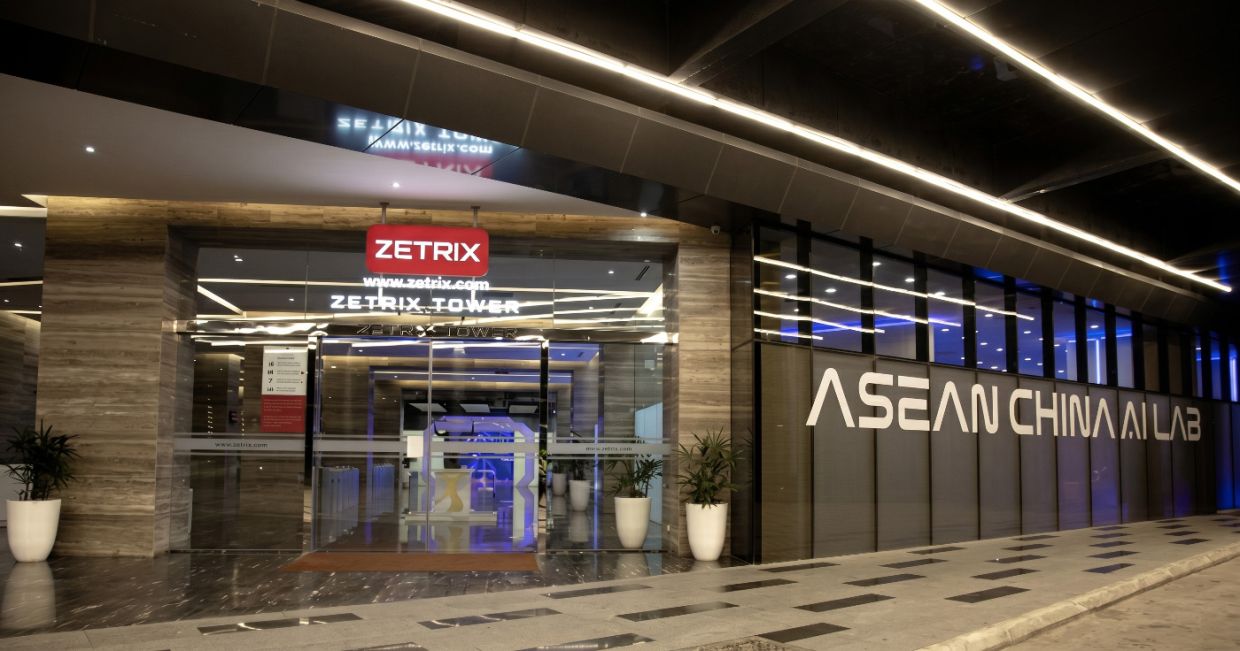
Zetrix AI Bhd moved swiftly to quell market concerns on Friday, issuing a categorical denial that it bears any relationship to corruption allegations currently facing former human resources minister Datuk Seri M. Saravanan. The technology company's statement came after the exchange operator Bursa Malaysia Securities Bhd flagged unusual market activity, prompting the firm to formally address what executives characterised as rumours and conjecture lacking substantive foundation.
Saravanan faces three separate corruption charges that were filed against him in Sessions Court on August 28, with the allegations centring on his role in approving quotas for foreign workers. The timing of these charges and the subsequent market turbulence surrounding Zetrix AI shares suggests that investors may have misinterpreted a possible connection between the minister and the listed company. Such confusion in the market underscores the speed with which unverified information can move through trading platforms and investor networks, particularly when high-profile public figures are involved.
In its formal response to Bursa Malaysia, Zetrix AI emphasised unequivocally that it harboured neither direct involvement nor indirect association with Saravanan or the charges brought against him. The company's statement stressed that it had found no credible basis whatsoever for the speculation that had apparently gained traction among market participants. This kind of categorical denial is typically issued when companies detect that share movements are occurring on grounds entirely disconnected from actual corporate performance or developments.
The technology firm also undertook a comprehensive internal review to ensure no material facts had been overlooked. Management consulted its board of directors, significant shareholders, and other stakeholders in a bid to identify whether any undisclosed corporate developments might legitimately account for the trading surge. No negotiations, discussions, or other developments that required disclosure—whether at preliminary or advanced stages—emerged from this inquiry, suggesting that the market reaction was driven purely by external speculation rather than by genuine corporate news.
The scale of Friday's market decline was striking. Zetrix AI's share price plummeted to its daily limit down, shedding 30 sen per share and representing a loss of 50.4% of value. Approximately 1.05 billion shares changed hands during the trading session, a volume substantially above the company's normal daily turnover. This combination of sharp price movement and heavy trading activity created the conditions that triggered Bursa Malaysia's automatic review mechanism, designed to ensure that unusual swings receive proper scrutiny and transparency.
For Malaysian investors, the incident illustrates the potential hazards of rapid information dissemination in equity markets. When public figures face legal difficulties, even tangential or imagined connections to listed companies can generate significant selling pressure if retail investors act on incomplete information. The absence of clarity in such situations can drive share prices far below levels justified by fundamental business conditions, creating both risk and opportunity for those monitoring the situation carefully.
The broader context of Zetrix AI's denial also reflects evolving standards of corporate governance and disclosure in Malaysia's equity markets. Bursa Malaysia has increasingly required companies to respond rapidly to market disturbances, ensuring that where unusual trading activity occurs, the listed entity either provides material explanation or explicitly rules out undisclosed developments. This framework serves to protect retail investors by preventing asymmetric information scenarios where insiders benefit from advance knowledge of corporate events while the broader market remains in the dark.
Zetrix AI's statement did acknowledge that unfounded rumours and speculation had likely contributed materially to the trading activity, suggesting that the firm recognises the power of narrative in shaping market behaviour independent of fundamentals. The company's willingness to address this directly reflects modern corporate communication practice, where silence in the face of rumour is often interpreted negatively by markets. By issuing a detailed and emphatic denial, the company attempted to reset market expectations and provide investors with a clearer picture.
For Southeast Asian technology companies listed in Malaysia, this incident carries implications beyond Zetrix AI itself. It underscores the importance of maintaining clear separation between corporate operations and government interactions, particularly in sectors like technology where policy decisions on foreign workers, data protection, and digital infrastructure intersect with business operations. The speed with which unfounded associations can damage shareholder value emphasises the need for robust investor relations and crisis communication protocols.
Moving forward, investors in Zetrix AI will likely scrutinise developments closely as the market processes the company's denial and reassesses its valuation. The 50% single-day decline, while dramatic, may be partially reversed if confidence in management's statement consolidates and trading normalises. However, the incident will likely remain a cautionary tale about the vulnerability of technology stocks to reputation contagion, particularly when public corruption cases capture headlines and create space for speculative linking of apparently unrelated entities.

