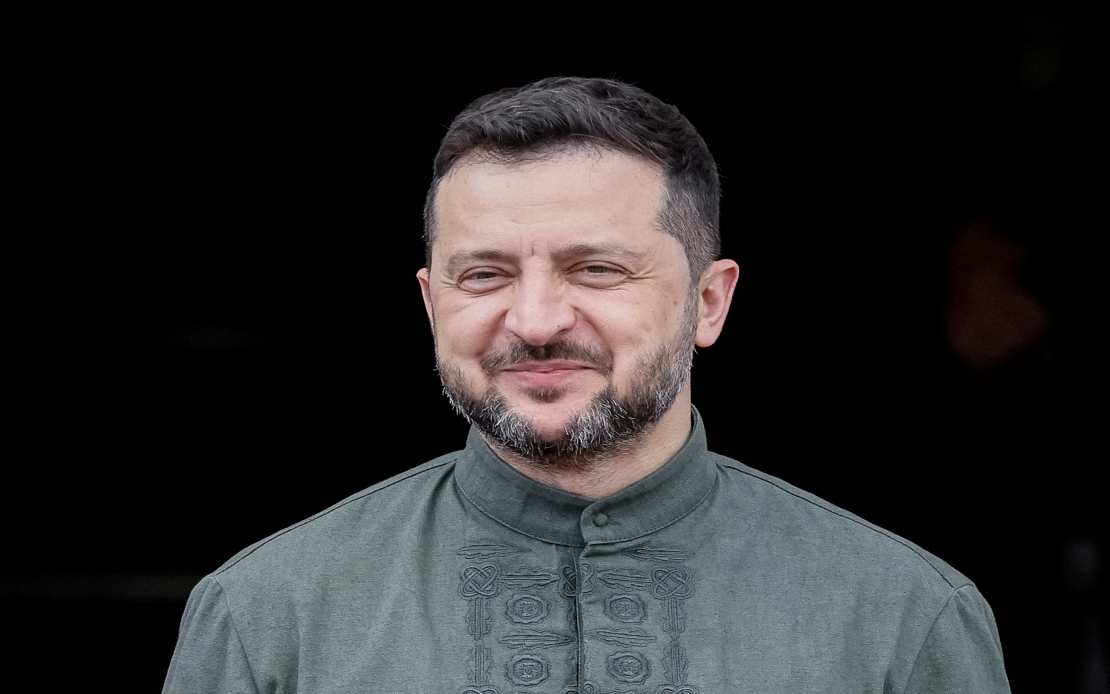
Ukrainian President Volodymyr Zelensky has signed into law a controversial measure establishing a national heroes' memorial in Kyiv, marking a decisive moment in a deepening rift with Poland over how Ukraine memorialises its past. The decision, confirmed by the Ukrainian parliament and reported by the Ukrinform news agency, represents Zelensky's commitment to a vision of national identity that prioritises Ukrainian historical narratives, despite sustained diplomatic pressure from Warsaw.
The legislation authorises construction of a state pantheon that will commemorate figures spanning from the medieval Kyivan Rus period through modern times. Among those slated for reinterment or honour are members of the Ukrainian Insurgent Army, known by the Ukrainian acronym UPA, an underground nationalist movement that fought during German occupation in World War II. The inclusion of UPA figures has become the focal point of controversy, as historical documentation establishes that UPA members perpetrated mass killings of ethnic Poles and Jews, with particular brutality concentrated in the Volyn region of what is now western Ukraine. Scholarly estimates suggest tens of thousands perished in these campaigns.
Zelensky has framed the memorial as an exclusively Ukrainian decision, declaring before war veterans on Saturday that "only Ukrainians will decide who is a hero for us" and affirming that the pantheon "will definitely be built." This defiant rhetorical positioning reflects a broader pattern in contemporary Ukrainian politics where Soviet-era denunciations of nationalist movements have been systematically reversed through legislation and official commemoration. The pantheon will also function as a burial site for deceased Ukrainian presidents, intertwining the contested historical figures with the nation's modern political leadership.
The memorial initiative represents a stark collision between how Ukraine and Poland each interpret twentieth-century history. For Ukraine, figures associated with independence movements against foreign occupation, including Soviet rule, have increasingly been rehabilitated and elevated to heroic status. Conversely, Poland views the glorification of those responsible for mass atrocities within its borders as a profound affront to historical truth and to the memory of victims. This fundamental disagreement over moral evaluation of the same historical actors has poisoned bilateral relations.
Warsaw's response has been measured in public statements but forceful in symbolic gestures. When the Ukrainian parliament advanced the pantheon legislation in July, Polish President Karol Nawrocki's office issued a sharp statement, contending that commemorating those convicted of genocide in Volyn was incompatible with Ukraine's aspirations to integrate with the Western world. This framing attempts to leverage European values around historical accountability as pressure against the memorial's establishment.
The diplomatic temperature had already risen significantly in June when Zelensky awarded the honorary title "Heroes of the UPA" to a Ukrainian military unit. Poland responded by withdrawing the Order of the White Eagle, one of its highest honours, that it had previously bestowed upon Zelensky. This tit-for-tat escalation prompted several politicians from both countries to renounce honours they had received from the neighbouring state, transforming the dispute from a government-level disagreement into a broader symbolic rupture.
The timing of this decision carries particular weight given Poland's strategic importance to Ukraine. As Russia continues its invasion, Poland has emerged as one of Ukraine's most steadfast Western allies, providing military assistance, hosting millions of Ukrainian refugees, and championing Ukrainian interests within NATO and European Union forums. The memorial law risks jeopardising this crucial partnership at a moment when Ukraine requires maximum international support and cohesion within its alliance structure.
For Southeast Asian observers, this dispute offers instructive parallels to regional debates over contested history and national commemoration. Many countries in this region navigate similarly complex questions about how to honour independence movements while acknowledging historical complexities and ensuring that memorialisation does not diminify the suffering of victims from different communities. The challenge of balancing nationalist sentiment with historical accuracy and intercommunal reconciliation extends across continents.
The pantheon initiative also reflects broader geopolitical calculations within Ukraine's leadership. By asserting Ukrainian control over historical narrative and refusing to be dictated to by external powers, Zelensky reinforces a message of national sovereignty and determination. However, this assertion comes at potential cost to relationships needed for Ukraine's wartime survival and post-war reconstruction. The law signals that Ukraine's government prioritises self-determination in defining national identity over diplomatic convenience.
Poland's relatively restrained public response, combined with its withdrawal of honours, suggests Warsaw recognises limits to its leverage over Kyiv while still needing to register protest against what it perceives as historical injustice. The Polish government faces domestic pressure to defend the memory of Volyn victims while avoiding actions that might weaken Ukraine's defensive capabilities against Russian aggression. This constrains Warsaw's options for expressing disapproval.
The memorial's establishment will likely harden positions on both sides. Ukrainian nationalism has increasingly centred on figures previously marginalised during Soviet periods, and official commemoration through a state pantheon will entrench these rehabilitations in institutional form. For Poland, the pantheon will stand as a permanent symbol of what Warsaw perceives as Ukrainian refusal to acknowledge historical wrongs, potentially poisoning relations for years beyond the current conflict.
Looking forward, the memorial law demonstrates how wartime alliances can coexist with fundamental disagreements over historical memory and national identity. Ukraine's focus on state survival against Russian invasion does not preclude simultaneous pursuit of controversial domestic historical policies. This creates enduring tensions that may resurface with particular intensity once the military conflict concludes and post-war reconstruction and international relations normalise.

