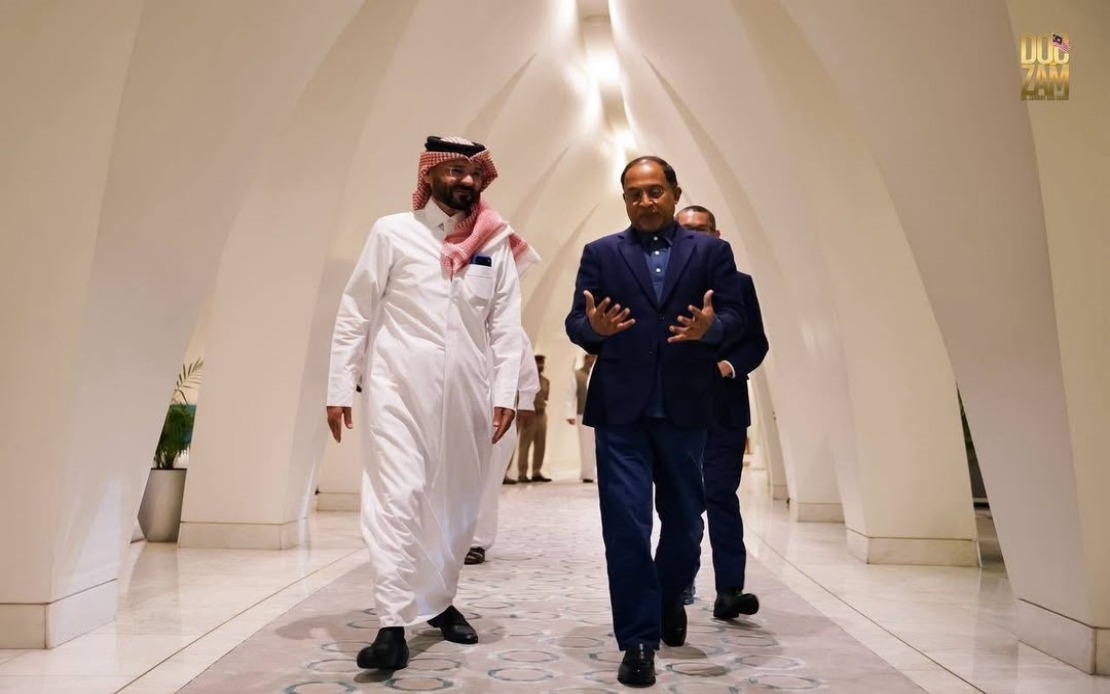
Malaysia's Higher Education Minister Datuk Seri Dr Zambry Abd Kadir touched down in Doha early Tuesday morning as the official representative of the Malaysian government to pay respects to Qatar's late Father Amir, Sheikh Hamad bin Khalifa Al Thani, who died on Sunday at the age of 74. The arrival underscores Malaysia's commitment to honouring its bilateral relationship with Qatar and demonstrating solidarity during a period of national mourning in the Gulf state.
Zambry announced via social media that he would meet with Qatar's current Amir, Sheikh Tamim bin Hamad Al Thani, at the Lusail Palace, a significant protocol moment that reflects the formality and importance Malaysia attaches to its ties with the Qatari leadership. Such high-level diplomatic representations are customary practice in the Muslim world and wider international community when senior figures pass away, particularly monarchs who have played pivotal roles in their nations' development and regional standing.
The Malaysian government's statement conveyed deep condolences to both Qatar's leadership and its people, acknowledging the loss of a transformative figure in Middle Eastern politics and economics. Sheikh Hamad's passing marks the end of an era for a ruler who fundamentally reshaped Qatar's international profile and strategic importance over nearly two decades of governance.
Sheikh Hamad governed Qatar for 18 years, from 1995 to 2013, a period during which he initiated sweeping modernization programmes that elevated the small Gulf nation into a major global player. His reign witnessed Qatar's transformation through massive investments in infrastructure, education, and diversification beyond oil and gas revenues. The establishment of Al Jazeera during his tenure, in particular, gave Qatar a powerful voice in international media discourse and demonstrated his vision for soft power projection.
In 2013, Sheikh Hamad made the deliberate decision to abdicate in favour of his son Sheikh Tamim bin Hamad Al Thani, becoming the first Gulf Cooperation Council monarch to voluntarily step down from power. This transition, while unusual in the region, was executed smoothly and demonstrated institutional stability within the emirate. Sheikh Hamad subsequently took on the symbolic title of Father Amir, a position of honour that reflected his continuing stature within Qatari society and his historical significance to the nation's modern founding narrative.
The state of Qatar declared a four-day official mourning period beginning on Sunday, July 12, reflecting the gravity and respect accorded to Sheikh Hamad's legacy. During this time, government ministries, official agencies, and public institutions across the country remained closed, allowing citizens to participate in mourning rituals and commemorative activities. Such nationwide gestures underscore how deeply embedded Sheikh Hamad's legacy remains within Qatari national identity and collective memory.
For Malaysia, the dispatch of a cabinet minister to attend funeral proceedings carries particular significance given the historical and contemporary importance of Qatar-Malaysia relations. Both nations share Islamic values and have engaged in substantive cooperation across trade, investment, education, and cultural spheres. Qatar's sovereign wealth fund has made notable investments in Malaysian real estate and infrastructure, while Malaysian professionals work across Qatar's diversified economy.
The representation also reflects broader Southeast Asian diplomatic engagement with the Gulf region. Malaysia, as the largest economy in Southeast Asia with substantial Muslim population and institutions, maintains strategic partnerships across the Middle East. Such funeral diplomacy serves as a mechanism for renewing high-level contacts and reaffirming mutual respect between governments, particularly within the Islamic world where such ceremonies hold profound cultural and religious significance.
Sheikh Hamad's legacy extends beyond Qatar's borders. His vision transformed a relatively small nation into a centre for regional diplomacy, hosting major international events including the FIFA World Cup in 2022. His contributions to education, exemplified through Qatar Foundation and its partnerships with international universities, influenced development patterns across the Gulf and beyond. For policymakers and observers in Southeast Asia, his modernization model offered alternative pathways to economic development that balanced tradition with strategic opening to global markets.
The current Amir Sheikh Tamim, who succeeded his father over a decade ago, has continued several of his father's strategic initiatives while charting his own course through Qatar's evolving regional and global relationships. The transition in 2013 established a precedent for deliberate, planned succession that contrasts with some other Gulf monarchies, lending institutional predictability and stability that has benefited Qatar's economic and diplomatic standing.
Zambry's presence in Doha reinforces Malaysia's place within networks of Islamic governance and diplomacy that extend across continents. The funeral proceedings provide opportunity for Malaysian officials to engage with counterparts from multiple nations, strengthening connections and understanding across the Muslim world. Such multilateral dimensions of state funerals often escape public attention but constitute important channels through which diplomatic relationships are maintained and renewed at the highest levels.

