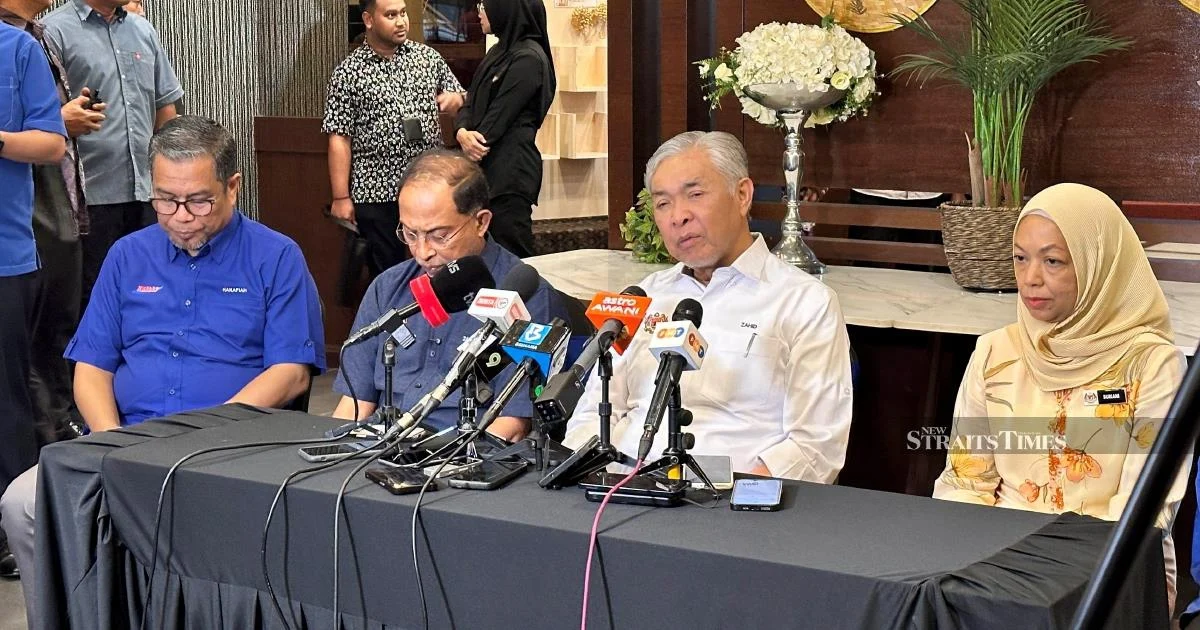
Barisan Nasional chairman Datuk Seri Dr Ahmad Zahid Hamidi has signalled that his unity government coalition partners should move past contentious issues involving former prime minister Najib Razak and his wife Datin Seri Rosmah Mansor as the Johor state election campaign intensifies. Speaking in Kluang, Zahid's remarks appeared to directly address concerns over the deployment of Rosmah's image in campaigning, suggesting that coalition members should refocus their efforts on present-day messaging rather than revisiting figures and narratives tied to previous political controversies.
The situation reflects the delicate political balance required within the unity government framework, where Barisan Nasional, Pakatan Harapan, and other smaller coalition components must navigate their differing historical relationships with controversial figures from Malaysia's recent political past. For parties that have built considerable support on anti-corruption messaging and reform narratives, the visibility of personalities associated with high-profile corruption cases creates strategic complications that could undermine campaign momentum or alienate key voter constituencies.
Zahid's intervention speaks to the challenges of coalition politics in Malaysia's post-2022 landscape. The unity government itself emerged partly from efforts to stabilize governance following the turbulence of recent years, yet the constituent parties have competing narratives about accountability, reform, and national direction. When campaign imagery or rhetoric inadvertently resurrects these divisions, it threatens the careful compromises that allow such diverse political forces to work together. The Johor campaign therefore becomes a test case for whether the coalition can maintain cohesion despite these underlying tensions.
For Barisan Nasional specifically, the Najib and Rosmah issue occupies complicated territory. While Umno remains the backbone of BN and Najib retains significant influence within the party, his legal troubles and conviction on corruption charges have become entrenched in Malaysian political discourse. Any campaign element that foregrounds these figures risks reigniting public debate precisely when the coalition hopes to focus on developmental promises and future-oriented platforms. Zahid's message essentially prioritizes electoral strategy over historical vindication.
The broader implications extend beyond Johor's state elections. The unity government's stability depends on maintaining sufficient discipline within its ranks while allowing member parties sufficient autonomy to pursue their distinct political identities. When one component's campaigning creates friction with another's core messaging strategy, it tests whether the coalition architecture can absorb such strains. Zahid's rebuke, though diplomatically worded, underscores that there are acceptable and unacceptable approaches to coalition campaigning.
For Malaysian voters, particularly those in Johor who will decide the state's political direction, such behind-the-scenes coordination negotiations matter because they affect campaign quality and the authentic choice voters face. If coalition messaging becomes compromised by internal conflicts, voters receive muddled rather than clear policy platforms. Conversely, if the coalition imposes excessive messaging discipline, individual parties lose capacity to articulate their distinct positions. The challenge is finding this balance.
The Rosmah imagery controversy also highlights how campaign tactics intersect with questions of accountability and justice in Malaysian politics. Citizens remain deeply divided on how the country should reckon with corruption allegations against prominent figures. Some view continued visibility of these cases as necessary for accountability, while others see it as dwelling on the past rather than building the future. Coalition partners necessarily hold different positions along this spectrum, making their integration into unified campaigns inherently contentious.
Geographically, Johor's significance as Malaysia's largest state and economic powerhouse makes this election particularly high-stakes for all coalition members. The state's electoral outcome will influence perceptions of the unity government's performance and popularity heading toward the federal parliament. Consequently, campaign quality and message clarity carry amplified weight. Any internal coalition friction that degrades campaign effectiveness represents a competitive disadvantage against opposition parties that operate without such constraints.
Zahid's direction to unity allies reflects pragmatic acknowledgement that electoral success in the near term requires setting aside some historical grievances and contested narratives. Whether partner parties comply with this guidance will reveal whether the unity government can subordinate component interests to collective strategic imperatives. The coming weeks of campaigning in Johor will likely demonstrate whether Malaysian coalition politics has matured sufficiently to manage such sensitivities with minimal public friction.
Ultimately, the Zahid intervention illustrates the ongoing negotiations required to maintain a unity government comprised of parties with genuinely different historical experiences and political missions. That such negotiations sometimes require explicit direction from the leadership about which issues to avoid suggests that consensus remains brittle and contingent on active management. The Johor campaign will test whether this management strategy can succeed under the pressures of competitive electoral campaigning.

