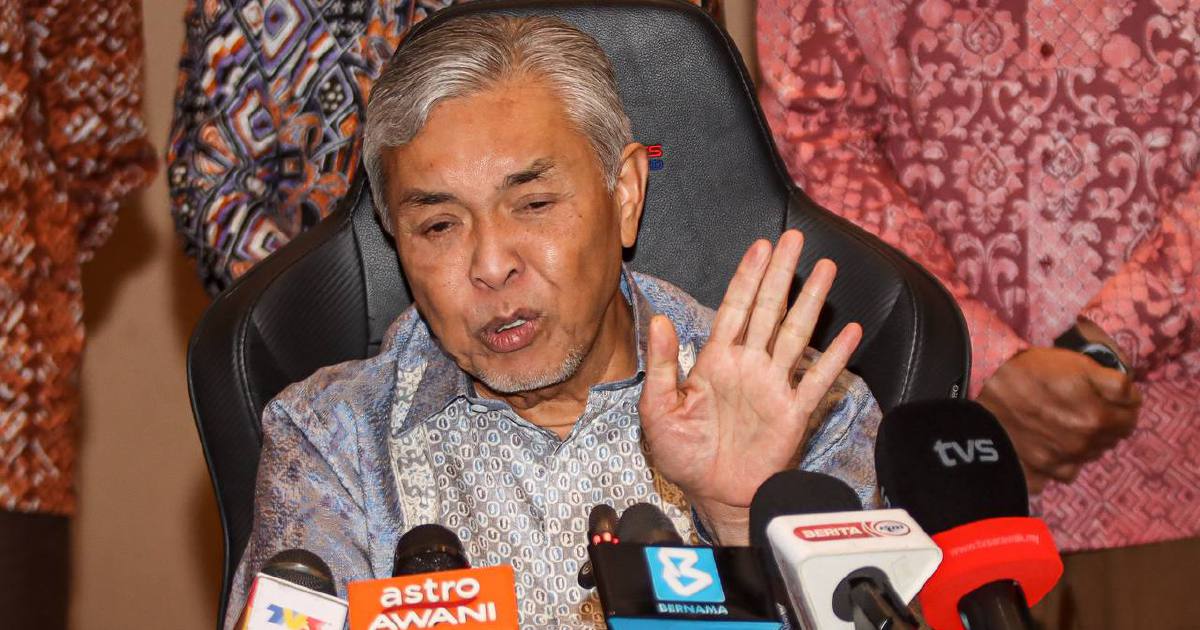
The political landscape of Malaysia has been roiled periodically by rumours of internal manoeuvring at the highest levels of government, yet the leadership of Barisan Nasional moved swiftly to extinguish such speculation this week. Speaking in George Town, Datuk Seri Dr Ahmad Zahid Hamidi, a pivotal figure within the opposition-turned-partner coalition, flatly denied that any faction within BN harboured intentions to dislodge Prime Minister Datuk Seri Anwar Ibrahim from his post.
Zahid's statement carries particular weight given his position as deputy chairman of Barisan Nasional and his historical significance within UMNO, the dominant component of the coalition. His comments represent a formal rebuttal of the kind of corridor talk that has periodically surfaced in Malaysian political circles, where speculation about shifting alliances and potential challenges to leadership can gain traction rapidly. By publicly disavowing any such ambitions, Zahid has sought to provide reassurance to coalition partners and the broader political establishment about the stability of the current government formation.
The significance of this denial cannot be understated in the context of Malaysian politics, where coalitional arrangements have repeatedly proven fragile. The unity government—formally known as Keluarga Malaysia—represents an unprecedented political arrangement that brought Barisan Nasional, Pakatan Harapan, and several other parties and independent MPs together following the 2022 general election. This configuration, while born of necessity rather than ideological alignment, has provided the parliamentary stability necessary for the government to function and pursue its legislative agenda without constant threat of collapse.
Zahid's reaffirmation of Barisan Nasional's commitment to the unity government carries implications that extend beyond mere reassurance. It signals that despite whatever internal tensions or disagreements may exist within the coalition—and such tensions are inevitable in any multi-party arrangement—the leadership has collectively determined that maintaining the current structure serves their long-term interests better than pursuing alternative configurations. This calculation likely reflects both institutional considerations and practical recognition that destabilising the government would carry considerable political costs.
The timing of these clarifications matters significantly. Malaysia has experienced cycles of political uncertainty over the past five years, and maintaining investor confidence as well as public reassurance about governmental continuity represents an ongoing challenge. When speculation emerges about potential changes in leadership at the apex of government, it can create ripple effects throughout financial markets and diplomatic relationships, even if such speculation lacks credible basis. By moving quickly to suppress such talk, Zahid and other BN leadership have attempted to prevent unfounded rumours from creating unnecessary turbulence.
Barisan Nasional's explicit commitment to maintaining the unity government through the conclusion of the 15th Parliament—which is constitutionally mandated to run until 2028—establishes a clear timeline for the current political arrangement. This framing converts what might otherwise appear as an open-ended commitment into a bounded agreement with a specified endpoint. For supporters and critics alike, this clarity provides at least a definitive horizon, eliminating ambiguity about whether the partnership might dissolve unexpectedly during the parliamentary term.
The stability afforded by the unity government has proven consequential for Malaysia's governance during a period of substantial economic and geopolitical challenges. The COVID-19 pandemic, international supply chain disruptions, and regional tensions have created a complex operating environment for policymakers. A government consumed by internal instability and leadership challenges would be poorly positioned to respond effectively to such pressures. Conversely, a functional unity government, whatever its ideological inconsistencies, permits the administration to maintain sufficient focus on economic management, service delivery, and strategic planning.
For Malaysia's partners in Southeast Asia and beyond, the durability of the current government also carries practical significance. Diplomatic relationships, trade arrangements, and regional security cooperation function more effectively when engaged with governmental counterparts that enjoy demonstrated stability. The ASEAN community and Malaysia's strategic partners in the region have a vested interest in seeing Malaysia governed by a coherent, functional administration capable of implementing commitments and maintaining consistent policy directions.
Within the broader context of Malaysian politics, Zahid's comments also reflect the maturation of the country's political elite in recognising certain institutional realities. After the volatility of the 2020-2021 period—which witnessed dramatic shifts in government and unprecedented political uncertainty—there appears to be emergent consensus that frequent governmental disruption carries costs that outweigh the benefits of any particular faction gaining momentary advantage. This represents a subtle but meaningful shift in how political actors calculate their strategies.
The challenge facing the unity government, however, extends beyond merely maintaining formal unity through parliamentary mathematics. The ideological distance between component parties, the divergent policy preferences within the coalition, and the competing electoral incentives facing different members create persistent friction beneath the surface of official pronouncements. Managing these tensions whilst maintaining governmental functionality represents an ongoing test of political leadership and institutional adaptation.
For Malaysian observers and analysts tracking the country's political trajectory, Zahid's dismissal of destabilisation rumours should be understood not as definitive proof that no internal tensions exist, but rather as a signal that the BN leadership calculates continued participation in the unity government as the superior strategy at present. Political circumstances remain fluid, and commitments made today could be reinterpreted tomorrow should calculations shift. Nevertheless, for now, the formal position of Malaysia's largest opposition coalition is clear and unambiguous: Anwar Ibrahim's position as Prime Minister remains secure, and BN remains invested in the stability pact that sustains the current government until at least 2028.

