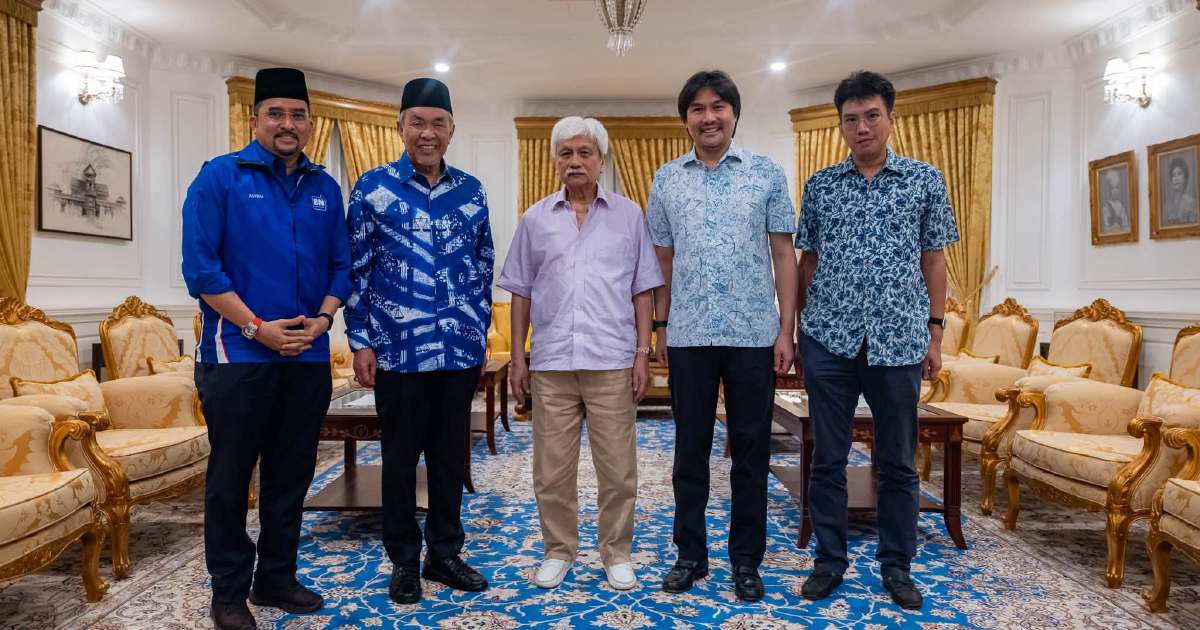
Barisan Nasional chairman Datuk Seri Dr Ahmad Zahid Hamidi has submitted a shortlist of three individuals to the Negri Sembilan palace, setting the stage for the selection of the state's next Menteri Besar. The move represents a crucial juncture in the coalition's efforts to stabilise leadership in a state that remains strategically important within the broader landscape of Malaysian politics.
The submission to the palace follows established constitutional protocols, whereby the palace will evaluate the proposed candidates before making a formal decision. This process underscores the constitutional role retained by Malaysia's monarchical institutions in government formation, particularly at the state level where palace consent remains integral to ministerial appointments. The timing of this development carries significance for Barisan Nasional, which continues rebuilding its political standing across multiple state administrations after setbacks in recent electoral cycles.
Negri Sembilan occupies a distinctive position within Malaysia's federal system. Governed as an elective monarchy, the state's ruler plays a more active ceremonial and constitutional role than their counterparts in other Malaysian states. The Menteri Besar, as the chief executive, serves as the primary administrator and requires the ruler's confidence. This historical arrangement has occasionally generated political tension when coalitions propose candidates whose suitability the palace questions, making the selection process both politically and institutionally significant.
The Negri Sembilan government has witnessed considerable political flux in recent years, with coalition alignments shifting and questions over political stability becoming recurring themes. For Barisan Nasional, securing a stable administration in Negri Sembilan forms part of its broader strategy to consolidate control across Malaysia's states. The coalition's performance here carries symbolism beyond the state's borders, influencing broader perceptions of its political viability and organisational effectiveness.
Zahid's role as Barisan Nasional chairman places him at the centre of the coalition's state-level negotiations and power distributions. His submission of candidates reflects not merely administrative duty but represents strategic positioning within the coalition's internal hierarchy. The selection process will likely involve consultation with other BN component parties, particularly those with significant representation in the state assembly, ensuring that the final choice commands sufficient support to govern effectively.
The palace's evaluation of these three candidates will examine their qualifications, administrative experience, legislative support, and perceived suitability for managing state affairs. Negri Sembilan's economy relies significantly on manufacturing, services, and light industry, requiring leadership competent in economic management and business-friendly governance. The state also serves as a dormitory region for the Klang Valley, making infrastructure and urban planning critical concerns that the incoming Menteri Besar must address.
The constitutional process of Menteri Besar selection demonstrates how Malaysian governance operates within a framework that balances democratic representation with institutional monarchy. Unlike systems where executive appointments flow entirely from parliamentary votes, Malaysia's arrangement requires royal assent, creating multiple pressure points where different political actors can exercise influence. This structure occasionally prolongs political uncertainty but also provides stability mechanisms absent from purely partisan systems.
For ordinary Malaysians, particularly Negri Sembilan residents, the selection of a new chief minister carries tangible implications. The Menteri Besar's priorities will shape state budget allocations, development projects, and regulatory approaches affecting daily life. Education standards, healthcare delivery, and civil service efficiency all fall under state purview, making the quality of leadership genuinely consequential for citizens. The incoming administration's administrative competence will directly influence whether residents experience efficient public services or bureaucratic dysfunction.
The announcement also reflects broader questions about Barisan Nasional's organisational cohesion and its capacity to function as a unified coalition. Successfully navigating the Menteri Besar selection and subsequently delivering effective governance demonstrates the coalition's fitness to govern and its ability to command support among state representatives and traditional institutions alike. Missteps or internal conflicts would reinforce perceptions of a coalition struggling with internal contradictions and member-party rivalries.
Regionally, Negri Sembilan's political stability carries implications for Malaysia's central corridor development initiatives. The state's proximity to Kuala Lumpur and Putrajaya positions it as increasingly important for metropolitan expansion, transportation connectivity, and integrated economic development. A stable, capable administration becomes crucial for implementing long-term strategic projects requiring sustained governmental focus and inter-agency coordination.
The palace's forthcoming decision will ultimately determine whether Barisan Nasional's preferred direction prevails or whether the monarchy asserts independent judgment in candidate selection. Either scenario will signal important messages about the balance of institutional power within Malaysia's system and the extent to which traditional institutions remain capable of exercising genuine discretion in contemporary politics. The resolution of this selection process will thus merit close observation beyond Negri Sembilan's borders.

