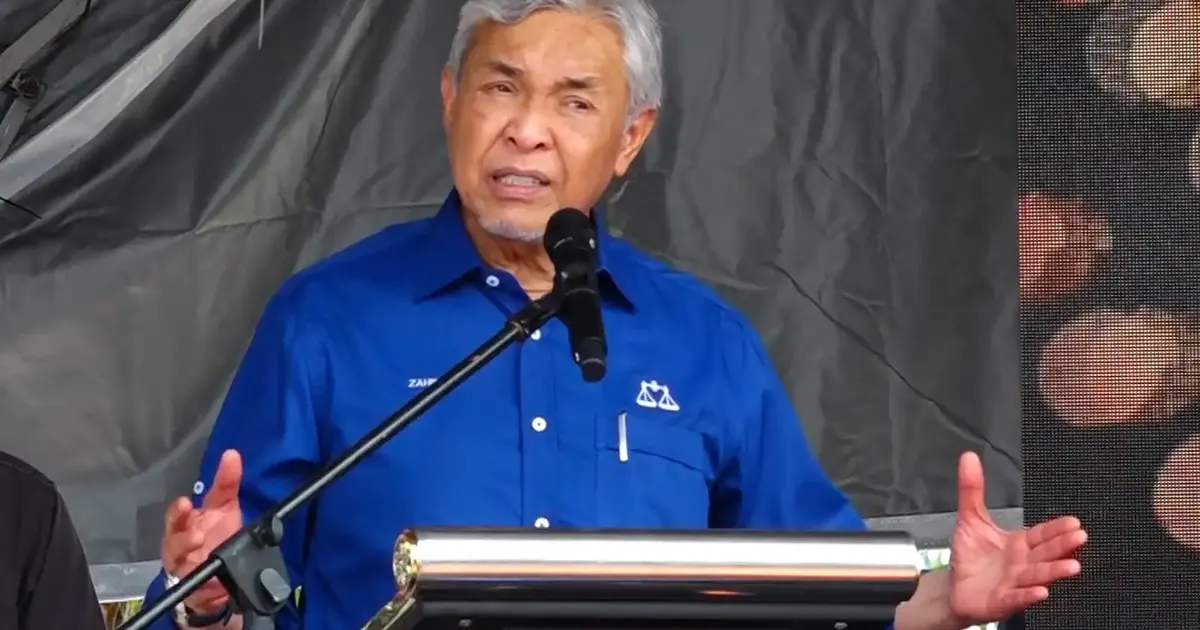
Ahmad Zahid Hamidi, chairman of Barisan Nasional, has moved to extinguish speculation about a high-level gathering of Malaysia's major political coalitions, insisting he has no awareness of any such meeting involving BN, PN, GPS, and GRS. The denial comes amid persistent political chatter about possible realignments ahead of the anticipated general election, a concern that has periodically unsettled Malaysia's coalition-dependent political landscape.
Zahid's statement carries particular weight given his position overseeing BN, the country's dominant political machinery that has governed through different configurations for most of Malaysia's independent history. By publicly dismissing the reports, he appears intent on dampening speculation that could unsettle the delicate equilibrium currently sustaining the Madani government. Such rumours, whether grounded or speculative, can trigger nervous reactions among stakeholders who worry about sudden shifts in political allegiances.
The Perikatan Nasional coalition, led by Muhyiddin Yassin, has historically positioned itself as an alternative political force, particularly after the 2022 general election. Gains made by PN in certain states and its federal influence through supply-and-confidence agreements have kept it a relevant player in national politics. Speculation about PN engaging in discussions with BN components signals potential movement towards either coalition consolidation or fresh political arrangements.
GPS, the Gabungan Parti Sarawak, maintains a crucial role as kingmaker in Malaysian politics through its significant parliamentary representation and control of Sarawak state affairs. The party has carefully managed its relationships with both federal coalitions, leveraging this independence to secure state-level advantages and infrastructure investment. Any gathering involving GPS would carry implications for Sarawak's political trajectory and its relationship with the federal centre.
GRS, the Gabungan Rakyat Sabah, similarly commands considerable influence through its Sabah representation. Like GPS, GRS has historically maintained strategic flexibility in its political positioning. The party's participation in any multi-coalition dialogue would reshape calculations about federal government stability and the distribution of political patronage across the two Malaysian states on Borneo.
Zahid's reiteration that BN remains committed to supporting the Madani government through to the general election scheduled for 2026 serves multiple purposes. Firstly, it reinforces continuity and predictability to economic stakeholders, investors, and civil service officials who require assurance about governance consistency. Secondly, it signals to BN component parties that the leadership remains focused on the existing arrangement rather than pursuing destabilising alternative coalitions. Thirdly, it reassures the DAP-PKR-Amanah core of the Madani government that BN's backing remains intact.
The timing of Zahid's denial warrants examination within the broader context of Malaysian politics. Pre-election periods invariably generate speculation about coalition reshuffling as different factions position themselves for advantage. With general election timing becoming increasingly predictable—albeit subject to the prime minister's discretionary powers—political actors begin calculating optimal strategies months in advance. Reports of such meetings, whether fabricated or prematurely publicised, can trigger defensive positioning by established coalitions.
For Malaysian readers and Southeast Asian observers, these coalition dynamics hold concrete implications. A fragmented opposition facing a united government typically results in more decisive legislative outcomes and clearer policy implementation. Conversely, coalition instability creates legislative unpredictability, potentially delaying crucial economic legislation or infrastructure development. Malaysia's region-wide importance in ASEAN affairs, trade corridors, and semiconductor supply chains means that domestic political stability directly affects regional economic prospects.
Zahid's statement also implicitly acknowledges growing speculation about political regrouping that party leadership considers premature or destabilising. By firmly denying the meeting's existence, he attempts to reset the narrative and redirect political conversation away from coalition permutations back towards government performance and policy delivery. This tactical positioning reflects lessons learned from previous episodes when uncontrolled speculation about political reshuffles triggered market volatility and investor uncertainty.
The relationship between BN and the current federal government represents a pragmatic arrangement rather than an ideological partnership. BN's support provides numerical stability; the Madani government provides BN ministers with cabinet posts and political relevance after its 2022 election defeat. This transactional foundation creates inherent instability because both parties maintain incentives to explore alternative arrangements that might prove more advantageous electorally or in resource distribution.
For political observers monitoring Malaysian developments, Zahid's denial should be interpreted as damage control rather than definitive clarification. In Malaysian politics, explicit denials often follow when confidential discussions have become public knowledge—denying the meeting prevents further scrutiny while providing political cover. This follows established patterns where senior politicians consistently deny meetings later confirmed through other sources.
Looking forward, the stability of current arrangements will increasingly depend on delivering tangible benefits to coalition partners and their supporting constituencies. Economic growth, employment creation, and developmental progress in key states become currencies for maintaining coalition cohesion. Any deterioration in Malaysia's economic trajectory or public service delivery could accelerate the coalition recalculation that Zahid currently denies is occurring.

