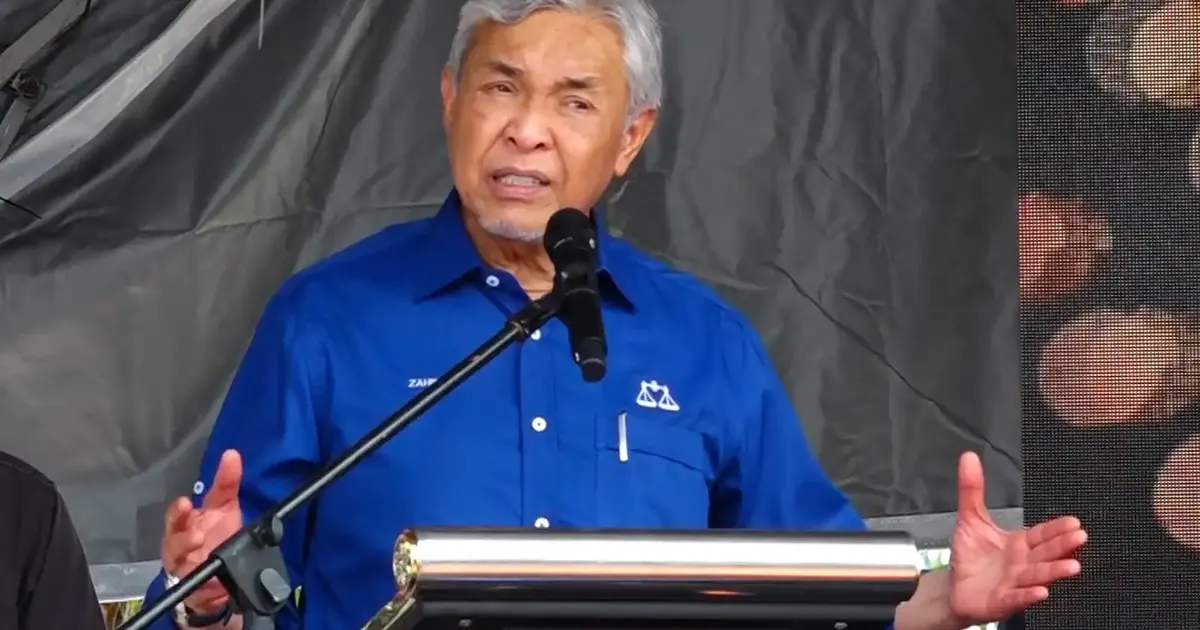
Umno president Zahid Hamidi has moved to quell internal party tensions by instructing the party's election machinery to simply ignore any comments made by former party leader Puad Zarkashi concerning Barisan Nasional candidates contesting in the Johor state elections. The directive reflects an attempt to prevent divisive remarks from disrupting the coalition's campaign momentum during a critical electoral period.
Zahid's instruction represents a notable moment in intra-party management, signalling that Umno's leadership intends to maintain party discipline and election focus despite occasional criticism from senior figures. The decision to dismiss Puad's commentary rather than engage with it suggests a strategic preference for maintaining unified messaging across the Barisan Nasional machinery, even if not all party veterans fully agree with candidate selection decisions.
Puad Zarkashi, who previously served as Umno vice-president, has been among the more vocal former leaders offering commentary on party matters and electoral strategies. His observations about candidate quality and suitability for the Johor contest have apparently prompted sufficient internal discussion that the party president felt compelled to address the matter directly with party officials managing the election campaign.
The Johor state election carries significant importance for Umno and Barisan Nasional given the state's historical role as a traditional stronghold and its current political complexities. Control of the state assembly has implications not only for local governance but also for the broader balance of power in peninsular politics. Maintaining internal cohesion during such contests is essential for presenting a united front to voters.
Zahid's approach of directing the party machinery to disregard Puad's criticism rather than censuring the former leader outright suggests a calculated judgment about managing dissent without heavy-handedness. Former leaders retain substantial standing within the party, and publicly rebuking them could generate additional controversy or appear authoritarian. By instructing lower-level party officials to simply continue their work without distraction, Zahid effectively sidelines the criticism without creating a larger intra-party conflict.
This episode reflects broader challenges facing established parties in Malaysia when managing internal diversity of opinion. Umno remains a large coalition encompassing various factions and perspectives, and tensions occasionally surface over candidate selection, election strategy, and the party's direction. Previous instances have seen senior figures express reservations about specific candidates or overall campaign approaches, creating moments of friction that party leadership must navigate carefully.
The timing of Zahid's intervention suggests that Puad's remarks had gained enough traction within party circles to require a leadership response. Either the frequency or the substance of the criticism, or both, prompted the president to issue explicit guidance to party officials about how to respond. This preemptive communication indicates that Umno's central leadership is monitoring internal discourse closely during this election cycle.
For Malaysian political observers, such internal party dynamics offer insights into how established coalitions manage legitimacy concerns. Umno has historically valued internal debate and faction-based competition as mechanisms for ensuring responsiveness to members. However, during election campaigns, excessive public airing of internal disagreements can damage electoral prospects by signalling disunity to voters. Zahid's intervention attempts to balance these competing imperatives by allowing criticism to occur but insulating the public campaign from its effects.
The Johor elections represent a test of Barisan Nasional's continued relevance and electoral competitiveness following the significant political realignments that Malaysia has experienced since 2018. The coalition's performance in this state will be watched closely for indicators about its prospects in future national elections. Maintaining party discipline and campaign focus becomes therefore even more critical for leadership, who cannot afford campaign distraction from internal disagreements.
Puad's willingness to continue offering commentary despite implicit pressure to remain silent reflects the complex position of former leaders within Malaysian parties. They retain voice and standing but lack executive authority, creating situations where they can influence internal conversation without bearing responsibility for electoral outcomes. This positioning allows figures like Puad to serve as conscience figures or offer alternative perspectives, but it also creates potential friction with current leadership.
The broader context of Barisan Nasional's recent electoral fortunes also matters here. The coalition has been rebuilding its position following losses and reduced support in previous years. In this context, unified messaging and disciplined execution become paramount. Zahid's intervention can be read as part of a larger effort to ensure that the organisation operates with the focus and coordination necessary to reverse electoral decline in strategic states like Johor.
Looking forward, how Umno manages similar situations will likely influence the coalition's internal stability and public presentation during the Johor campaign and potentially beyond. The party's ability to accommodate internal voices while maintaining external discipline will be tested repeatedly as the election draws closer.

