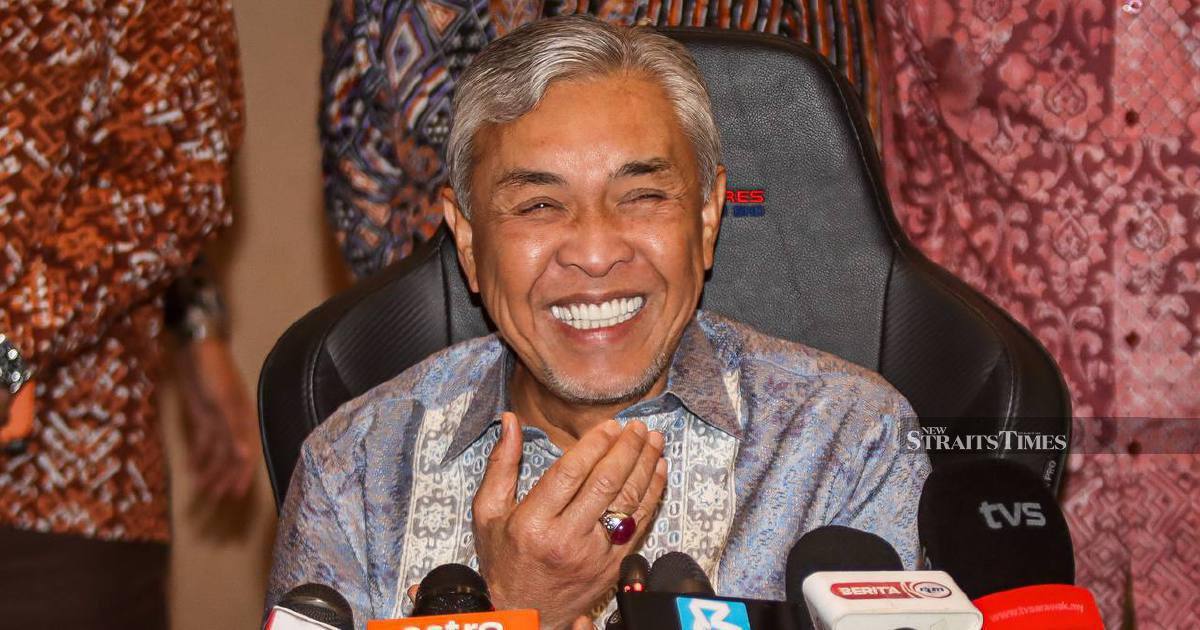
Deputy Prime Minister Datuk Seri Dr Ahmad Zahid Hamidi answered Prime Minister Datuk Seri Anwar Ibrahim's unity-themed pantun with a four-line verse of his own while in George Town, escalating a poetic exchange that appears to hint at deeper political currents within Malaysia's fractious coalition government. The deployment of pantun—Malaysia's classical form of Malay folk poetry—as a medium for political messaging underscores how traditional cultural expressions continue to carry considerable weight in the country's political discourse.
The pantun, with its characteristic rhyming couplets and coded metaphorical language, has long served as a diplomatic instrument within Malaysian politics, allowing leaders to communicate sentiment and grievance in ways that appear measured yet carry unmistakable undertones. By choosing this vehicle rather than direct public statements, both leaders have selected a distinctly Malaysian idiom that carries historical resonance and cultural authenticity, appealing to traditional sensibilities whilst maintaining a veneer of civility that more combative rhetoric might shatter.
Zahid's imagery of roofs and storms appears deliberately constructed to contrast with whatever unity sentiment Anwar had previously expressed. Where a roof protects from the elements, a storm represents destructive forces beyond individual control. This juxtaposition suggests the Deputy PM may be signalling concerns that despite official narratives about coalition solidarity, underlying vulnerabilities threaten the government's stability. The storm metaphor could reference the various political challenges confronting the administration, from internal party tensions to external pressures that test the coalition's cohesion.
The exchange occurs within a context of well-documented friction between the Perikatan Nasional bloc and the Pakatan Harapan-led core of the unity government. Zahid, as president of the United Malays National Organisation and deputy premier, occupies a particularly delicate position, commanding significant parliamentary support whilst remaining tangential to Anwar's primary decision-making circle. His pantun response may reflect frustrations over how coalition decisions are made or implemented, particularly regarding matters affecting UMNO's interests or his own political standing.
Pantun exchanges between senior leaders invariably attract intense scrutiny from political analysts and media observers who parse every metaphorical layer for hidden meanings and signals. The traditional form's ambiguity creates plausible deniability—leaders can claim poetic licence if their verses invite interpretations they later wish to disavow. Yet this very opacity makes pantun politically sophisticated, permitting leaders to test reactions and send messages through culture rather than confrontation.
The choice to respond in George Town carries its own significance, as Penang represents a stronghold of Pakatan Harapan governance. Zahid's presence and his poetic rebuttal there might signal that UMNO intends to maintain its voice across the peninsula regardless of regional political dominance, and that the Deputy PM speaks with authority even in opposition-held territories. Geographic location thus reinforces the political messaging embedded in his verse.
For Malaysian observers, such exchanges reflect the government's underlying fragility despite official proclamations of unity and stability. The coalition governing arrangement, stitched together from diverse and sometimes ideologically opposed parties, requires constant negotiation and periodic demonstrations that individual partners retain agency and respect. Pantun exchanges fulfil this function elegantly, allowing leaders to maintain appearances whilst signalling that they will not be marginalised or overlooked.
The broader implications for Malaysia's governance extend beyond personality-driven politics. The reliance on traditional poetic forms as vehicles for political communication suggests the government operates within a framework that prioritises maintaining face and avoiding direct confrontation over rapid resolution of substantive disagreements. This approach has historical precedent in Malaysian political culture but may impede the clarity and decisiveness increasingly demanded by contemporary governance challenges.
Regionally, the incident illustrates how Malaysian political communication operates distinctly from Western democratic norms. Southeast Asian leaders frequently deploy cultural and symbolic language in ways that might baffle outside observers. The pantun exchange demonstrates the continued vitality of Malay cultural forms within elite politics, ensuring traditional expressions remain relevant to modern power struggles. International observers monitoring Malaysian stability might note that when political tensions manifest through poetry rather than parliamentary hostility, the situation retains some degree of controlled civility, though underlying strains clearly persist.
Looking forward, observers will monitor whether this pantun exchange precipitates further poetic volleys, escalates into more direct criticism, or resolves through backstage negotiations typical of Malaysian political management. The verses' cryptic nature means multiple constituencies can read their own interpretations into the exchange, providing cover for all parties whilst maintaining the appearance of governmental unity to international audiences and domestic constituencies seeking reassurance about political stability.

