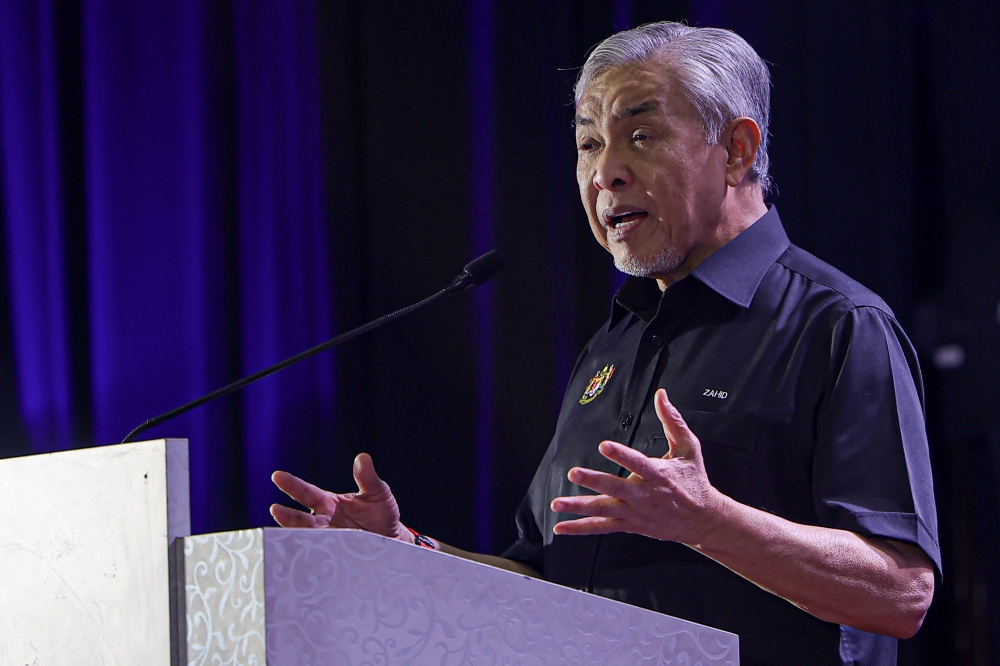
Deputy Prime Minister Datuk Seri Ahmad Zahid Hamidi has raised serious allegations about the politicisation of the civil service, claiming that ministry officers encountered pressure to attend activities organised by or linked to the Barisan Nasional coalition during recent state-level elections. The accusation, made in Putrajaya, touches on a longstanding concern in Malaysian governance: the proper boundaries between the administrative apparatus and political party activities, a distinction that remains contentious across government institutions.
Zahid's statement reflects growing unease within the government about the conduct of political campaigns and the potential blurring of lines between state resources and party activities. The pressure allegedly exerted on civil servants to participate in BN-linked events represents a departure from established protocols that seek to maintain the neutrality of the public service during electoral periods. Such conduct, if substantiated, could undermine public confidence in the impartiality of government machinery and the civil service's commitment to serving all citizens regardless of political affiliation.
The timing of these allegations is significant, occurring against the backdrop of Malaysia's complex political landscape where state and federal elections have increasingly become contentious affairs. Recent electoral cycles across various states have witnessed intensified competition, and with it, concerns about whether administrative officials are being instrumentalised to support particular political interests. The distinction between legitimate government mobilisation and improper political deployment of state resources remains a critical governance challenge that continues to affect how elections are conducted throughout the country.
For Malaysian readers and particularly those in Barisan Nasional-held states, these allegations have direct implications for how government services are delivered and whether public officials maintain appropriate distance from partisan political activities. When ministry personnel feel compelled to attend party-linked functions, questions arise about whether their primary duty to serve the public interest remains paramount, or whether political considerations have begun to influence administrative decisions and resource allocation.
The civil service in Malaysia operates under strict codes of conduct designed to preserve its non-partisan character. Officers are expected to implement government policies impartially and to refrain from activities that might suggest bias toward particular political parties. When allegations emerge that officers face pressure to participate in party-aligned events, this threatens the foundational principle that public administration should remain above partisan politics. Such pressure, whether explicit or implicit, can create an environment where officers feel their career advancement or evaluation depends partly on their willingness to support the governing coalition's political agenda.
Zahid's disclosure also reflects internal tensions within the Barisan Nasional itself and broader government circles about best practices during elections. As Deputy Prime Minister, his willingness to voice these concerns publicly suggests that senior figures within the administration recognise the risks posed by excessive politicisation of the bureaucracy. The statement may serve as a signal to ministry leaders that maintaining proper boundaries is not merely advisable but essential for preserving institutional integrity and public trust.
The broader context includes Malaysia's ongoing evolution as a democracy navigating the relationship between executive power and administrative independence. The country has witnessed repeated cycles of electoral competition where the governing coalition has faced challenges to its dominance. In such contexts, the temptation to maximise use of available state resources, including civil service personnel, can become pronounced. However, successful democracies typically maintain clear separation between such activities and administrative functions.
For Southeast Asia more broadly, Malaysia's experience with civil service politicisation carries lessons. The region has seen various countries struggle with the proper role of public administration during electoral periods. Malaysia's relatively robust institutions and transparent policy discussions, exemplified by Zahid's public statement, indicate a system where such concerns can be aired and debated, even if perfect enforcement remains elusive.
The implications for citizens include questions about service delivery and fairness. If ministry officers are distracted by or obligated to participate in campaign-related activities, their capacity to perform core administrative functions may be compromised. Additionally, if certain constituencies perceive that government machinery is being deployed to support particular parties, this erodes the legitimacy of state institutions and the confidence that all communities place in neutral governance.
Moving forward, these allegations highlight the need for clearer guidelines, stronger enforcement mechanisms, and continued vigilance from both political leadership and civil service management to ensure that Malaysia's public institutions remain true to their foundational purpose of serving all citizens impartially. The Deputy Prime Minister's willingness to raise these concerns represents an important acknowledgment that maintaining institutional boundaries requires constant attention and commitment from the highest levels of government.

