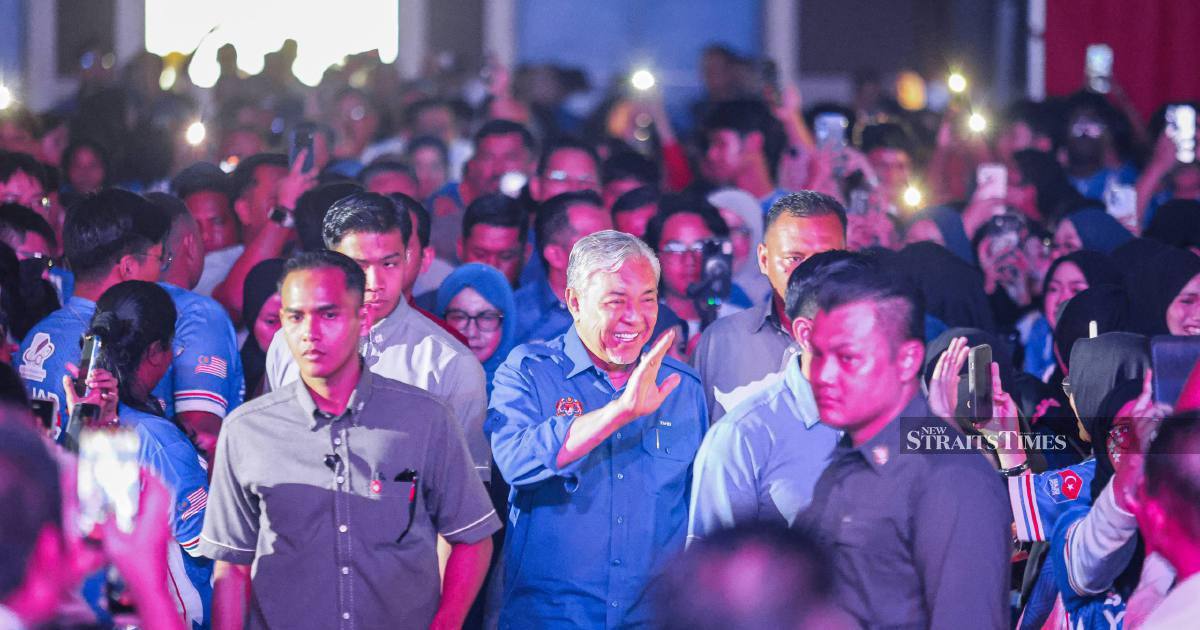
Barisan Nasional is making a direct appeal to Johor's younger voters to maintain their support for caretaker menteri besar Datuk Onn Hafiz Ghazi, positioning the incumbent as the coalition's flagship candidate for the July 11 state election. The strategy reflects the coalition's recognition that securing the youth demographic is essential to retaining control of the state administration and translating recent political momentum into electoral gains.
Party leaders, including senior figures in Barisan Nasional, are actively engaging with young voters in Iskandar Puteri and surrounding areas, emphasizing what they describe as Onn Hafiz's development agenda for Johor. The messaging centres on continuity of infrastructure projects, economic opportunities, and governance reforms that the coalition argues resonate with younger constituents who are more mobile and economically engaged than previous generations.
Onn Hafiz has emerged as Barisan Nasional's most visible and strategically important candidate for this election. His tenure as caretaker menteri besar has provided him with a platform to highlight achievements and ongoing initiatives, while simultaneously positioning him as a bridge between traditional party structures and a more contemporary, reform-minded electorate. The coalition is banking heavily on his appeal crossing demographic lines, particularly among voters aged 18 to 40 who will play a decisive role in determining the election outcome.
The timing of this youth-focused campaign is significant. Johor has undergone substantial transformation over the past decade, with younger populations gravitating towards urban centres like Iskandar Puteri and Johor Bahru. These areas combine growing cosmopolitan influences with local concerns about employment, housing affordability, and quality of services. Barisan Nasional's strategy appears designed to demonstrate that development under its governance directly addresses these preoccupations.
Johor's political landscape has been marked by competitive contests between Barisan Nasional and Pakatan Harapan in recent years, making voter retention a high priority. The state's economic importance—encompassing major industrial zones, port facilities, and strategic manufacturing hubs—means that governance and development narratives carry particular weight with pragmatic voters who prioritize economic stability and job creation over ideological positioning.
The coalition's emphasis on sustained youth support suggests internal polling or feedback indicating that consolidating this segment is more challenging than securing traditional Barisan Nasional voters. Youth are generally more volatile politically, more likely to split votes across candidates, and more responsive to social media campaigns and grassroots organizing than older demographics. This makes the explicit appeal to younger voters a calculated effort to prevent erosion of support in a constituency segment that was crucial to Barisan Nasional's relative resilience during the 2022-2023 period.
Onn Hafiz's public profile has benefited from increased media visibility in his caretaker role, where he has overseen policy announcements and development projects. The coalition appears confident that personalizing the campaign around his leadership—rather than focusing on party machinery alone—will resonate with younger voters who tend to evaluate politicians more on individual competence and perceived results than on party affiliation. This approach marks a subtle shift from traditional Barisan Nasional electoral strategy, which historically relied more on party structures and community networks.
Regional context matters significantly here. Johor borders Singapore and is integrated into broader Southeast Asian economic networks and supply chains. Young Johoreans are increasingly exposed to regional employment opportunities and cross-border commerce, making them evaluative of government performance on practical metrics: infrastructure quality, educational attainment, ease of doing business, and public service efficiency. Barisan Nasional's pitch to youth voters must therefore address these regional competitiveness concerns, not merely local parochial interests.
The coalition's campaign strategy also reflects broader shifts in Malaysian electoral dynamics. Younger voters participated in significant numbers during the 2022 general election and demonstrated willingness to split votes between different candidates and parties depending on perceived merit and positioning. Retaining these voters requires sustained engagement, not merely transactional political messaging. Barisan Nasional's visible effort to court youth support in Johor suggests the party leadership recognizes that complacency or reliance on traditional mobilization structures would be strategically risky.
For Malaysian politics more broadly, the emphasis on youth engagement in Johor signals that major coalitions are adapting their organizational approaches to reflect demographic and technological realities. Younger voters are more accessible through digital platforms, more responsive to peer networks and influencer engagement, and more likely to demand transparent communication about policy implementation and results. Barisan Nasional's strategy in Johor may thus provide a template for how established political structures attempt to remain relevant in an evolving electoral environment.
The July 11 election will serve as a significant indicator of whether the coalition's youth-focused messaging translates into tangible support at the ballot box. Success would suggest that personalizing campaigns around competent individual leaders, combined with concrete development narratives, can compete effectively against opposition parties' messaging. Conversely, a significant youth shift away from Barisan Nasional would signal that demographic change is outpacing the coalition's capacity to adapt its political proposition.

