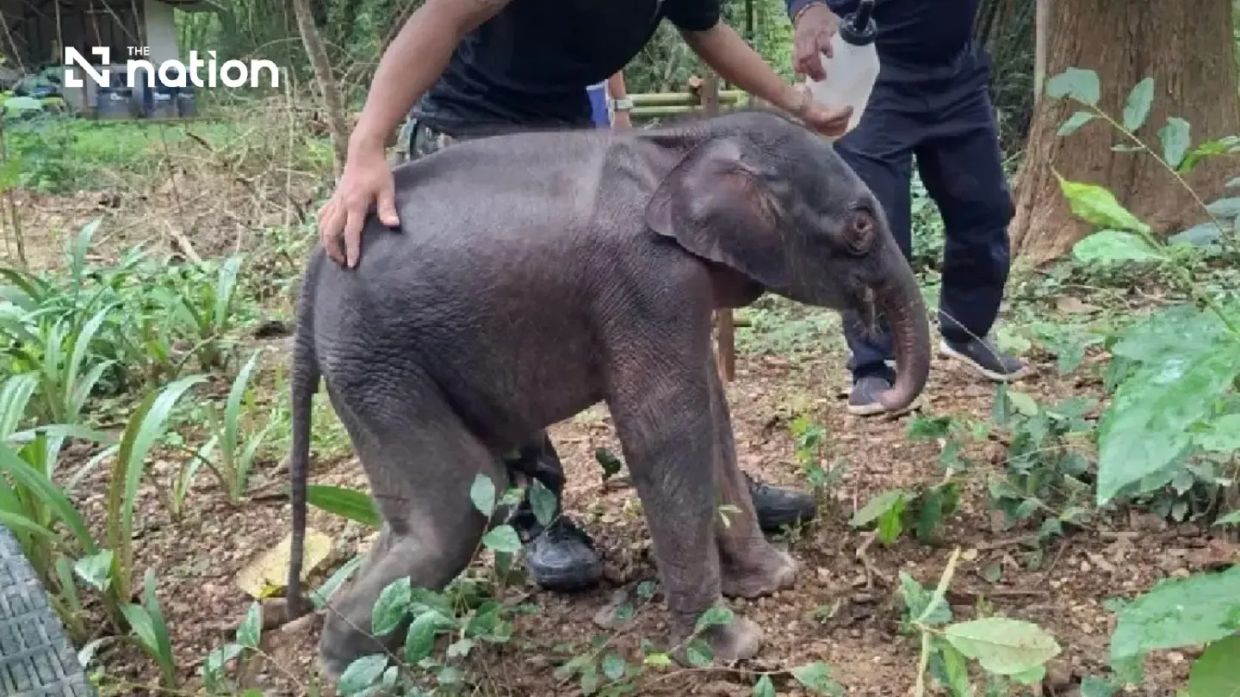
A tiny male wild elephant, no more than two weeks old, has become the focus of intensive rescue and medical efforts in Thailand's Kanchanaburi province after being discovered alone and severely distressed on a riverbank in Sai Yok district. The newborn calf, weighing only around 40 kilograms, was found in critical condition after apparently becoming separated from its mother and herd during a period of heavy rainfall that swelled the local waterways. The animal's discovery and subsequent rescue has prompted high-level government attention and mobilised veterinary resources across multiple regions, highlighting the ongoing conservation challenges faced by Thailand's wildlife authorities in managing human-wildlife interactions and protecting endangered elephant populations.
Villagers from Ban Mae Nam Noi first reported the stranded calf to park officials on Thursday morning, 30 July, after spotting the distressed young animal on the banks of Huai Mae Nam Noi. Officers from Sai Yok National Park Protection Unit No. 5 responded to the alert but faced considerable logistical obstacles reaching the remote location. The terrain surrounding the calf was treacherous, with steep slopes limiting the animal's movement to an area of just 1.5 metres, while a river lay dangerously close on one side. What should have been a straightforward rescue became a challenging operation, requiring villagers to provide boats and navigators familiar with the area, a journey that consumed between one and two hours in difficult conditions.
Upon initial inspection, park officers observed that the calf appeared to have been stranded for approximately two days, likely after being swept downstream during the recent heavy rainfall. The young elephant was discovered calling repeatedly for its mother throughout the night, producing the characteristic distress calls that young calves use to maintain contact with their herd. When no response came from the surrounding forest or river, officers concluded that the mother and herd had moved considerably far from the area, possibly crossing the swollen waterway and abandoning the search. This scenario, while distressing to contemplate, reflects the survival instincts of wild elephants when facing dangerous conditions such as flash flooding and treacherous terrain.
The medical assessment conducted by veterinarians from Protected Areas Regional Office 3 on Friday, 31 July, revealed a catalogue of serious health complications that placed the calf in genuine danger. The animal was severely dehydrated, its condition evident from dark yellowish-red urine and an overall weakness that made even basic movements laboured. Multiple mouth ulcers, some measuring the size of a Thai 10-baht coin, caused the calf considerable pain whenever it attempted to drink milk provided by rescuers. Beyond the mouth injuries, the young elephant displayed blistered wounds across its trunk, navel inflammation, and areas of dead tissue that raised concerns about potential infection. Medical personnel also noted that bee-like insects had gathered around the calf's eyes, resulting in conjunctivitis and additional discomfort.
The underlying causes of the calf's injuries and current state remain partly speculative but appear linked to the trauma of separation and harsh environmental exposure. The steep, rocky terrain of its temporary refuge likely contributed to the blistering and abrasions covering its body, while the extended period without adequate milk nutrition and water had left the animal dangerously weakened. The loose stools with foul odour suggested possible gastrointestinal distress, potentially indicating infection or the calf's body attempting to process unsuitable foraged materials such as tree roots and stones that it had attempted to consume in desperation. The overall clinical picture painted a young animal fighting against multiple simultaneous physiological challenges.
Minister of Natural Resources and Environment Suchart Chomklin issued a statement on Saturday, 1 August, emphasizing both his personal concern for the calf's welfare and the government's commitment to its recovery. Suchart acknowledged the exceptional efforts required from park officers and veterinarians who had navigated dangerous weather conditions and treacherous terrain to reach the animal. His public intervention underscores the political and conservation significance attached to elephant welfare in Thailand, where wild elephant populations represent both a national heritage asset and a symbol of environmental stewardship. The minister issued urgent directives to the Department of National Parks, Wildlife and Plant Conservation to mobilise specialist veterinary teams capable of providing ongoing intensive care.
The rescue operation itself represents a logistical and medical achievement given the remote location and challenging conditions. Officers employed boats and navigated flooding waterways to transport veterinarians and supplies to the calf's location. Once on-site, the veterinary team faced the delicate task of conducting a thorough medical assessment while the distressed young animal was already in a weakened state. Obtaining secure transport from the riverbank back to Sai Yok National Park headquarters required careful planning to minimise additional stress to the calf. The decision to relocate the animal to the park facility rather than attempt maternal reunion reflected the veterinarians' assessment that the calf's critical condition required constant monitoring and intervention that only a properly equipped facility could provide.
Testing for elephant endotheliotropic herpesvirus (EEHV) has been identified as a critical component of the ongoing treatment protocol. This viral infection represents one of the most serious threats to young wild elephants and can progress rapidly from initial symptoms to fatal outcomes. The combination of the calf's existing physical traumas, severe dehydration, and possible immunocompromise from malnutrition creates precisely the kind of conditions under which EEHV could flourish. Early detection through systematic testing would enable veterinarians to implement species-specific antiviral protocols if the virus is present, potentially making the difference between recovery and catastrophic deterioration.
The incident carries broader implications for elephant conservation in Southeast Asia and the vulnerability of young animals to environmental stressors and habitat disruption. Climate-related extreme weather events, including the severe rainfall that appears to have triggered this calf's separation, are projected to increase in frequency across the region. As human settlements expand into elephant habitats and traditional migration corridors become fragmented or blocked, young elephants separated from their herds face reduced chances of natural reunion and survival. The rescue of this particular calf demonstrates Thailand's institutional capacity and political will to intervene in wildlife crises, yet it also highlights the limitations of reactive rescue efforts when underlying habitat and climate pressures continue to intensify.
The coming weeks will prove critical in determining whether this young elephant achieves recovery or succumbs to the accumulated physiological stresses of dehydration, infection, and malnutrition. Veterinary teams must manage the calf's immediate medical needs while also navigating the profound psychological trauma of maternal separation. Even successful physical recovery cannot fully address the developmental damage caused by losing maternal guidance during the critical early months when young elephants learn essential social and survival behaviours. Conservation authorities across Southeast Asia are watching this case closely, as it exemplifies both the possibilities and limitations of wildlife rescue in an era of increasing human-wildlife conflict and environmental change. The ultimate outcome will likely inform future protocols for elephant calf rescue and rehabilitation throughout the region.

