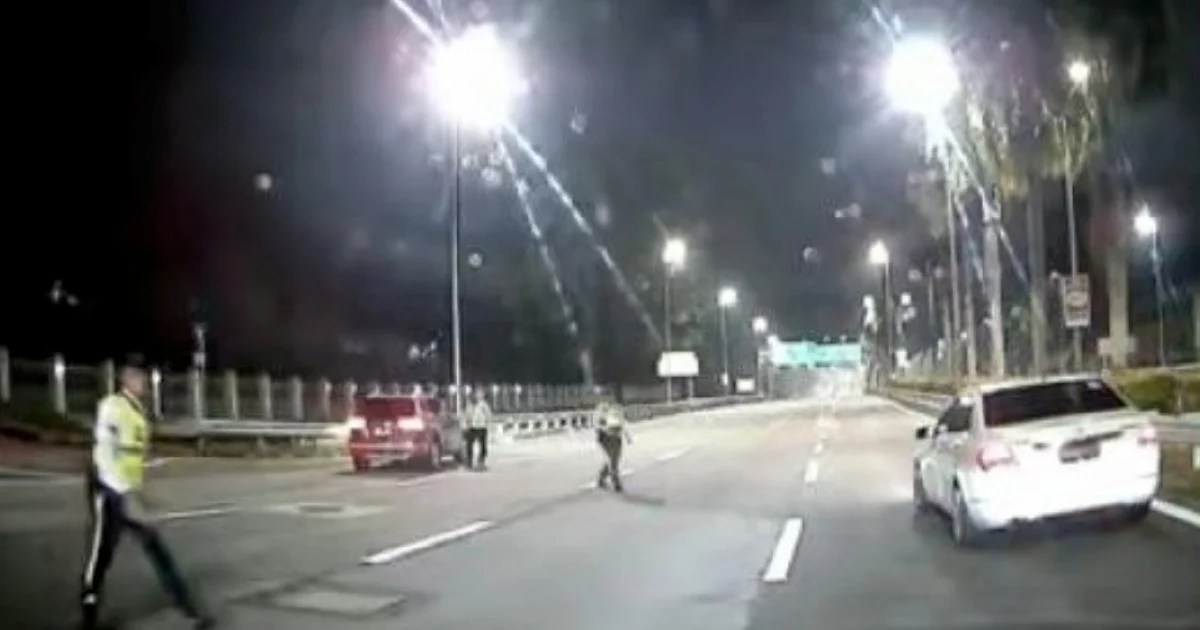
A young driver in Kuala Lumpur has been taken into police custody following a dramatic incident where his white Mercedes breached a law enforcement checkpoint on Sprint Expressway. The 20-year-old motorist collided with the roadblock installation near the National Institute of Public Administration (Intan) before accelerating away from the scene, prompting authorities to launch an investigation into the circumstances surrounding the clash.
The incident, which unfolded on one of Kuala Lumpur's major arterial routes, generated considerable online discussion as footage and accounts of the event circulated across social media platforms. The dramatic nature of the collision and the subsequent flight triggered widespread public interest, transforming what might ordinarily be a routine traffic violation into a matter of significant public discourse. Such incidents involving vehicles deliberately or recklessly breaching police checkpoints highlight vulnerabilities in enforcement operations and raise questions about officer safety during roadblock operations.
For Malaysian motorists and commuters, incidents of this nature serve as a reminder of the risks inherent in attempting to evade police authority. Roadblocks are established across the nation's expressway network for multiple reasons: to monitor compliance with traffic regulations, to conduct vehicle inspections, and to enhance overall road safety. When drivers attempt to circumvent these checks, they not only place themselves in jeopardy but also endanger the lives of law enforcement personnel who work at these checkpoints, often during peak traffic periods or in challenging weather conditions.
The Sprint Expressway, which connects Kuala Lumpur with surrounding areas and serves thousands of vehicles daily, is a critical corridor for both commercial and private transport. The location of this incident near Intan underscores how such events can occur in relatively developed urban areas where traffic volumes are high and police presence is more visible. The expressway has experienced its share of traffic incidents over the years, ranging from minor collisions to more serious accidents that have impacted traffic flow and commuter schedules.
Police investigations into such matters typically examine several key factors: the driver's state of mind at the time of the incident, whether any substances were involved, mechanical failure of the vehicle, or other contributing circumstances. Understanding the motivation behind the collision—whether deliberate, accidental, or the result of impaired judgment—becomes crucial in determining appropriate legal responses and identifying any underlying issues that might necessitate intervention or rehabilitative measures. The age of the driver, at just 20 years old, also raises questions about road maturity and decision-making capacity.
From a broader road safety perspective, incidents involving vehicles breaching police checkpoints represent a subset of traffic violations that authorities take with particular seriousness. Such events can set dangerous precedents and normalise attempts to evade law enforcement. Malaysia's Road Transport Act contains specific provisions addressing such offences, and the penalties can be substantial depending on the circumstances and any resulting damage or injury. The legal framework is designed to both punish wrongdoing and deter others from similar behaviour.
The expressway system across the Klang Valley and Greater Kuala Lumpur region has become increasingly sophisticated in terms of monitoring and enforcement infrastructure. Electronic toll collection systems, CCTV cameras, and coordinated police operations work together to manage traffic flow and enforce regulations. When individual motorists breach checkpoints, they potentially compromise the effectiveness of these integrated systems and place additional strain on law enforcement resources that might otherwise be allocated to other public safety priorities.
Viral incidents of this nature often spark broader conversations within Malaysian society about road culture, the responsibilities of young drivers, and the relationship between the motoring public and enforcement authorities. Social media amplification of such events can lead to heightened public scrutiny of police procedures at roadblocks, questions about whether adequate warning signs are displayed, and debates about proportional responses to traffic violations. These discussions, while sometimes contentious, contribute to ongoing evaluations of how traffic management and enforcement can be improved.
The detention of the 20-year-old for investigation purposes represents the standard procedural approach. During this period, police will gather evidence, interview the suspect, examine the vehicle for any mechanical issues, and determine the full scope of charges that may be appropriate. Depending on the findings, charges could range from traffic violations to more serious offences if negligence or intentional misconduct is established. The investigation will also clarify whether any injuries resulted from the collision or whether damage was confined to the roadblock installation and vehicles involved.
For the broader transport and logistics community that relies on expressway networks, such incidents represent disruptions to predictable traffic patterns and operational planning. Roadblock operations, whether routine or related to specific enforcement campaigns, are necessary public safety measures. When motorists choose confrontation over compliance, they create cascading effects that impact other road users, emergency service response times, and overall network efficiency.
Moving forward, this incident may prompt renewed discussions within police departments about checkpoint safety protocols, improved signage, and graduated enforcement responses that distinguish between accidental incursions and deliberate evasion. For the young driver involved, the investigation and subsequent legal proceedings will likely represent significant consequences that extend beyond immediate penalties to considerations of personal responsibility and understanding of the serious implications of road behaviour decisions.

