The inaugural Minister's Cup debate competition has emerged as a significant milestone in Malaysia's push to deepen public understanding of energy policy, bringing together twenty university students to deliberate on one of the nation's most pressing strategic questions. Held as part of the 7th International Sustainable Energy Summit (ISES) 2026 at the Kuala Lumpur Convention Centre, the competition challenged young debaters to grapple with the complex question of whether Malaysia should expand renewable energy exports to neighbouring countries while simultaneously securing sufficient electricity supply for its own growing population and economy.
The debate motion, articulated in both English and Malay, directly addresses a critical juncture in Southeast Asian energy politics. Malaysia, blessed with abundant solar resources and increasingly developed hydroelectric capacity, finds itself at an inflection point where it could become a regional renewable energy exporter. Yet this ambition must be weighed against Malaysia's own domestic imperatives—a rising middle class consuming more electricity, industrial growth driving demand, and the need to phase out coal-fired generation. By framing this as a formal debate rather than a policy seminar, organisers acknowledged that Malaysia's energy future is not merely a technical question for engineers and policymakers, but a fundamentally political and developmental issue that demands broader societal participation.
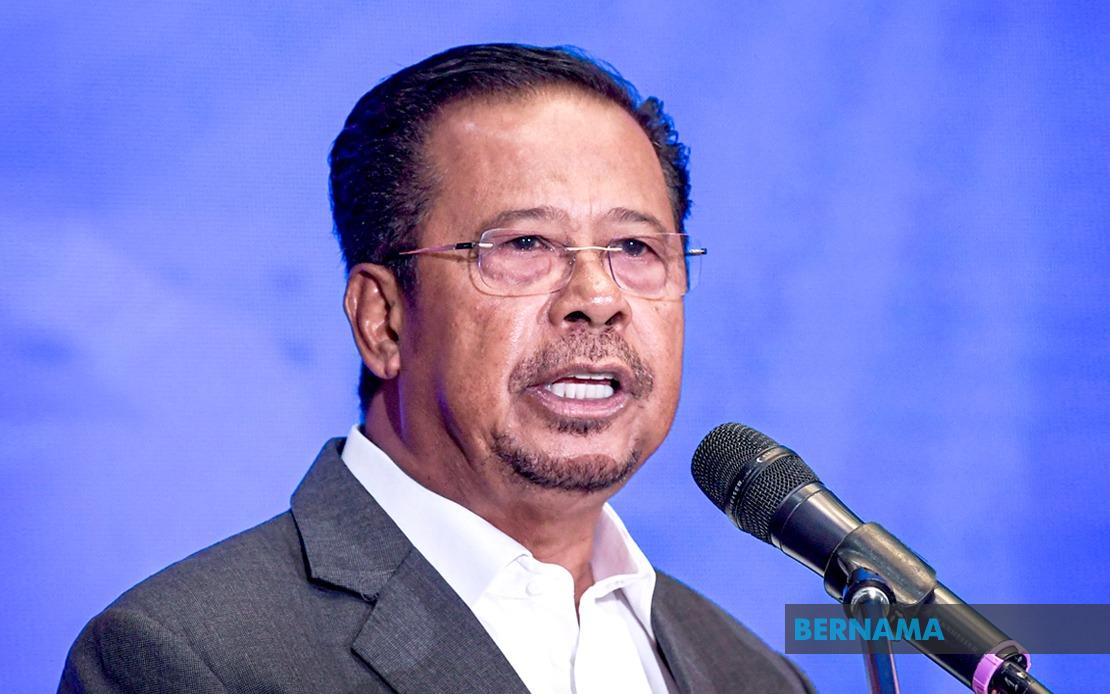
Deputy Minister of Energy Transition and Water Transformation Datuk Seri Abdul Rahman Mohamad, himself chairman of the Malaysia Energy Literacy Programme (MELP) steering committee, awarded the championship trophy to the Government team and presented the Best Debater accolade to Muhammad Uwais Mohd Hazril Munir @ Umar, a twenty-year-old law student from Universiti Malaya. The symbolic significance of rewarding the Government team warrants examination—it suggests official confidence that the government's position on energy export expansion can withstand scrutiny and argument, while also demonstrating to younger generations that policy positions are subject to debate and justification rather than mere pronouncement. The presence of Tan Sri Dr Wan Ahmad Dahlan Abdul Aziz, the Chief Secretary to the Government and chairman of the Sustainable Energy Development Authority Malaysia (SEDA), underscored the highest levels of administrative commitment to this initiative.
Beyond the ceremonial aspects, SEDA Strategic Communications director Izzad Zalman Abdul Kader articulated the deeper rationale for involving students in structured policy debate. Energy literacy—the ability to understand how electricity is generated, distributed, priced, and consumed—remains limited among broad segments of the Malaysian population. Public discourse on energy often defaults to emotional reactions rather than informed deliberation, particularly when questions touch on affordability, reliability, and environmental impact. By creating a debate platform, MELP seeks to cultivate what Kader described as a "critical, mature and fact-based understanding" of government policies, transforming energy from a peripheral concern into a topic of genuine intellectual engagement.
The Malaysia Energy Literacy Programme itself represents a recognition that energy policy cannot be imposed top-down without popular comprehension and buy-in. Launched as a national initiative to provide Malaysians with accurate, verified, and trustworthy information on energy production, usage, and management, MELP acknowledges a gap in public knowledge that potentially undermines policy effectiveness. When citizens understand the constraints and trade-offs involved in energy decisions—why renewable expansion takes time, why grid reliability matters, why export opportunities could benefit the nation—they are more likely to support necessary transitions and accept short-term costs for long-term gains. The Minister's Cup Debate, as MELP's flagship 2026 programme, operationalises this philosophy by placing students at the centre of these conversations.
Muhammad Uwais Mohd Hazril Munir @ Umar, the Best Debater award winner, offered a revealing insight into the transformative potential of structured debate. He observed that the format makes complex issues like renewable energy "more accessible to the public" by allowing audiences to hear competing perspectives articulated persuasively on both sides. This mirrors international best practice in science communication and policy engagement, where adversarial debate often clarifies issues better than technical briefings alone. When a skilled advocate must defend renewable energy export expansion against thoughtful objections—concerns about domestic electricity security, grid stability, or fair distribution of benefits—the audience develops nuanced understanding impossible through one-sided advocacy.
Meanwhile, Afiq Athmar Mohamed, a twenty-one-year-old business economics student from Universiti Malaya, highlighted the cross-institutional collaboration animating this initiative. The involvement of multiple ministries, government agencies, and local media in organising the competition signals that energy policy enjoys high-level political prioritisation in Malaysia. This institutional coordination becomes particularly important in Southeast Asia, where energy decisions have regional ramifications. Malaysia's renewable capacity development affects power flows across the ASEAN grid, influences regional climate commitments, and shapes competition for regional influence in green technology markets. By engaging young people in these discussions now, Malaysia invests in a generation capable of sophisticated energy governance as they move into leadership positions.
Afiq further noted that the competition served dual purposes: raising awareness of energy supply vulnerabilities that could affect different demographic groups differently, and promoting understanding of the structural shift from non-renewable to renewable energy sources. The second point deserves emphasis. Many Malaysians still view renewable energy as optional or aspirational, rather than an inevitable necessity driven by climate physics, resource depletion, and economics. Students who debate the question seriously—examining arguments about capacity factors, storage technology, transmission requirements, and export markets—graduate from these forums with internalized understanding that the renewable transition is not a matter of environmental preference but of national necessity and strategic positioning.
The geographic and demographic profile of participants also carries significance. That twenty university students from local institutions participated reflects Malaysia's substantial higher education sector and growing youth cohort. Yet it also suggests that engagement remains concentrated among relatively privileged students at established universities. Future iterations might profitably expand to include voices from polytechnics, technical colleges, and working-class communities whose energy needs and perspectives differ markedly from those of campus-based debaters.
Looking forward, the Minister's Cup Debate establishes a template for deepening energy literacy across Malaysian society. As Southeast Asia navigates its transition toward net-zero emissions while managing rapid economic development, policy legitimacy increasingly depends on public understanding and acceptance. Malaysia's experiment in structured debate offers a replicable model—one that treats young citizens not as passive subjects of energy policy but as active participants in its deliberation and refinement. By cultivating a generation capable of discussing renewable energy export strategy with sophistication, Malaysia positions itself to navigate the complex energy politics of the coming decades with greater democratic grounding and informed consent.

