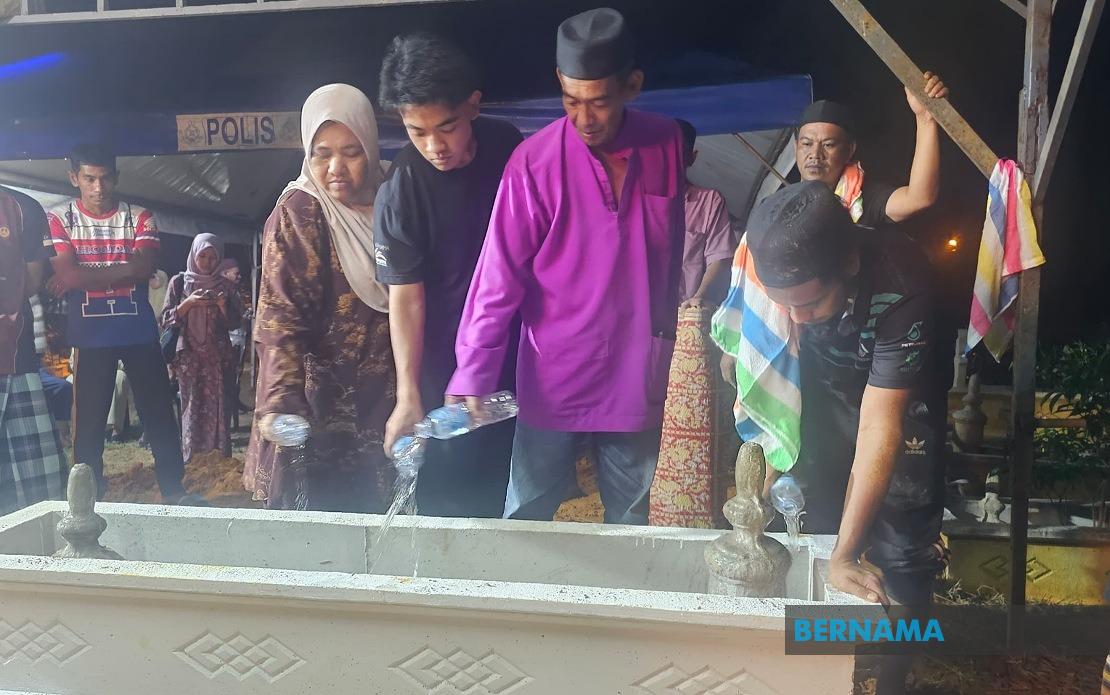
Constable Muhammad Raimi Ismarubee, a 24-year-old police officer who died in an electric shock incident in Kampung Weston, Beaufort, Sabah, was buried at the Felda Kerteh 2 Muslim Cemetery in Dungun, Terengganu, in the early hours of Thursday. The solemn burial ceremony, which took place at 1.15 am, marked the conclusion of a tragedy that claimed the lives of three serving police personnel and has cast a shadow over Malaysia's law enforcement community.
The officer's remains were transported with full ceremonial honours befitting a fallen civil servant. Muhammad Raimi's body departed Kota Kinabalu International Airport aboard a Royal Malaysian Air Force aircraft, touching down at Kuantan Air Base in Pahang before being conveyed by hearse to his family home in Felda Kerteh 2. The vehicle arrived at his residence at 11.40 pm, allowing family members and colleagues to pay their final respects and participate in funeral prayers before the midnight burial.
The funeral service was conducted with significant official presence and public attendance. Datuk Satiful Bahari Mamat, who serves as chairman of the Terengganu State Education, Higher Education, Science, Technology and Human Development Committee, led the funeral prayers. The gathering included Dungun District Police Chief Supt Nik Ab Halim Nik Mat, approximately 200 police officers and personnel, alongside extended family and friends. The substantial turnout underscored the deep respect within law enforcement circles for a young officer whose life was cut short in tragic circumstances.
Muhammad Raimi was the second of three children in his family and had only recently begun his policing career at Weston Police Station, having joined the force in September 2024. His tenure at the station lasted less than a year, meaning he never had the opportunity to establish a full career trajectory or realise the potential his appointment suggested. His unmarried status and youthful age amplified the tragedy, with many reflecting on the unfulfilled possibilities ahead of him.
The fatal incident occurred at 5.50 pm on the day before the burial, along Jalan Weston in Kampung Weston, when three officers serving at the same station encountered what authorities have determined to be a high-voltage electrical hazard. The circumstances surrounding how the three personnel came into contact with the electrified source remain subjects of ongoing investigation by relevant authorities in Sabah.
Besides Muhammad Raimi, two of his colleagues at Weston Police Station lost their lives in the same incident. Corporal Chiu Teck Siong, aged 40, and Corporal Mohamad Nur Hafiz Ibrahim, 29, were pronounced dead following exposure to the electric shock. The deaths of all three officers at a single location within such a compressed timeframe suggest that environmental or infrastructure factors may have contributed to the tragedy, raising broader questions about workplace safety protocols within police stations across the region.
This incident represents a sobering reminder of the occupational hazards that extend beyond the commonly perceived dangers associated with active police work. While officers typically train for confrontational situations and crime prevention, unexpected environmental hazards—such as faulty electrical systems or maintenance deficiencies—can prove equally fatal. The incident in Beaufort highlights the necessity for comprehensive safety audits across police facilities to identify and rectify potential electrical dangers that could endanger personnel.
For the families affected, the loss carries particular weight. Muhammad Raimi's parents have lost a son in the prime of his young life, while Corporal Chiu and Corporal Mohamad Nur Hafiz leave behind dependents and family networks. The ripple effects of such tragedies extend throughout police communities and their families, fostering discussions about duty-of-care obligations and institutional responsibility to protect those in service.
The incident also carries implications for workplace safety standards across government institutions in Malaysia. While the Royal Malaysian Police maintain established protocols and safety measures, the Weston Police Station fatalities indicate that implementation and maintenance of these standards may require strengthening. Authorities will likely conduct comprehensive investigations into whether safety procedures were followed and whether infrastructure at the station met required specifications.
From a regional perspective, this tragedy serves as a cautionary tale for Southeast Asian law enforcement agencies operating in similar climates and infrastructure contexts. Sabah's tropical environment, with high humidity and seasonal weather patterns, can accelerate electrical system degradation. Police departments across the region may benefit from reviewing their facility maintenance schedules and electrical system inspections to prevent comparable incidents.
The immediate and respectful manner in which authorities handled the repatriation and burial of Constable Muhammad Raimi demonstrates institutional recognition of the sacrifice made by those serving in law enforcement. The involvement of state-level officials and the substantial police presence at funeral rites affirmed the government's commitment to honouring fallen officers. However, such tributes must be paired with concrete action to investigate root causes and implement corrective measures to prevent future tragedies.
As investigations into the incident continue, the broader question remains whether the Weston Police Station and comparable facilities have undergone the necessary safety overhauls. Constable Muhammad Raimi's brief but honourable service will be remembered by his colleagues, but ensuring that his death was not in vain requires a systemic approach to identifying and eliminating workplace hazards that threaten the safety of Malaysia's police force across all states.

