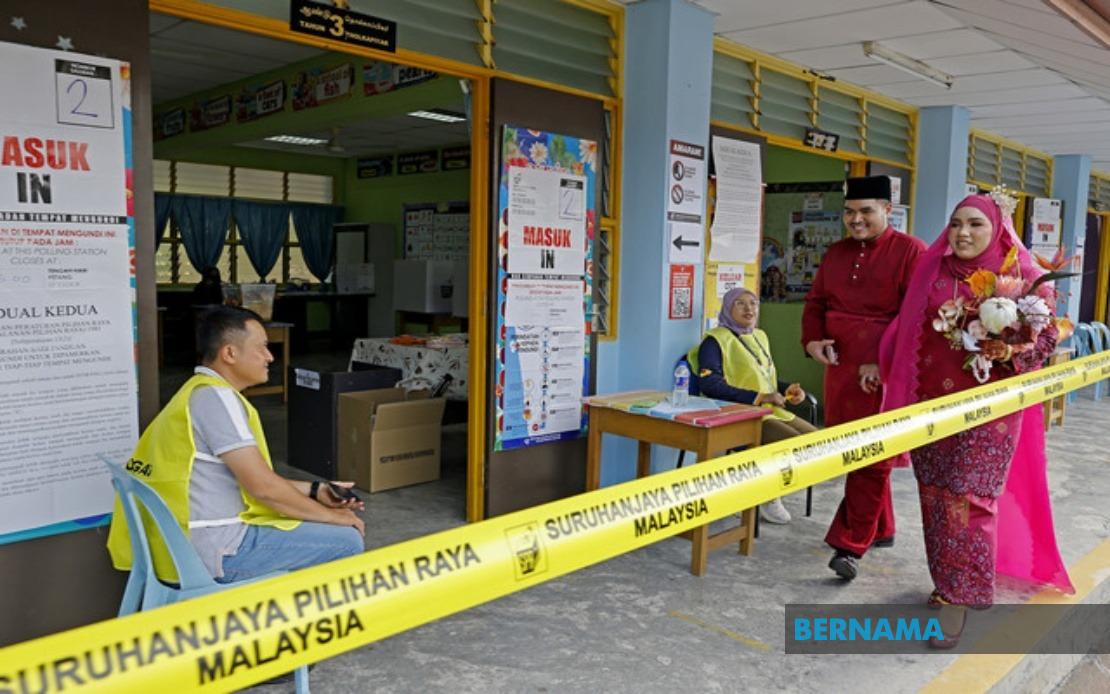
The Negeri Sembilan state election witnessed an unusual moment when a newlywed woman arrived at her designated polling centre dressed in full traditional bridal regalia to fulfil her civic duty. Noor Farzana Masnoor, 26, made the distinctive choice to cast her ballot while wearing her striking red wedding ensemble at Sekolah Jenis Kebangsaan Tamil Ladang Kubang in Labu, accompanied by her new husband Luqman Adam Sudirman, 27.
The couple's decision to prioritize voting on their wedding day underscores a broader narrative about generational attitudes toward democratic participation in Malaysia. Rather than postponing their electoral engagement to focus entirely on wedding celebrations, the pair demonstrated a deliberate commitment to exercising their constitutional rights as citizens, even amid the personal significance of their nuptials.
Working as a marketing officer, Noor Farzana articulated a perspective increasingly common among younger Malaysians who view electoral participation as integral to their identity as citizens. In a statement to BERNAMA, she emphasized that for Gen Z couples like herself and her husband, the responsibility of voting transcends the mere casting of ballots. She framed electoral engagement as a fundamental trust placed upon citizens to select leaders genuinely invested in serving their communities and advancing the nation's interests.
The timing of the vote—during the Labu constituency polling for the state election—created a memorable convergence of personal and civic milestones. Rather than viewing these as competing priorities, the couple treated them as complementary commitments that deserved equal attention and respect. This approach reflects a maturation in how some young Malaysians conceptualize their role within the democratic apparatus, rejecting the notion that personal celebrations should eclipse civic obligations.
Noor Farzana's visibility at the polling station, adorned in her elaborate red traditional wedding attire, inevitably drew attention from observers and poll workers alike. However, she reframed this attention as an opportunity to communicate a message about youth engagement with electoral processes. She emphasized that their story should resonate beyond the romantic narrative of a wedding day, instead serving as a testament to how young Malaysians take their citizenship responsibilities seriously.
The couple's joint participation in the election process also carries significance in the context of broader discussions about voter turnout among younger demographics in Malaysia. Historically, youth engagement with electoral processes has lagged behind older cohorts, prompting concerns among political analysts and civic organizations about whether younger citizens are adequately invested in shaping their nation's future. Instances like this, where young people proactively participate despite competing personal priorities, contribute to counter-narratives that youth remain disengaged or apathetic.
Noor Farzana expressed her hope that their decision would linger in public consciousness not merely as a charming anecdote about a bride's wedding day, but as a powerful reminder of youth investment in democratic systems. By consciously linking her personal celebration with civic engagement, she articulated a vision of citizenship that integrates personal identity with collective responsibility. This resonates particularly in Malaysia, where building stronger democratic institutions depends significantly on sustained, enthusiastic participation across all demographic groups.
The choice to vote in traditional bridal dress also carries cultural significance, as it visibly affirmed Malaysian heritage and traditions within a democratic setting. The red attire, laden with centuries of cultural meaning, became a backdrop for expressing contemporary civic values. This fusion of traditional aesthetics with modern democratic practice created a layered message about how younger Malaysians navigate and integrate multiple aspects of their identity.
For the Negeri Sembilan state election specifically, such demonstrations of youth participation take on added importance given ongoing efforts across Malaysia to expand electoral involvement among voters aged 18 to 40. State-level elections provide crucial testing grounds for understanding how effectively messages about civic engagement resonate with younger cohorts, and whether systemic barriers to youth voting remain significant obstacles.
The incident also highlights practical considerations about polling infrastructure and accessibility. The couple's ability to vote together, with coordination allowing the bride to appear in her bridal attire, suggests that polling stations remained operationally flexible and welcoming to voters regardless of their personal circumstances or presentation. This accessibility—enabling a voter to participate while dressed for a wedding—reflects the principle that electoral participation should remain available to citizens conducting their lives in diverse ways.

