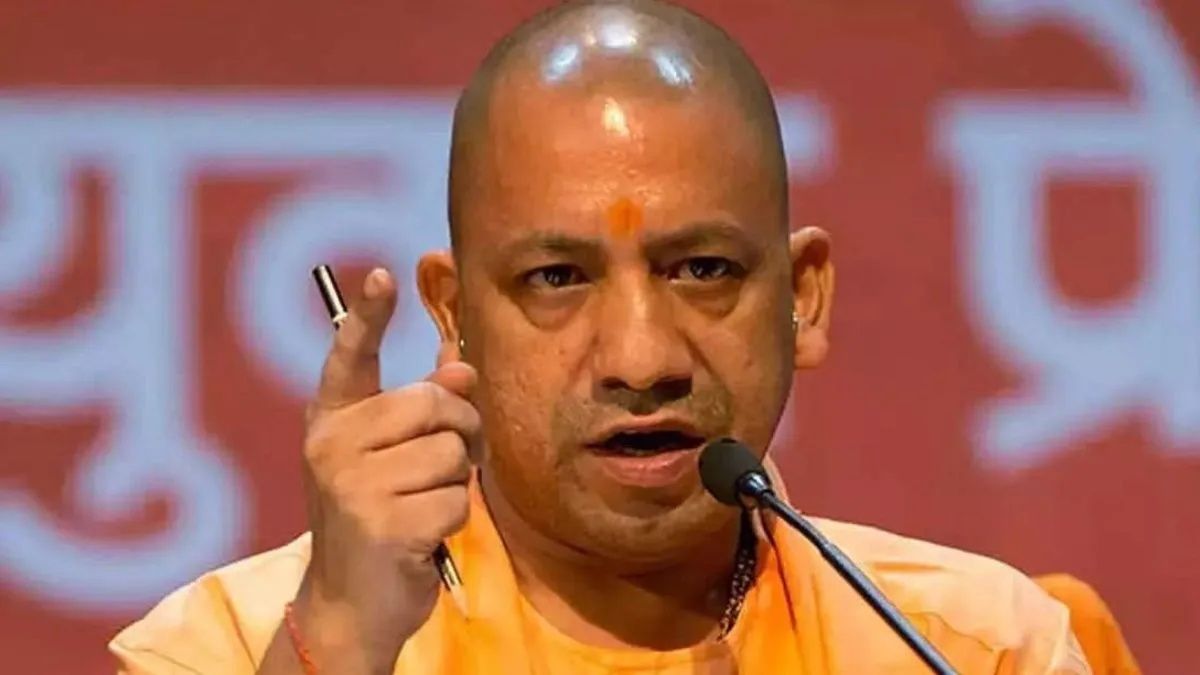
The theft of donations at the Shri Ram Janmabhoomi Teerth Kshetra in Ayodhya has triggered a strong response from Uttar Pradesh Chief Minister Yogi Adityanath, who has pledged swift action against those accountable. Speaking at a public event in Deoria on Friday, the Chief Minister emphasised that authorities would pursue the matter with rigour, having received the Special Investigation Team's findings and initiated proceedings based on its recommendations. His declaration reflects the political sensitivity surrounding the Ram Temple, which remains a lightning rod for communal tensions and partisan disagreement across India.
Yogi's comments represent an attempt to frame the controversy within a broader narrative of protecting Hindu religious sentiments from what he characterises as systematic erosion. During his address at the foundation stone-laying and inauguration ceremony for development projects in Deorio, he sought to distinguish between legitimate investigation and what he termed as efforts to cast aspersions on Ayodhya itself. The Chief Minister appealed to Ram devotees and the state's population to refrain from making unsubstantiated allegations, calling instead for political restraint while the investigation unfolds. His tone suggested frustration with what he views as coordinated attempts to weaponise the donation theft against the government and religious establishment.
The Chief Minister's remarks carried pointed criticism of the Congress and Samajwadi Party, which he accused of historical opposition to the Ram Janmabhoomi movement and temple construction. According to Yogi, the Congress had previously denied Ram's historical existence and mounted sustained legal challenges to the temple project, fielding extensive legal teams to obstruct proceedings. He suggested that these parties lack moral standing to comment on matters of faith, given what he characterised as their track record of suppressing Hindu religious observances during their periods in office. This framing attempts to delegitimise opposition voices by associating them with anti-Hindu policies from past administrations.
Yogi specifically invoked historical incidents to support his argument that opposition parties have consistently undermined Hindu religious expression. He referenced the ordering of firing on Ram chanting devotees, the banning of Krishna Janmashtami celebrations, restrictions on the Kanwar Yatra pilgrimage, and incitement of riots during Durga Puja observances as evidence of systemic hostility toward Hindu traditions. He also mentioned the Lar riot as emblematic of communal violence during previous administrations. Through this selective recounting, the Chief Minister constructed a narrative wherein current opposition criticism of the donation theft investigation represents the latest chapter in an extended campaign to undermine Hindu faith and religious practices.
The Chief Minister deployed his criticism of the Samajwadi Party's governance record, accusing the party of large-scale looting and corruption during its tenure in Uttar Pradesh. He contrasted this with what he termed the "double engine" approach of the current Bharatiya Janata Party government at both state and national levels. According to Yogi, the Samajwadi Party's current attacks on Ayodhya and allegations against the Ram temple administration represent acts of desperation, motivated by frustration over the government's efforts to curtail what he characterised as systemic plunder. This framing positions the donation case controversy as merely a tactical move in a larger political struggle between parties with fundamentally different visions for the state.
Yogi's appeal to Ram devotees carried an implicit warning to opposition voices, urging them not to "test the patience" of those devoted to the deity and the temple. He called for an immediate cessation of what he termed tampering with people's faith, whether through unsubstantiated allegations or counter-allegations lacking concrete evidence. The Chief Minister's language suggested that while the government would follow due process through the Special Investigation Team's investigation, public criticism of the temple administration or attempts to question the legitimacy of the temple institution itself would face governmental disapproval. This stance raises questions about the space available for independent scrutiny of institutions in Uttar Pradesh's current political environment.
The handling of the donation case has exposed broader tensions between investigative accountability and political considerations in contemporary India. Yogi's framing suggests that legitimate investigation into financial irregularities at a religious institution must be carefully calibrated to avoid implications that might undermine public confidence in the temple itself. The Chief Minister's repeated emphasis on separating truth from falsehood indicates acknowledgment that inconsistencies or wrongdoing have emerged, yet his political messaging attempts to contain the reputational damage to both the institution and the government. This balancing act reveals the delicate position of administrations in highly religious contexts where institutional failures can carry political consequences.
For Malaysian readers observing Indian politics, Yogi's response illuminates how religious institutions and state authority intersect in India's federal structure. Unlike Malaysia's formal separation between religious administration and civil government, India's public institutions often become enmeshed in religious controversies, particularly when these institutions hold significant symbolic and financial importance. The Ram Temple, having occupied a central place in Indian politics since the 1980s, demonstrates how religious sites can become focal points for broader political competition, particularly during periods of heightened communal polarisation. The donation theft case thus represents not merely a financial irregularity but a challenge to the political narrative that Yogi and the BJP have constructed around the temple's reconstruction and management.
The Chief Minister's insistence that investigation teams should proceed without political interference carries particular irony given the heavily politicised environment surrounding the Ram Temple itself. His appeal for restraint in making allegations, while simultaneously advancing partisan accusations against Congress and the Samajwadi Party, demonstrates the asymmetrical nature of political discourse around this issue. The implicit message—that criticism of the temple administration constitutes tampering with faith, while government criticism of opposition parties constitutes legitimate political speech—reflects a broader challenge facing Indian institutions attempting to maintain public credibility in polarised contexts. As the Special Investigation Team continues its work, the investigation's findings and their presentation will likely continue to be filtered through intense partisan frameworks.
Looking forward, the donation case threatens to complicate the triumphalist narrative that surrounded the Ram Temple's consecration, which was expected to close a contentious chapter in Indian politics. Instead, revelations of financial irregularities may persist as reminders that even symbolically significant institutions require robust accountability mechanisms. For observers across South Asia, including Malaysia, the case underscores the challenge that majoritarian governments face in maintaining institutional credibility when religious symbolism becomes intertwined with state authority. The Uttar Pradesh government's approach—simultaneously pursuing investigation while defending the institution against broader criticism—may set precedents for how religious institutions in politically contentious contexts navigate accountability demands without diminishing their political utility.

