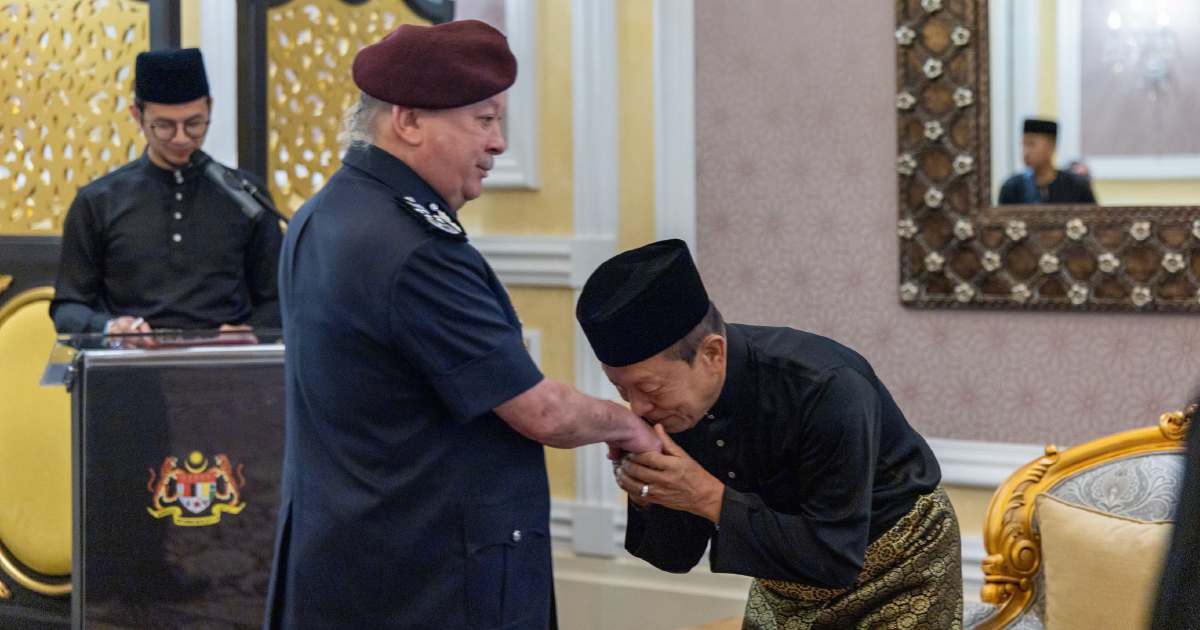
His Majesty Sultan Ibrahim, King of Malaysia, received Malaysian Anti-Corruption Commission chief commissioner Datuk Seri Abdul Halim Aman during a formal audience held at Istana Negara today. The meeting represents part of the monarch's routine protocol of engaging with heads of major constitutional institutions that play critical roles in the nation's governance framework.
Formal audiences between the Yang di-Pertuan Agong and senior government officials serve as important ceremonial occasions that underscore the constitutional hierarchy and mutual respect between different branches of governance. The MACC, as an independent agency established under the Malaysian Anti-Corruption Commission Act 2009, operates under the oversight of the King as head of state, and such meetings provide opportunities for direct communication at the highest institutional levels.
The audience comes at a juncture when Malaysia's anti-corruption efforts remain under considerable international and domestic scrutiny. The MACC's mandate encompasses investigation and prosecution of corruption offences involving public officials, government agencies, and statutory bodies, functions that directly impact public confidence in institutions and the efficiency of government service delivery across the country.
Under Datuk Seri Abdul Halim Aman's stewardship, the commission has continued enforcing its mandate against financial misconduct and abuse of authority. These engagements with the monarchy help reinforce the independence and institutional importance of the MACC within Malaysia's constitutional order, particularly as the commission navigates complex investigations and maintains public credibility.
Regular interactions between heads of major institutions and the King serve broader governance purposes beyond ceremony. They facilitate the exchange of information about institutional challenges, resource requirements, and policy coordination at the highest levels, ensuring that critical agencies like the MACC receive appropriate recognition and support from the apex of state authority.
For Malaysian readers and regional observers, such audiences underscore the continued relevance of constitutional monarchy in Southeast Asia's governance systems. Unlike purely ceremonial roles elsewhere, the Malaysian monarchy maintains active oversight of executive institutions and embodies the constitutional principle that no branch of government operates in isolation from established checks and balances.
The timing of this formal engagement also reflects the King's broader commitment to institutional strengthening across government. Since his accession in October 2023, Sultan Ibrahim has demonstrated active interest in meeting with various ministerial departments and constitutional bodies, signalling a reinvigorated royal role in promoting governmental accountability and institutional effectiveness.
Anti-corruption work occupies a sensitive position in Malaysian politics, often intersecting with party politics and business interests. By maintaining direct engagement with the MACC's leadership, the monarchy reinforces the constitutional imperative that anti-corruption efforts remain above partisan consideration and continue serving the broader national interest rather than narrow political agendas.
For the MACC itself, royal acknowledgement of the commission's work carries symbolic significance that extends beyond ceremonial protocol. Such audiences help legitimise the commission's investigative activities and enforcement actions, signalling to both the public and institutional stakeholders that anti-corruption efforts operate with monarchical support and constitutional blessing.
The audience also occurs within the broader context of Malaysia's international reputation regarding governance and corruption perception. International indices and foreign investor confidence often consider the independence and effectiveness of anti-corruption agencies as barometers of institutional strength, making visible demonstrations of institutional respect between constitutional bodies particularly relevant to Malaysia's global standing.
Looking forward, such engagement patterns may indicate an enhanced role for royal institution-building efforts in Malaysia's governance architecture. If sustained, regular audiences between the King and heads of independent constitutional bodies could help strengthen institutional autonomy and public trust in agencies often susceptible to political pressure or resource constraints.
The meeting between His Majesty and Datuk Seri Abdul Halim Aman exemplifies how constitutional monarchies like Malaysia can maintain institutional vitality beyond ceremonial functions, using formal protocol to reinforce the legitimacy and independence of agencies essential to democratic governance and public accountability.

