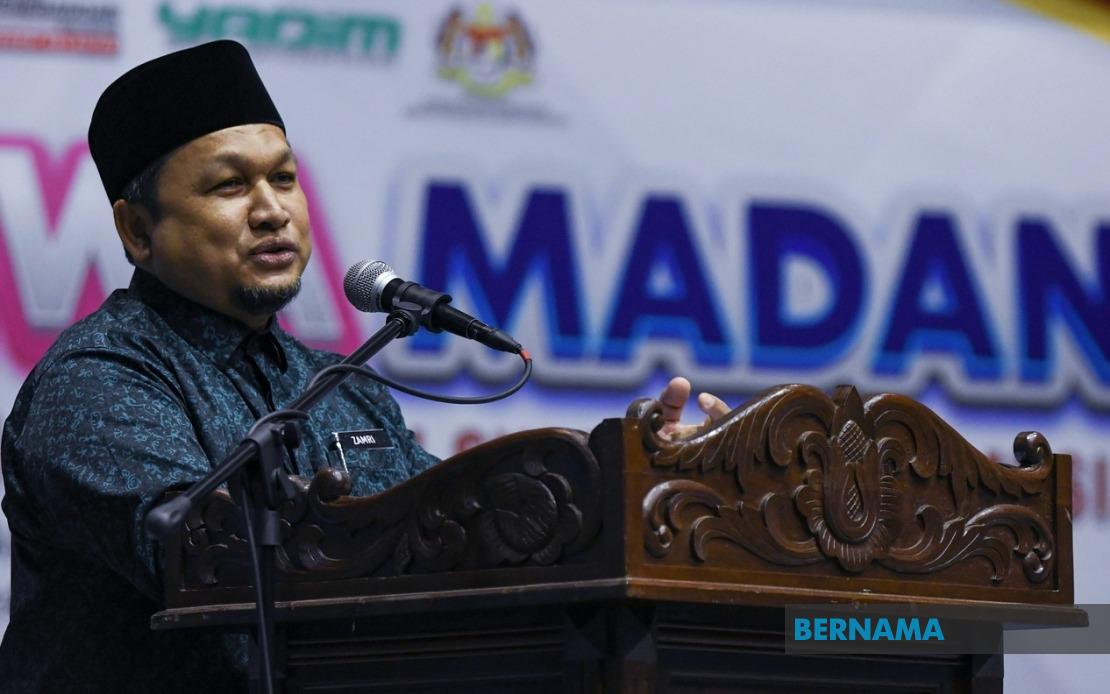
The Malaysian government's initiative to establish clearer accreditation standards for religious speakers operating on digital platforms has gained backing from Yayasan Dakwah Islamiah Malaysia (YADIM), the country's principal Islamic preaching foundation. The proposal, announced by Minister in the Prime Minister's Department (Religious Affairs) Dr Zulkifli Hasan, aims to strengthen the credibility of Islamic instruction in an increasingly crowded online space where religious content reaches millions of Malaysians daily. YADIM's chief executive Zamri Zainal Abidin framed the initiative as a necessary protective measure rather than a restrictive policy, emphasising that proper oversight would benefit both religious institutions and the public.
The digital transformation of religious education has created both unprecedented reach and significant risks. Social media platforms now function as primary conduits through which Malaysians, particularly younger demographics, encounter Islamic teachings and guidance. This accessibility has democratised religious learning but simultaneously opened pathways for misinformation and doctrinal distortion. Without formal verification mechanisms, individuals with minimal Islamic scholarly training can present themselves as qualified preachers, potentially leading followers astray with interpretations that contradict established Islamic jurisprudence or lack proper theological grounding. The concern extends beyond simple factual errors to encompass the potential exploitation of public trust by unqualified voices seeking influence or financial gain through religious authority they do not possess.
Zamri articulated the core problem facing Malaysia's religious ecosystem in the social media age. Anyone with an internet connection and basic presentation skills can establish themselves as an "ustaz" or religious teacher, claiming expertise without demonstrated knowledge or formal qualification. This democratisation of the preacher role has bred confusion among audiences seeking reliable guidance, as distinguishing between authentic Islamic scholars and self-appointed religious commentators becomes increasingly difficult for ordinary believers. The absence of standardised verification creates a marketplace where sensationalism, conspiracy theories, and heterodox interpretations can compete equally with sound Islamic scholarship, potentially influencing millions through algorithmic amplification that rewards engagement over accuracy.
Young Malaysians represent a particularly vulnerable audience in this environment. Many have grown up with social media as their primary information source and lack the foundational Islamic education necessary to evaluate theological claims critically. When influential online personalities present questionable religious interpretations with confidence and polish, younger followers may absorb these teachings without recognising their deviation from mainstream Islamic jurisprudence. This generational gap in religious literacy compounds the risks posed by unaccredited preachers, as does the speed and reach of viral religious content that can spread interpretations across the country within hours, bypassing traditional institutional oversight mechanisms.
YADIM's endorsement carries particular weight given the foundation's established position within Malaysia's official Islamic apparatus. Operating under the Prime Minister's Department, YADIM has long implemented its own accreditation practices, training preachers known as Daie Muda who receive formal credentials from the Federal Territories Mufti Department. This internal framework has served as a model demonstrating that accreditation can function without suppressing genuine dakwah activity. The foundation's willingness to partner strategically with the government on this broader initiative signals institutional readiness to help establish and implement clearer national standards, potentially drawing on its existing experience and infrastructure.
The proposal explicitly aims to protect rather than restrict legitimate dakwah activities. Zamri stressed that the accreditation framework would not create unnecessary barriers for sincere individuals wishing to share Islamic knowledge authentically. Instead, it would distinguish between those with proper training and theological grounding and those without, allowing audiences to make informed choices about whose religious instruction they follow. This distinction becomes particularly important in Malaysian society, where Islam's constitutional position grants religious institutions significant authority and responsibility, but where that authority has increasingly diffused into informal digital networks beyond institutional oversight.
Implementation of such a framework would necessarily involve difficult questions about standards, who sets them, and how appeals and disputes are handled. Regional variations in Islamic jurisprudence across Malaysia's thirteen states and three federal territories complicate matters, as do differences in how various mufti offices and Islamic councils approach religious education. The accreditation proposal would require coordination across these existing institutions while respecting their jurisdictional autonomy. YADIM's potential role as a strategic implementation partner suggests the foundation could help bridge these institutional divides, leveraging its federal positioning and existing networks.
The broader regional context underscores the urgency of Malaysia's approach. Across Southeast Asia, online religious radicalisation has emerged as a documented security concern, with extremist groups utilising social media to recruit and radicalise sympathisers. While Malaysia's accreditation proposal focuses on credibility and authentic Islamic teaching rather than explicit counter-extremism measures, the two objectives align naturally. Accredited preachers accountable to recognised Islamic institutions face inherent pressures toward doctrinal mainstream positions, reducing vulnerability to extremist reinterpretation. Countries including Indonesia have grappled with similar challenges, suggesting that Malaysia's experience could offer valuable lessons for regional religious governance in the digital age.
Public confidence in religious institutions depends partly on visible efforts to maintain the integrity of Islamic teaching. When false or unqualified voices operate unchecked under the banner of Islam, they damage broader institutional credibility by association. YADIM's framing explicitly recognises this relationship, noting that persistent exposure to inaccurate religious messages erodes public trust in established religious bodies. An accreditation framework that validates qualified preachers implicitly strengthens institutional authority by creating clear distinctions between approved and unapproved voices, potentially restoring confidence in official religious guidance mechanisms.
The proposal also reflects changing patterns of how religious knowledge circulates in Malaysia. Traditional models relied on mosque-based instruction, face-to-face mentorship, and institutional pathways to Islamic learning. These structures naturally incorporated gatekeeping functions that limited who could claim religious authority. Digital platforms have demolished these barriers almost entirely, requiring new institutional responses that function in environments where traditional authority structures hold less sway. An accreditation system adapted to digital contexts recognises this fundamental shift while attempting to reintroduce accountability mechanisms appropriate to modern communication patterns.
Implementation challenges will likely emerge as the government develops specific accreditation criteria and procedures. Questions about grandfather clauses for established online preachers, appeals processes for rejected applicants, and enforcement mechanisms against unaccredited speakers all require careful consideration. YADIM's enthusiastic support suggests the foundation will engage constructively with these technical details, though broader public consultation will likely prove necessary for legitimacy. Religious communities themselves may hold varying views on how stringently accreditation should be applied and whether certain independent preachers merit recognition despite lacking formal institutional affiliation.
The timing of this initiative reflects growing governmental recognition that digital religious content requires updated governance frameworks. As online spaces have become the primary venue for Malaysian religious discourse, the gap between institutional religious authority and actual influence has widened. This proposal represents an attempt to narrow that gap without reverting to pre-digital models that no longer match actual communication patterns. Whether the accreditation system succeeds will depend heavily on implementation details, institutional cooperation, and whether it gains acceptance among the online preaching community and Malaysian religious audiences seeking credible guidance.

