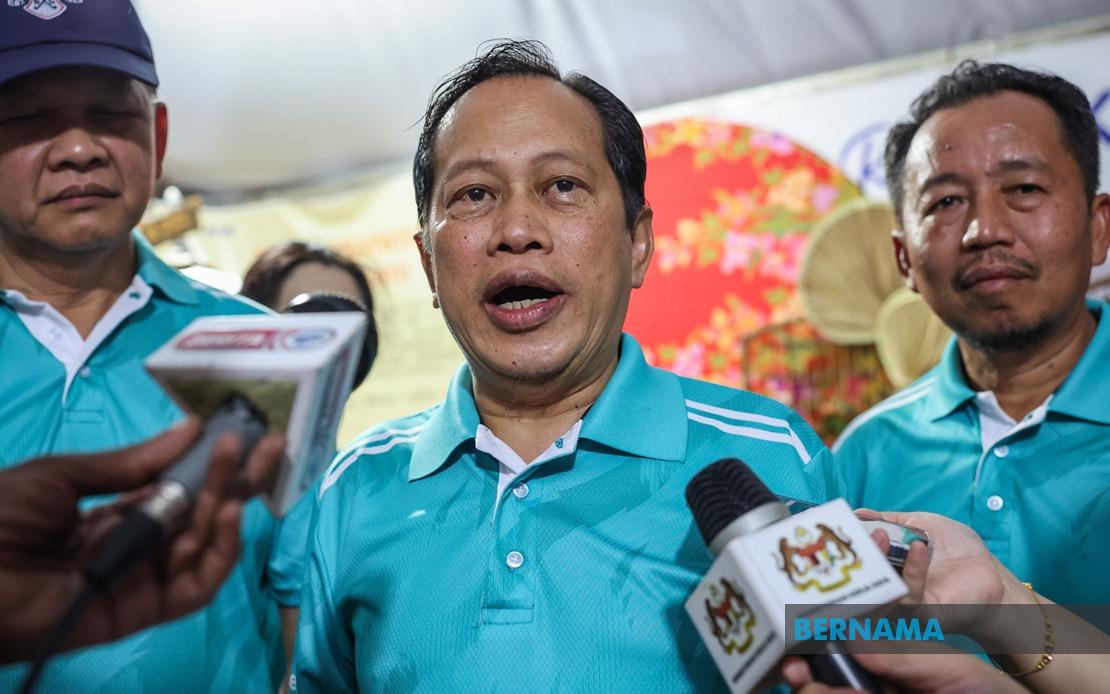
The Malaysian Works Ministry (KKR) has set its sights on securing the largest development budget allocation among all government ministries in the 2027 fiscal year, signalling an ambitious push to expand the nation's infrastructure footprint. Deputy Works Minister Datuk Seri Dr Ahmad Maslan announced the initiative during the Cultural Night Run at the Sultan Abdul Halim Mu'adzam Shah Bridge in Batu Kawan on Thursday evening, underscoring the ministry's commitment to scaling up both new development projects and ongoing maintenance across Malaysia's sprawling transport network.
The ministry's budgetary strategy reflects a consolidation approach, with KKR currently consolidating funding proposals from its principal agencies. This coordinated effort encompasses the Malaysian Highway Authority (LLM), the Construction Industry Development Board Malaysia (CIDB), and the Public Works Department (JKR), each contributing their operational and capital requirements for the upcoming fiscal period. All subordinate divisions and agencies have been directed to compile their submissions, with a crucial presentation scheduled for August 28 before Finance Minister II to make the case for enhanced allocation.
Ahmad Maslan disclosed that the ministry had received approximately RM10 billion in the previous budget cycle, of which RM9 billion was designated for development initiatives. The aspiration to increase this quantum reflects growing infrastructure demands across Malaysia's expanding economy and urban centres. The distinction between current and development allocations is particularly significant, as development funding directly translates to tangible new projects and modernisation efforts, whereas operational budgets sustain existing services and infrastructure maintenance.
Beyond budgetary appeals, the Works Ministry is advancing an increasingly sophisticated digital transformation agenda for Malaysia's highway infrastructure. Through the LLM, the ministry has prioritised the development of smart highways incorporating contemporary technologies including artificial intelligence, closed-circuit television monitoring, intelligent lane management systems, and innovative applications designed for Malaysian motorists. This technological integration represents a substantial departure from traditional highway management approaches, positioning Malaysia within a growing international trend toward digitally-enabled transport networks.
A centrepiece of this digital strategy is TuJu, a locally-developed navigation application created by LLM that has established itself as Malaysia's third major mapping platform alongside established competitors Waze and Google Maps. Rather than serving as a general-purpose navigation tool, TuJu specialises in highway-specific functionality, providing drivers with real-time CCTV feeds, accurate toll rate information, locations of rest and recreation facilities, emergency service availability, and constantly updated traffic conditions. The application maintains direct integration with the LLM Traffic Control Centre, which continuously monitors hundreds of surveillance cameras distributed across Malaysia's 34 highways, including both of Penang's major bridge crossings.
The technical infrastructure supporting TuJu extends beyond the application itself. By linking TuJu to complementary government initiatives such as the KKR and MYJalan applications, the ministry has created an ecosystem where motorists can not only receive traffic information but actively contribute by reporting road hazards, maintenance issues, and congestion patterns. This crowdsourced feedback mechanism strengthens real-time situational awareness across Malaysia's highway network, creating a virtuous cycle of data collection and service improvement.
Malaysia's highway infrastructure comprises 34 distinct highways operated by 28 separate concessionaires, spanning more than 2,000 kilometres of roadway. Among these, PLUS Malaysia Berhad operates the largest network, accounting for more than 1,000 kilometres. This fragmented operational structure—typical of Malaysia's public-private partnership model—creates both coordination challenges and opportunities for innovation across the concessionaire ecosystem. Ahmad Maslan's emphasis on multi-stakeholder technology adoption reflects an understanding that system-wide improvements require voluntary adoption rather than mandated compliance.
The ministry is also advancing implementation of Multi Lane Free Flow (MLFF) technology, a system enabling tolls to be collected from moving vehicles without requiring stops at traditional toll plazas. However, Ahmad Maslan clarified that this deployment remains at the proof-of-concept stage, with further rollout dependent on business-to-business arrangements between individual concessionaires rather than direct government investment. The decentralised implementation model allows each of the 28 operators to independently select service providers, whether through wholly-owned subsidiaries or external technology partners. PLUS Malaysia has already commenced MLFF trials utilising JustGo, a toll payment solution that exemplifies how private-sector innovation can integrate with existing highway operations.
The broader context for these infrastructure initiatives reflects Malaysia's positioning within Southeast Asia's competitive transport landscape. As regional economies increasingly invest in smart city and digital infrastructure, Malaysia's efforts to enhance highway digitisation serve both practical and strategic purposes. Enhanced traffic management reduces congestion costs, improves safety outcomes, and facilitates more efficient goods movement—all critical factors for maintaining Malaysia's economic competitiveness. The emphasis on locally-developed solutions like TuJu also demonstrates commitment to building domestic technological capability rather than importing wholesale international systems.
The Works Ministry's initiative gained public visibility during the Cultural Night Run 2026, an event attracting 5,000 participants including 114 international visitors from 18 countries. The gathering at the Sultan Abdul Halim Mu'adzam Shah Bridge served as a platform for showcasing infrastructure investment across multiple ministries, reflecting the collaborative nature of Malaysia's development agenda. The event's organisation involved coordination between KKR, the Entrepreneur Development and Cooperatives Ministry, the Youth and Sports Ministry, Penang state government, various cooperative agencies, and numerous corporate partners—demonstrating how infrastructure projects increasingly integrate with broader social and economic development objectives.
For Malaysian motorists and logistics operators, these initiatives promise tangible improvements in journey predictability and operational efficiency. The combination of enhanced traffic monitoring, real-time information access through locally-developed applications, and evolving toll collection technologies positions Malaysia's highway network for significant modernisation. However, success will ultimately depend on the coordinated uptake across fragmented concessionaires and sustained government funding commitments that the Works Ministry is now formally requesting through the Budget 2027 process.

