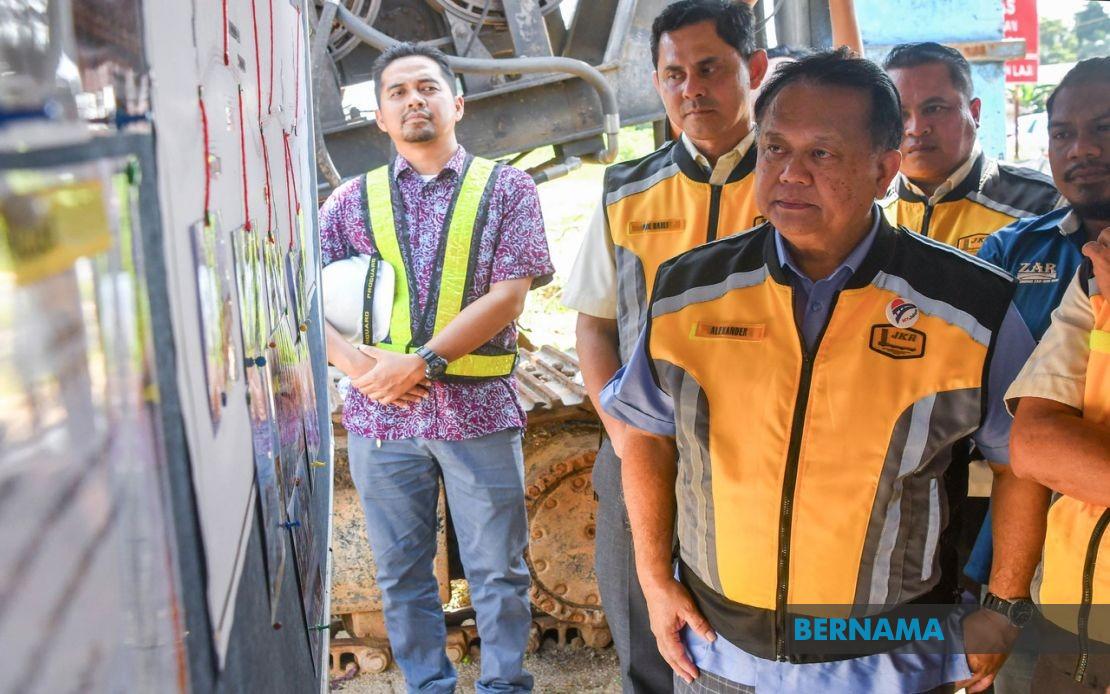
The Works Ministry has cast a wide net over struggling infrastructure schemes, identifying 50 problematic projects from its national portfolio of 865 undertakings. Works Minister Datuk Seri Alexander Nanta Linggi disclosed this substantial oversight effort during a site visit in Kota Bharu on July 16, signalling the government's determination to arrest delays that have plagued development timelines across the country. Of Kelantan's 104 projects administered by the ministry, merely seven have earned the "sick" designation, suggesting the state fares better than the national average when measured against the full project roster.
The ministry's classification system reflects a pragmatic acknowledgment that infrastructure delivery faces multifaceted obstacles. Nanta identified several recurring culprits behind project stagnation: contractors grappling with cash flow crises or operational mismanagement, protracted land acquisition procedures, complications arising from utility relocations, and geological surprises such as subsurface obstructions that escaped detection during preliminary surveys. These impediments underscore the complex interplay between commercial viability, administrative processes, and physical realities that can derail even carefully planned development schemes. The admission that such challenges emerge despite planning efforts provides Malaysian stakeholders with realistic insight into construction sector vulnerabilities.
The ministry's response framework distinguishes between projects warranting termination and those meriting extensions. Nanta outlined the cost-benefit calculus informing such decisions: when a project stands substantially complete with merely 10 to 15 per cent of work outstanding, granting an extension of time becomes financially prudent compared to contract termination and fresh contractor engagement, which would inflate expenditure. This measured approach suggests the ministry has learned lessons from previous episodes where hasty terminations compounded rather than resolved delivery problems. However, the qualification that decisions must follow proper governance procedures indicates awareness of legal exposure and contractual obligations that constrain administrative discretion.
Weekly monitoring cycles have become embedded in the ministry's post-Cabinet review processes, creating systematic mechanisms for performance assessment and intervention planning. Nanta delegated oversight responsibility to his deputy, distributing workload whilst maintaining ministerial accountability. This institutional arrangement suggests recognition that sustained attention—rather than sporadic intervention—is essential for extracting tangible improvements from troubled projects. The transparency around review frequency and escalation pathways provides public assurance that the ministry is neither ignoring difficulties nor allowing problems to fester unaddressed. For contractors and project stakeholders, such systematic scrutiny creates both pressure for performance and clarity regarding expectations.
Projects demonstrating persistent underperformance face graduated consequences, from contractor removal through to contract termination. These sanctions carry legal ramifications requiring careful calibration to avoid litigation exposure. The ministry's acknowledgment of governance constraints reveals understanding that administrative power, however significant, operates within juridical boundaries established by contract law and regulatory frameworks. This sobering recognition reflects experience gained from past disputes and litigious entanglements. Malaysian infrastructure participants should note that remedy options, whilst substantial, are not unlimited—disputes often favour contractually documented positions over ministerial convenience.
Kelantan's FT209 and FT131 road upgrade project exemplifies both the ministry's ambitions and the practical challenges besetting major works. The RM191 million scheme aims to attack chronic congestion plaguing the Kubang Kerian–Sabak–Pengkalan Chepa corridor, a route integral to Kelantan's commercial connectivity. The six-kilometre improvement programme has achieved 71.61 per cent physical progress, positioning it for September 2025 completion. However, the project has demanded land acquisition negotiations affecting 300 properties at cumulative cost exceeding RM200 million—a figure that dwarfs the main contract value and illustrates how property transactions can consume resources and create delays independent of construction performance.
The flooding complaint raised by Pengkalan Chepa Member of Parliament Datuk Dr Ahmad Marzuk Shaary adds environmental and social dimensions to project governance. Construction activities frequently generate drainage disruptions affecting surrounding communities, creating tensions between development objectives and residential welfare. Nanta's instruction to construct a temporary 40-metre drainage channel reflects recognition that temporary mitigation measures, whilst not ideal, represent necessary interim solutions until permanent infrastructure remediation occurs upon project completion. This responsiveness to community concerns suggests the ministry appreciates that infrastructure success encompasses not merely technical delivery but maintenance of stakeholder goodwill throughout implementation phases.
For Malaysian observers tracking infrastructure performance, the ministry's 50-project watch list simultaneously conveys reassuring oversight and concerning prevalence of delivery difficulties. The fact that roughly six per cent of the ministry's national portfolio requires intensive monitoring indicates neither catastrophic system failure nor unconstrained smooth functioning—rather a middle ground where most projects progress adequately whilst a significant minority encounter obstacles requiring active remediation. The ministry's willingness to publicise difficulties and monitoring mechanisms, rather than obscuring them, suggests institutional confidence that identified problems are manageable through systematic attention. However, the sheer number of projects requiring intensive focus raises questions about whether planning and pre-contract assessment processes might be strengthened to prevent difficulties from emerging initially.
The weekly review cadence and graduated intervention framework reflect contemporary governance best practice emphasising adaptive management over static planning. Infrastructure delivery inherently encounters contingencies, yet systematic monitoring creates opportunities for timely course correction rather than discovering catastrophic failures belatedly. The ministry's approach implicitly acknowledges that perfection is unattainable but trajectory improvement remains achievable through disciplined attention. For Southeast Asian peers confronting comparable infrastructure delivery challenges, Malaysia's experience demonstrates that transparent monitoring systems and graduated sanctions can constitute viable governance responses to persistent development difficulties, provided institutional capacity exists to implement such frameworks consistently.

