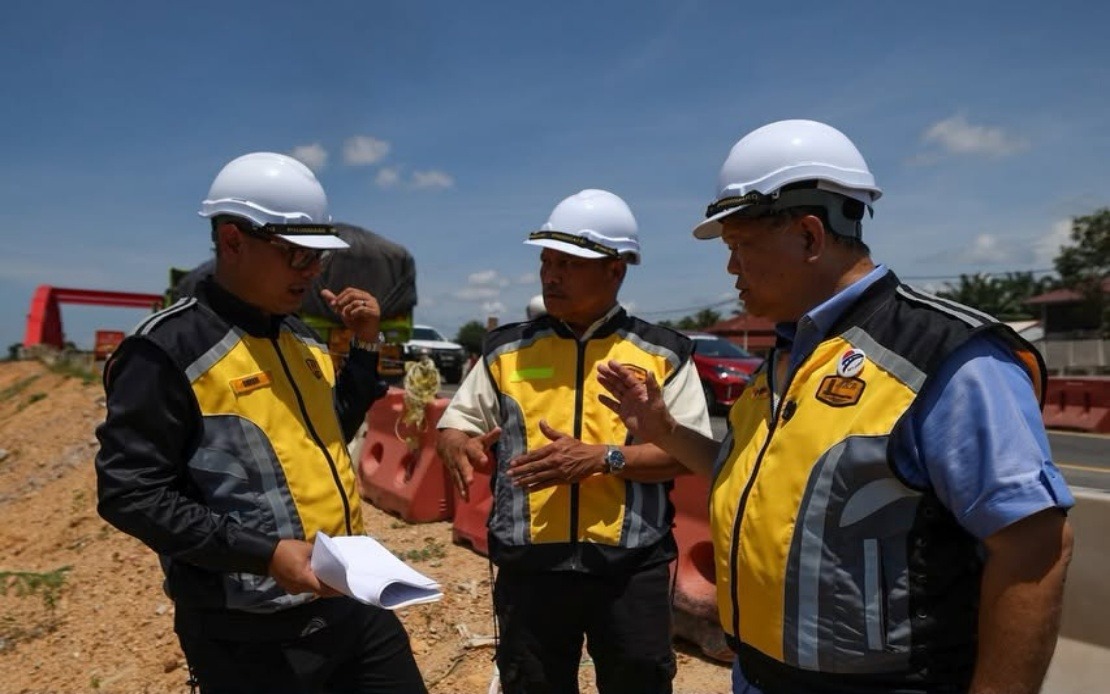
Works Minister Datuk Seri Alexander Nanta Linggi has taken direct action to break the cycle of delays affecting the Sungai Durian Bridge Replacement Project in Kuala Krai, ordering the contracted builder to immediately mobilise additional resources and expedite all remaining construction phases. The intervention comes after a ministerial site visit revealed that despite receiving six Extensions of Time, the infrastructure project continues to fall behind its revised schedules, prompting the government to signal zero tolerance for further slippage.
The bridge replacement initiative, a key piece of regional infrastructure in Kelantan, has become emblematic of the construction delays that periodically afflict Malaysian public works. By personally inspecting the site, Nanta underscored the political weight now attached to project completion—a signal that excuses rooted in technical challenges or unforeseen circumstances will no longer suffice. The minister's public commitment, articulated through his official Facebook statement, reflects mounting pressure from constituents who have endured prolonged waiting periods for a project that was originally envisioned to improve connectivity and traffic flow in the Kuala Krai area.
Technical complications have compounded the timeline issues. The contractor identified borepile installation difficulties stemming from conflicts with existing utility pipelines running beneath the proposed construction zone. Such underground infrastructure clashes are not uncommon in Malaysia, where historical records of utility placements are sometimes incomplete or poorly documented. Additionally, the temporary support structure required to hold the steel bridge components during assembly and erection has presented unexpected engineering challenges that initially slowed progress. These obstacles, while legitimate from an engineering standpoint, have nonetheless failed to prevent the accumulation of delays that now span multiple construction seasons.
Nanta's directive mandates a fundamental shift in project execution. Rather than accepting further Extensions of Time, which have become the default response to construction bottlenecks, the ministry has demanded that the contractor reallocate personnel, equipment, and financial resources to compress the remaining work timeline. This approach reflects a broader shift within Malaysia's public works administration toward treating schedule adherence as a non-negotiable performance metric. The minister has instructed the Public Works Department to intensify its monitoring protocols, suggesting that weekly or even daily progress reviews may now replace the typical monthly supervision cycle.
The involvement of the Public Works Department in collaborative problem-solving represents another dimension of the accelerated approach. Rather than allowing technical disputes to fester between the ministry and contractor, the directive explicitly calls for prompt resolution of engineering issues through coordinated effort. This partnership model acknowledges that infrastructure projects of this scale require flexibility in problem-solving while maintaining firmness on delivery timelines. The identification of utility pipeline conflicts as a delaying factor, for instance, now becomes a solvable problem requiring enhanced coordination with relevant utility providers rather than an excuse for indefinite postponement.
From a regional perspective, the Sungai Durian Bridge project holds significance for East Coast connectivity. Kuala Krai, positioned within Kelantan's transport network, benefits from improved bridge infrastructure that facilitates commercial movement and reduces journey times for residents. The project's persistent delays have likely frustrated local businesses dependent on efficient road networks and residents requiring reliable access to regional services. The ministerial intervention thus carries implications beyond mere project management; it addresses legitimate public grievances about infrastructure availability in less densely developed regions of peninsular Malaysia.
The minister's statement that "the public had waited far too long" acknowledges the legitimate frustration that accumulates when infrastructure projects extend well beyond their original timelines. In Malaysian political discourse, such delays frequently become focal points for criticism about governance effectiveness and resource management. By demonstrating personal engagement and imposing accountability measures, Nanta has positioned the ministry as responsive to public concerns while establishing clear consequences for continued underperformance. This messaging matters in Kelantan, where infrastructure development remains a politically sensitive topic.
The deployment of additional resources, though an obvious solution, carries financial and logistical implications. Contractors may resist accelerated schedules that require premium payments for overtime labour, expedited material deliveries, or equipment mobilisation outside normal cycles. The ministry's willingness to potentially absorb additional costs signals that schedule adherence has become the paramount objective. This shift in priorities may establish precedent for how future construction projects are managed, particularly those with high public visibility or constituency engagement.
Looking forward, the success or failure of this acceleration mandate will likely influence how Malaysian authorities approach infrastructure project delays more broadly. If the Sungai Durian Bridge project achieves completion within the revised timeline, it demonstrates that intensive ministerial oversight combined with contractor resource augmentation can overcome technical obstacles. Conversely, should delays persist despite these interventions, it may indicate that some technical challenges require more fundamental solutions, such as project redesign or alternative construction methodologies.
The incident also highlights the importance of comprehensive pre-construction planning. Utility pipeline conflicts, which contributed to the borepile delays, ideally should have been identified and addressed during the design phase rather than discovered during active construction. This observation carries lessons for future infrastructure tenders, where more rigorous site investigation and utility coordination protocols could prevent similar obstacles. Malaysian construction industry standards may gradually shift toward requiring certified utility surveys before contract commencement, reducing unforeseen underground conflicts.
Nanta's commitment to monitor the project until completion reflects institutional accountability mechanisms becoming more visible within Malaysia's public works sector. Rather than treating infrastructure projects as fire-and-forget undertakings once construction commences, the ministry is positioning itself as an active participant in problem resolution. This hands-on approach, particularly when exercised at ministerial level, sends powerful signals about governance priorities and the consequences of persistent underperformance.

