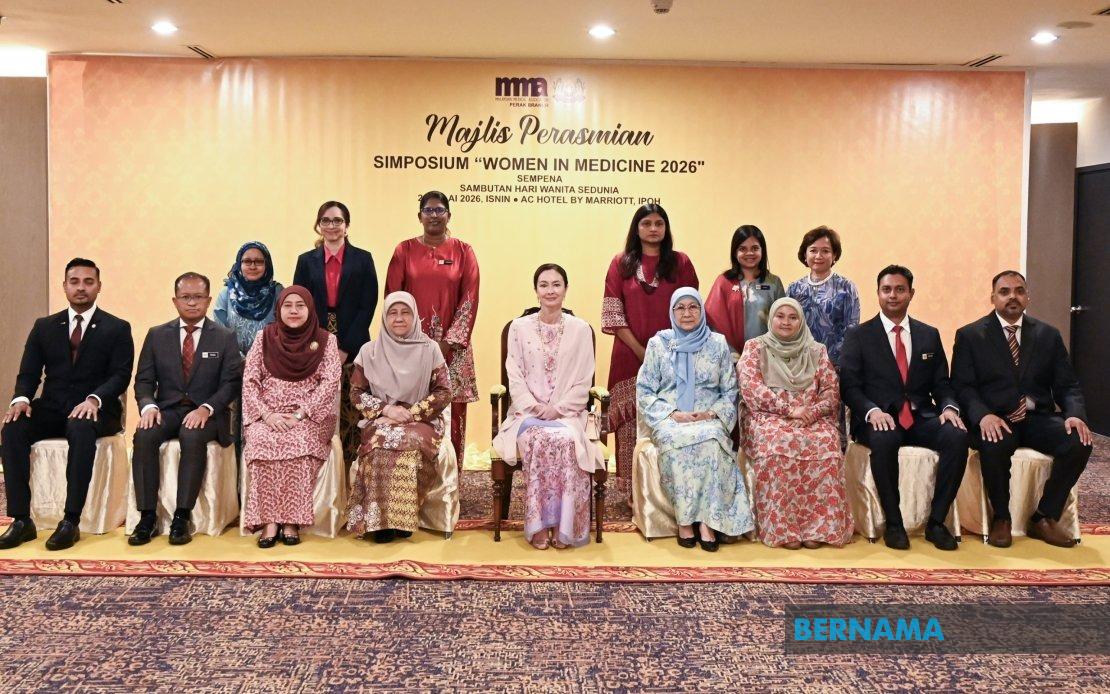
Healthcare leaders in Perak have made a compelling case for expanding women's representation in senior medical roles, contending that gender diversity at decision-making levels brings measurable benefits to patient outcomes and system innovation. Speaking at the Women in Medicine 2026 Symposium in Ipoh on July 20, senior figures from Malaysia's medical establishment articulated how female leadership introduces broader strategic thinking, heightened compassion, and a genuine focus on human-centred solutions—qualities they argue are indispensable as the sector grapples with mounting pressures.
The healthcare landscape across Malaysia and the region faces a confluence of complex, interconnected challenges that demand fresh approaches and creative problem-solving. Mental health disorders are rising sharply across Southeast Asia, with the pandemic's psychological aftermath still reverberating through communities. Non-communicable diseases such as diabetes, hypertension, and obesity continue their relentless climb, straining public health budgets and overwhelming primary care services. Meanwhile, Malaysia's ageing population—a demographic shift shared across developed and developing nations in the region—necessitates fundamental restructuring of preventive and geriatric care models. Simultaneously, healthcare systems must integrate digital tools and artificial intelligence into their operations while managing workforce transitions and patient expectations around technology-enabled medicine.
Dr Monesh Pillai, chairman of the Perak Malaysian Medical Association, articulated the association's position clearly, emphasizing that navigating this multifaceted terrain requires leadership that extends beyond technical competence. The presence of women in pivotal roles, he argued, fundamentally transforms how healthcare institutions approach problem-solving and policy formulation. Such leadership shapes institutional culture, influences resource allocation priorities, and determines whether systems genuinely serve patient needs or merely process cases efficiently. His remarks underscore a reality increasingly recognised across Malaysia's medical sector: that homogeneous leadership structures, whether male-dominated or otherwise, carry inherent blind spots that can compromise care quality and system responsiveness.
The symposium, held under the patronage of Tuanku Zara Salim, Raja Permaisuri of Perak, and supported by Datin Seri Aezer Zubin, wife of the Perak Menteri Besar, drew upon the momentum of International Women's Day to reframe women's participation in medicine as a systemic imperative rather than a diversity checkbox. Dr John Emmanuel, organising committee chairman, elaborated on this distinction, emphasising that true empowerment transcends merely creating opportunities for women. Instead, it requires deliberate institutional design that carves out genuine space for female healthcare professionals to exercise leadership, make consequential decisions, and shape the future trajectory of medical practice and policy.
Emmanuel's remarks highlighted an important evolution in how the medical community conceptualises women's roles. Historical narratives often confined women to clinical practice, particularly in front-line patient care roles such as general practice and nursing. Contemporary healthcare organisations, however, increasingly recognise women's contributions across the full spectrum of medical enterprise. Female administrators drive organisational strategy, women researchers pioneer scientific discoveries in molecular biology and epidemiology, female educators shape the next generation of practitioners, and women in allied professions—pharmacy, physiotherapy, diagnostic imaging—bring critical expertise to multidisciplinary teams. Some serve as patient advocates, others as community health activists, and many navigate the demanding terrain of balancing professional excellence with caregiving responsibilities.
The symposium featured substantive contributions from established healthcare leaders, including Datuk Dr Adeeba Kamarulzaman, president and pro vice-chancellor of Monash University Malaysia, who delivered insights on translating clinical knowledge into global policy frameworks—a domain where women's voices have historically been underrepresented despite their clinical competence. Dr Sangeetha Siniah, a consultant paediatric immunologist and infectious disease specialist at Sunway Velocity Medical Centre, addressed the intersection of women's health with broader population health concerns, illustrating how women's medical expertise extends into specialised domains that directly impact vulnerable populations including children.
For Malaysian healthcare professionals and policymakers, the Perak MMA's advocacy carries particular resonance. Malaysia's healthcare system, while delivering respectable outcomes on many metrics, operates under chronic resource constraints and faces mounting demand from an expanding and ageing population. Women constitute a substantial portion of Malaysia's medical workforce, yet their representation diminishes sharply at senior leadership levels. This underutilisation of talent represents both an equity concern and an efficiency problem. Drawing women into decision-making positions could enhance the system's adaptive capacity precisely when innovation is most needed.
The broader Southeast Asian context amplifies this argument's relevance. Across the region, healthcare systems confront similar pressures: rising disease burdens, limited public funding, brain drain to developed countries, and rapid technological change. Several nations in the region have made policy commitments to gender equality in healthcare leadership, yet implementation remains inconsistent. Malaysia's public and private healthcare sectors could gain strategic advantage by deliberately cultivating pipelines of female leadership talent, creating mentorship structures, and removing structural barriers that discourage women from ascending to senior positions.
The advocacy for women's leadership in medicine also intersects with patient safety and quality of care—practical considerations that extend beyond abstract notions of fairness. Research increasingly demonstrates that diverse teams make better clinical decisions, that female physicians often exhibit different prescribing patterns and follow-up practices than male colleagues, and that mixed-gender leadership teams generate more creative solutions to complex organisational challenges. In a Malaysian context where healthcare equity remains an unfinished agenda, particularly for rural and underprivileged populations, these considerations carry real weight.
Moving forward, the medical establishment's articulation of this case represents a significant cultural shift. No longer is gender diversity presented as primarily a moral or social justice issue, though those dimensions remain important. Instead, women's leadership is framed as functionally essential to system performance—a reorientation that should resonate with policymakers focused on health system efficiency and clinical outcomes. For Malaysia's healthcare professionals, patients, and administrators, the message from Perak's medical leaders suggests that advancing women in medicine serves not primarily individual career advancement, but systemic improvement in how healthcare serves the nation's diverse populations.

