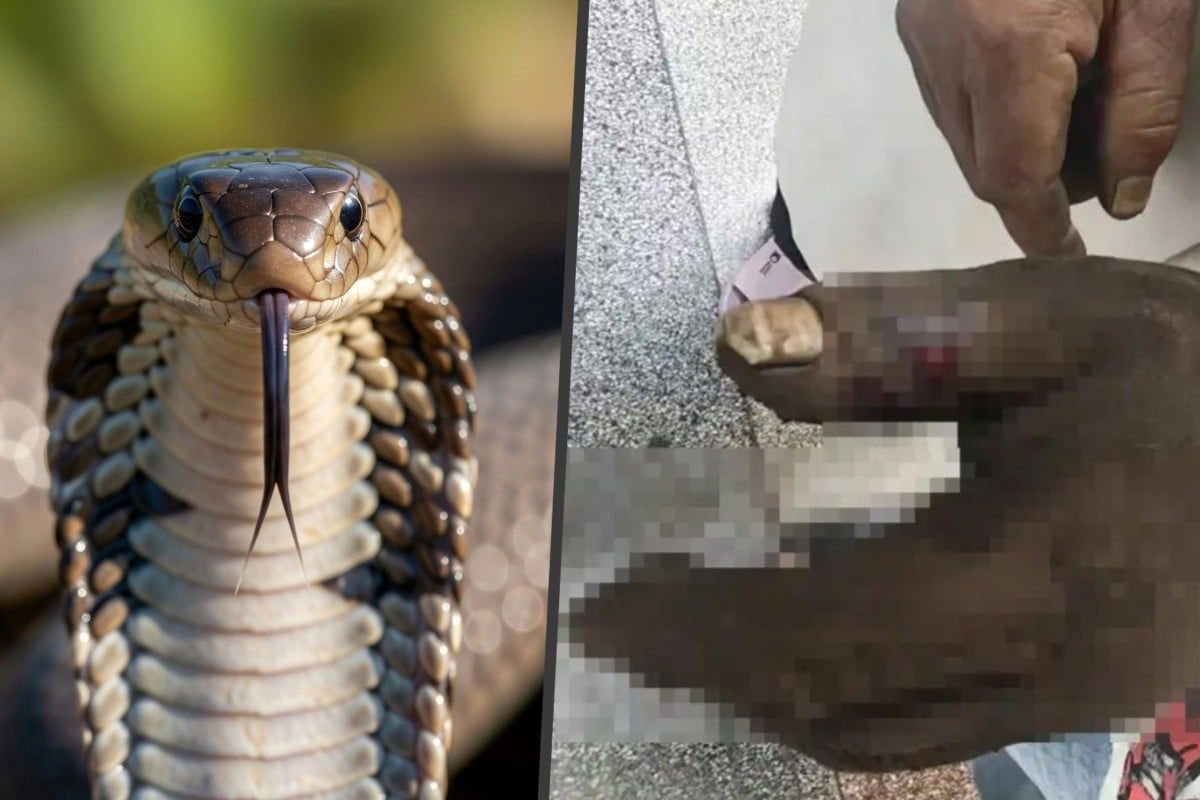
A dramatic rescue attempt in southwestern China has highlighted the risks of following first aid methods depicted in popular media. When a farmer in Yuanyang county, Yunnan province, suffered a cobra bite to his finger while working in his field, his wife's immediate response—to suck the venom directly from the wound—seemed like a lifesaving measure. Instead, the well-intentioned action left her seriously poisoned and hospitalised alongside her husband, their treatment at Honghe Prefecture No 3 People's Hospital becoming a cautionary tale about the gap between television drama and medical reality.
The farmer's condition deteriorated rapidly following the bite. His finger swelled considerably, and he soon experienced dizziness and weakness, signs of envenomation that alarmed his wife. Drawing on scenes she had witnessed on television, she made the fateful decision to extract the venom through suction without any protective measures whatsoever. While her husband was promptly transported to hospital, the consequences of her intervention became apparent within hours. Numbness spread across her mouth, tongue, face and limbs, and by the following day, severe fatigue had set in, prompting her family to seek emergency medical attention for her as well.
Doctors treating the couple identified them both as victims of cobra poisoning and administered antivenom serum alongside supportive medical care. Their condition stabilised over several days, leading to discharge from hospital. Yet the incident itself proved far more instructive than its outcome might suggest. Medical professionals at the Yunnan facility seized the opportunity to clarify fundamental misconceptions about snakebite response—misconceptions that remain deeply embedded in popular consciousness across Asia, including Malaysia and other Southeast Asian nations where venomous snake encounters occur regularly.
The most persistent myth concerns the extraction of venom through oral suction. Doctors explained that the mouth's oral mucosa contains an exceptionally dense network of capillaries—tiny blood vessels positioned just beneath the surface. When venom contacts these capillaries, it enters the bloodstream almost instantaneously, poisoning the person attempting rescue rather than providing relief to the victim. Moreover, snakebite punctures are deceptively small, often resembling mere pinholes. Contrary to popular belief, venom does not remain in accessible surface tissue but rapidly diffuses into subcutaneous layers and the circulatory system, making extraction through suction physically impossible regardless of how vigorously it is attempted.
For Malaysian readers, this distinction carries particular relevance. The region's abundance of pit viper species, including various cobra subspecies, means snakebite incidents occur sporadically in rural and semi-urban areas. The persistence of television-inspired first aid mythology across regional media means educated awareness of correct procedures could genuinely save lives. The Yunnan case demonstrates that the impulse to help is not in question—the wife's swift action reflected genuine concern—but uninformed intervention can transform a manageable medical emergency into a double tragedy.
Doctors also addressed another widespread dangerous practice: the deliberate cutting or slashing of snakebite wounds to promote bleeding. This approach, they cautioned, carries severe risks. Beyond the obvious danger of blood loss, such wounds invite infection and can cause additional tissue damage. Similarly misguided interventions include applying intense heat to the bitten area or using ice directly on the skin, both of which can worsen tissue damage and complicate medical treatment. These myths, perpetuated through decades of dramatised entertainment, represent some of the most harmful first aid misconceptions in circulation.
Instead, medical professionals recommend a straightforward protocol. Upon being bitten, the victim should immediately contact emergency services, as rapid antivenom administration remains the only effective treatment. Immobilisation is crucial—limiting movement restricts venom circulation throughout the body and buys precious time before reaching hospital. If the snake remains visible or accessible, capturing photographs showing the serpent's colour, pattern markings, and head shape proves invaluable to attending physicians. This information allows doctors to administer species-specific antivenom rather than relying on broad-spectrum treatment, improving outcomes significantly.
The incident has resonated widely on Chinese social media, partly because snakebite cases consistently generate considerable public interest and discussion. A particularly compelling example emerged in May when a fourteen-year-old student in Guangdong province experienced a mysterious bite on school grounds. The teenager initially dismissed the incident, having felt no pain and unable to identify the attacker. Hours later, as numbness and blurred vision developed, he finally reported the incident. Doctors administering treatment stated unequivocally that had medical intervention been delayed by merely one or two additional hours, respiratory failure would have ensued—a stark reminder of cobra venom's systemic severity.
The Yunnan couple's experience has prompted reflection on how media representations shape public understanding of medical emergencies. Online commentators have noted the disconnect between dramatised television rescues and genuine medical protocols, with observers recognising that entertainment-driven depictions of snakebite response often prioritise narrative drama over accuracy. One notable response acknowledged the wife's devotion while questioning the reliability of television-based medical knowledge. Such reflections suggest growing awareness, at least among online communities, that modern first aid principles deserve greater prominence in public consciousness.
For Malaysia specifically, where encounters with cobras, kraits, and other venomous snakes occur across peninsular and East Malaysian regions, this case offers concrete lessons. Agricultural workers, outdoor enthusiasts, and rural residents benefit from understanding that the correct response to any snakebite—whether inflicted by cobra, pit viper, or any other species—involves calmness, immobilisation, rapid transport to the nearest medical facility with antivenom capability, and detailed observation of the snake itself. The temptation to intervene dramatically, while emotionally understandable, consistently proves counterproductive. Modern emergency medical systems exist precisely to handle such situations; bypassing their expertise in favour of improvised methods, however well-intentioned, risks transforming isolated incidents into compound tragedies as illustrated by the Yunnan experience.

