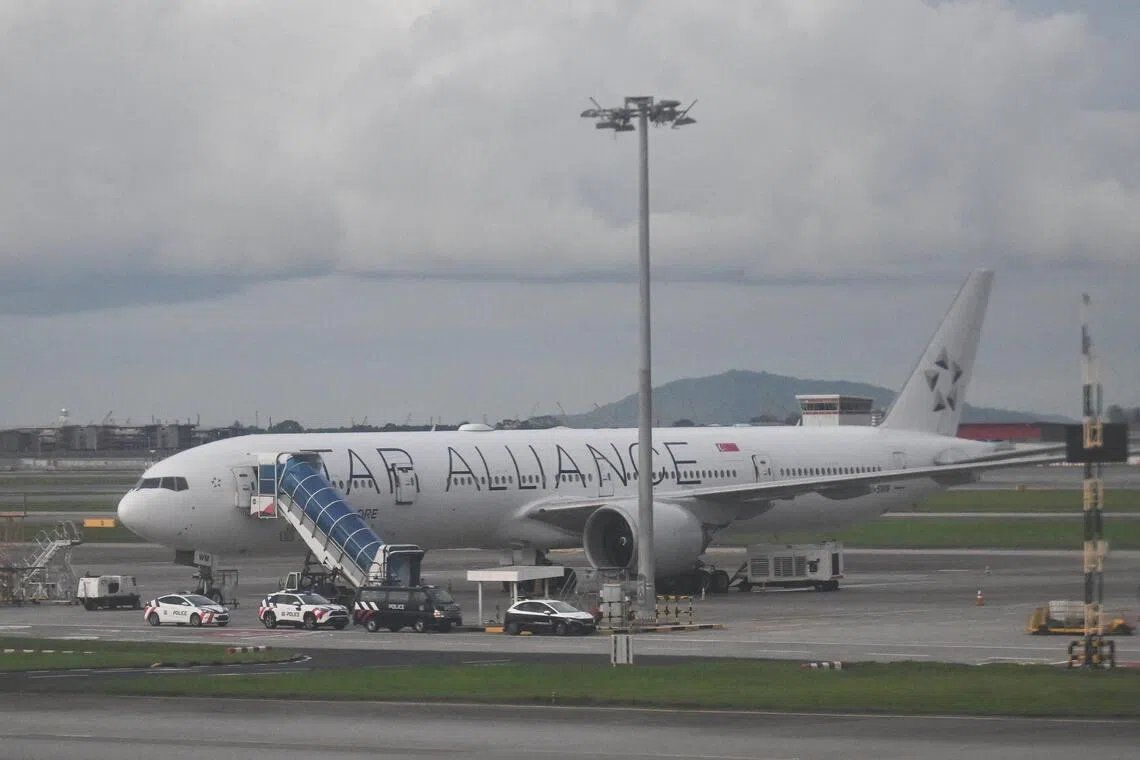
Linda Kitchen, a 74-year-old widow, has commenced legal action against Singapore Airlines at Britain's High Court, seeking compensation and answers following the death of her husband during a catastrophic turbulence event aboard Flight SQ321 in May 2024. The case marks a significant development in the aftermath of an incident that claimed at least one life, injured 79 people, and has prompted multiple passengers to pursue separate claims against the carrier.
The flight, which had departed London bound for Singapore with 211 passengers and 18 crew members aboard, encountered severe turbulence on May 21, 2024, while traversing airspace over Myanmar. In the span of five seconds, the aircraft plummeted more than 54 metres, causing catastrophic injuries throughout the cabin. The sudden atmospheric disturbance occurred without warning during the routine breakfast service, sending unsecured items and passengers themselves flying through the cabin with violent force.
Geoffrey Kitchen, a distinguished theatre director and Linda's spouse of 52 years, suffered a fatal heart attack during the violent descent. The couple had embarked on a six-week holiday through Singapore, Indonesia, and Australia, anticipating a restful retirement journey. During the turbulence, Geoffrey fell directly onto Linda, crushing her against an armrest with such force that she sustained severe spinal fractures requiring extended medical intervention. Other passengers eventually assisted in moving him, and a physician present on the flight initiated emergency resuscitation attempts, though these ultimately proved unsuccessful.
Following the emergency diversion to Suvarnabhumi Airport in Bangkok for landing, Linda was hospitalised for ten days before being medically airlifted to Bristol in the United Kingdom. The physical trauma of the incident was compounded by the psychological devastation of learning of her husband's death two days later. She subsequently spent an additional week in hospital upon returning to Britain and has required substantial ongoing assistance with daily activities since her discharge, with medical specialists recommending long-term care support for her spinal injuries.
Anthe Korelidou, the aviation specialist lawyer representing Kitchen's interests, emphasises that the family's pursuit of legal proceedings extends beyond financial compensation. More than two years after the incident, fundamental questions persist regarding what transpired during those critical moments and whether preventive measures might have mitigated the injuries sustained. Korelidou notes that the family seeks comprehensive investigations into the event, with the High Court action representing a crucial step towards obtaining the answers that Geoffrey's loved ones believe they deserve.
The proceedings submitted to the British High Court encompass two distinct claims filed in Linda Kitchen's name, one regarding her personal injuries and another representing the estate of Geoffrey Kitchen. Her case is not isolated; official court records indicate that additional passengers including Bradley Richards, Jack Jenkins, Hannah Fullerton, Andrew Dawood, Bryan Matthews, and the couple Pauline and Michael Rainey have also initiated separate legal actions against the airline, suggesting widespread dissatisfaction with the airline's response to the tragedy.
Singapore Airlines responded to inquiries regarding the litigation by declining to comment on proceedings before the courts, a standard legal position adopted by organisations facing active litigation. However, the airline had previously moved to address victims' circumstances through a compensation framework established in 2024. Passengers who sustained minor injuries were offered US$10,000, whilst those experiencing serious injuries requiring long-term medical treatment received advance payments of US$25,000 to assist with immediate needs. Additionally, SIA committed to full airfare refunds for all passengers aboard the flight and issued a formal apology acknowledging the traumatic experience endured by those on board.
The Singapore Transport Safety Investigation Bureau (TSIB), operating under the Ministry of Transport, conducted an investigation into the meteorological circumstances that preceded the turbulence. The bureau's findings determined that storm clouds most likely responsible for the severe atmospheric disturbance were not detected by the aircraft's on-board weather radar system, resulting in the pilots receiving no advance warning of the hazardous conditions ahead. This detection failure appears to have been the primary factor allowing the turbulence to catch the flight crew by surprise.
Whilst the TSIB investigation identified the radar's failure to detect the storm system, the bureau has maintained that it remains inconclusive whether underlying technical malfunctions within the radar equipment itself contributed to the oversight. This ambiguity has likely fuelled the family's desire for more comprehensive investigation, particularly regarding whether the aircraft's safety systems functioned as designed or whether maintenance and testing procedures may have fallen short of required standards. Such questions carry significant implications for aviation safety protocols across the region and the adequacy of detection systems on long-haul operations traversing tropical storm zones.
The incident highlights persistent challenges in aviation safety, particularly regarding turbulence detection and passenger protection during sudden atmospheric disturbances. Airlines across Southeast Asia operate regularly through airspace where severe but unpredictable turbulence occurs, raising questions about whether current warning systems and safety protocols adequately protect travellers. Linda Kitchen's legal action, along with those pursued by fellow passengers, may establish important precedents regarding airline accountability when safety systems fail to provide adequate warning of hazardous conditions.
For Malaysian and regional aviation stakeholders, this case underscores the importance of rigorous maintenance standards for weather radar systems and the necessity of continuous investment in advanced detection technology. As air travel through Southeast Asian airspace continues to expand, incidents like Flight SQ321 serve as sobering reminders that even brief moments of undetected turbulence can have life-altering consequences. The outcome of Kitchen's litigation may influence how airlines throughout the region assess their safety responsibilities and the standards to which they are held accountable when preventable accidents occur.

