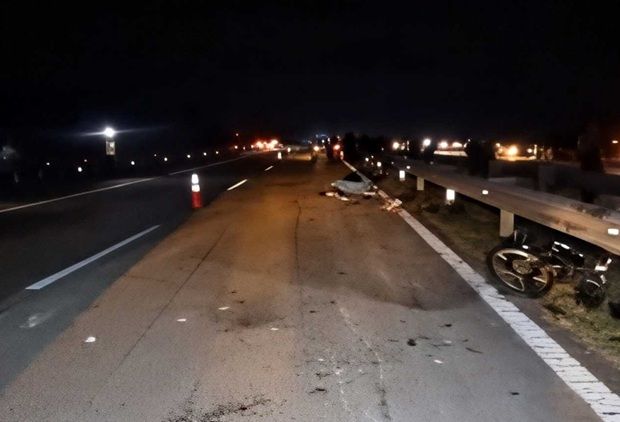
The East Coast Expressway witnessed another tragedy in the early hours of last Saturday when a motorcycle collision claimed four lives and injured 13 others, leaving eight young children suddenly bereft of their fathers. The immediate aftermath brought the predictable rush of social media commentary and finger-pointing about reckless behaviour and dangerous riding practices. Yet amidst the cacophony of public judgment and blame-assignment, a deeper and far more pressing reality went largely unexamined: the sudden economic devastation visited upon families who had neither sought nor deserved such catastrophe.
The children left behind—ranging from one to thirteen years old—now face an uncertain future without the primary breadwinner whose daily labour sustained them. Their mothers, thrust unexpectedly into single parenthood, must now navigate the overwhelming practical and financial demands of raising children alone. The immediate necessities are daunting: milk for infants, rent payments, kindergarten and school fees, clothing as the children grow, and adequate nutrition to ensure healthy development. These are not luxuries or indulgences, but the baseline requirements every child needs to flourish.
Yet the conversation about social security in Malaysia often fails to capture what the concept truly represents. Many Malaysians view social protection as merely a form of compensation paid after tragedy strikes, or as a temporary relief measure for those unlucky enough to suffer illness or injury. This fundamental misunderstanding obscures the actual purpose of social security schemes, which rests on a principle far more profound: solidarity. The scheme embodies the idea that those blessed with good health should support the sick, those spared by tragedy should stand alongside those who suffer loss, and those able to work should help sustain those who cannot. It is fundamentally a societal commitment that when disaster threatens to collapse a family's economic foundation, particularly when children depend on that stability, the community will not allow them to sink into poverty.
The East Coast Expressway crash demonstrates this principle in concrete terms through the survivor benefits administered by the Social Security Organisation (PERKESO). Three of the four men who died had maintained contribution records with PERKESO, and their families now receive monthly Survivors' Pensions. The family of Che Mohd Suffian Che Gani receives RM2,207.63 monthly, the family of Muhammad Hafiz Al Hakim Mazlan receives RM1,258.33, and the family of Mohd Aizat Husni receives RM708.33. These amounts reflect each individual's contribution history, recognising that workers with longer or more substantial contributions had been actively supporting the scheme.
When these monthly pensions are apportioned to widows and children according to prescribed formulas, the figures take on deeper significance. The three widows receive RM1,325, RM755, and RM425 monthly respectively—amounts they will receive for life, representing a continuing commitment rather than a one-time payment. Calculated conservatively over 30 years, these lifetime pensions translate to RM477,000, RM271,800, and RM153,000 in total support. Simultaneously, the eight children collectively receive RM1,670 monthly, which over a 15-year period amounts to RM300,600 dedicated specifically to their upbringing and education. In aggregate, PERKESO's protection for the families affected by this single tragedy exceeds RM1.2 million—a substantial safety net woven from the modest contributions workers made while employed.
Understanding these figures requires appreciating how social security operates as a long-term commitment rather than temporary assistance. The contributions that seemed like small, almost imperceptible deductions from workers' pay packets during their working lives now become a steady stream of protection flowing back to their families. This reciprocal arrangement ensures that the sacrifices workers made through consistent contributions yield tangible security for those who depend on them. The tragedy on the East Coast Expressway illustrates why maintaining this system—and why Malaysian workers should regard their contributions seriously—matters profoundly for family stability.
Beyond the deceased, the scheme's protective reach extends to the injured survivors as well, demonstrating its comprehensive approach to guarding families against economic devastation. Five of the 13 people injured in the crash qualified for benefits under PERKESO's coverage. This is particularly significant given the timing: prior to June 1 this year, victims of such an accident might have been statistically unable to access protection under existing frameworks. The introduction of enhanced coverage mechanisms means that those who survive catastrophic injuries—potentially facing lengthy recovery periods, permanent disability, or compromised earning capacity—no longer face the prospect of drowning in medical bills and lost income without any institutional support.
For Malaysian workers and families, the broader implications warrant serious consideration. Social security systems operate most effectively when participation rates remain high and contribution discipline remains strong. When citizens view these deductions with resentment as mere taxes rather than investments in family protection, or when employers become lax in remitting contributions, the system's capacity to respond to disasters like the East Coast Expressway tragedy deteriorates. Each missed contribution or evasion slightly weakens the communal promise that protects not just that individual worker, but their entire family circle.
The scheme also highlights an often-overlooked dimension of Malaysian society's resilience: the role of institutional protection in preventing tragedy from cascading into poverty. Without PERKESO's survivor benefits and disability protections, the eight children would likely have become candidates for poverty support, and their mothers would have joined the ranks of economically vulnerable single parents struggling against overwhelming odds. The public resources required to address such compounded hardship would dwarf the benefits paid from a functioning social security system. From this perspective, viewing social security contributions as a drag on personal finances misses the broader economic and social logic.
The tragedy also underscores why social security literacy remains a pressing concern across Malaysia. Many workers and families remain unclear about the specific protections available to them, the eligibility criteria for various benefits, or the calculation methods that determine payment levels. This knowledge gap means that even when families would benefit tremendously from accessing their entitlements, they may not know to apply or may lack understanding of the process. Improving public awareness about what PERKESO's various schemes provide—including the expanded Lindung 24 Jam protections—would empower families to navigate hardship more effectively.
Moving forward, the East Coast Expressway tragedy serves as a powerful reminder that social security deserves respect and support rather than dismissal or belittlement. While public discourse reasonably focuses on road safety and preventing reckless behaviour, it should not eclipse the equally important conversation about ensuring that when tragedies do occur—as they inevitably will—families possess institutional protection. The over RM1.2 million in benefits flowing to affected families represents not charity or welfare, but the fulfillment of a collective pledge made through regular contributions. For the eight children growing up without their fathers, and for the mothers now bearing the full weight of parental responsibility, that pledge represents the difference between hope and despair.

