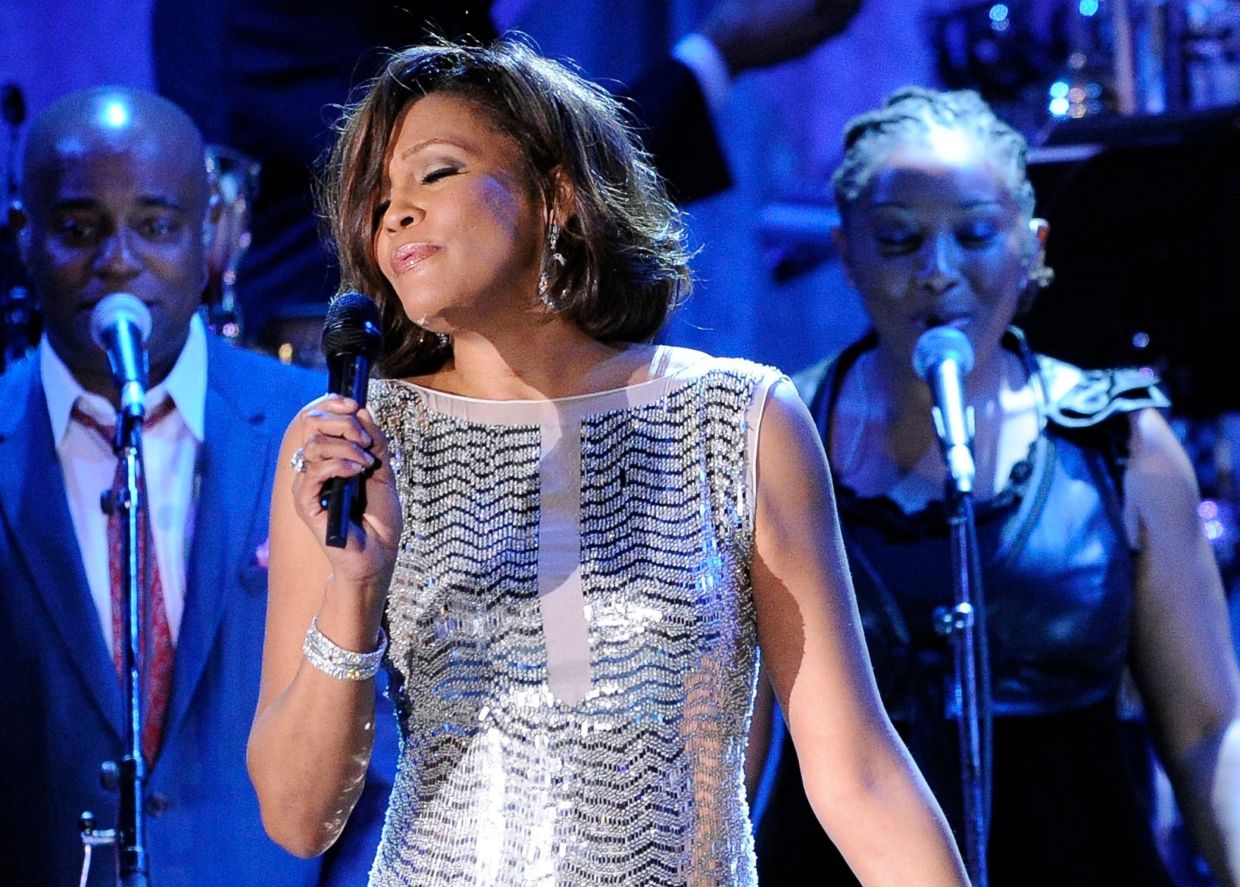
The Whitney Houston estate is building momentum around the legendary singer's enduring cultural impact, with a fresh wave of tributes and projects designed to introduce her artistry to new audiences and remind existing fans why her career remains unparalleled nearly four decades after her breakthrough. This expansion comes as the estate marks what would have been Houston's 63rd birthday on August 9, a milestone occasion that has sparked renewed interest in her singular achievements and the vault of material that remains largely unexplored by mainstream Western audiences.
Central to these celebrations is a comprehensive compilation of Houston's No. 1 singles, which captures the remarkable breadth of her dominance on the Billboard Hot 100 chart. The album assembles all 11 of her chart-topping hits, representing songs that transcended commercial success to become generational touchstones. These were not merely popular records but cultural moments—tracks that soundtracked pivotal moments in millions of lives and helped define the pop landscape of the 1980s and 1990s. Pat Houston, the executor of Whitney Houston's estate and her sister-in-law, emphasizes that this collection represents what Houston herself viewed as the ultimate statement of her artistry: songs that broke records, touched hearts globally, and showcased a voice that remains incomparable in popular music history.
Running parallel to the music release is the debut of the Whitney Houston Barbie doll, created by Mattel and unveiled on her birthday. This inaugural Barbie marks a significant moment in the estate's broader licensing strategy and reflects decades of planning. According to Pat Houston, conversations about a Whitney Houston Barbie began more than twenty years ago, making the doll's eventual release a realization of long-held creative aspirations. The collaboration with Mattel carries emotional weight for Houston, who describes the journey as inspirational—a testament to the power of persistence and the ability of dreams rooted in genuine purpose to transcend generations and reach audiences far beyond the original timeframe envisioned.
The role of music executive Clive Davis looms large in any discussion of Houston's legacy. Davis, who passed away in 2024, served as a transformative figure in Houston's life and career, functioning not merely as a professional mentor but as someone who fundamentally shaped her trajectory. Pat Houston speaks to this relationship with evident affection, noting that Davis revered Houston's career and played a role extending well beyond industry mechanics—their bond was deeply personal and meaningful. Houston herself reportedly acknowledged that while she possessed the talent and technical craft, Davis was instrumental in helping her career flourish and reach its historic potential. This dynamic remains central to how the estate conceptualizes Houston's legacy, recognizing that her success was built on collaborative relationships with visionary figures like Davis.
Looking forward, the estate is carefully considering additional projects without rushing into announcements. Pat Houston indicates that numerous proposals regularly come to the table, but the estate employs a measured approach to protect Houston's legacy from oversaturation or projects lacking genuine artistic purpose. This cautious strategy reflects a broader philosophy: Houston's catalogue is so extensive and her artistry so significant that the challenge lies not in finding content to release but in selecting projects that meaningfully serve her memory and provide genuine value to audiences. Rather than flooding the market with hastily assembled compilations or derivative works, the estate prioritizes initiatives that honor the depth and sophistication of Houston's contributions to music and culture.
Among the estate's most intriguing future ambitions are unreleased live performances that have never been broadcast to North American audiences. Pat Houston describes these shows as extraordinary documents of Houston's gifted talent in action—performances so impressive that seeing them would fundamentally shift perceptions of her artistry. This international catalogue represents a significant untapped resource, as portions of Houston's live performance history remain largely confined to regions outside North America. The estate sees opportunity in making these performances available to Western audiences who have never witnessed them, potentially offering new dimensions to how fans understand Houston's capabilities as a live entertainer.
The broader vision articulated by Pat Houston suggests an evolution beyond traditional music industry formats. While not definitively confirming a biopic-style project comparable to the Michael Jackson treatments that have become increasingly common in recent years, the estate is clearly contemplating multi-platform approaches to celebrating Houston's life and work. This could encompass released music, concert footage, and potentially documentary or narrative content that explores her extraordinary journey. However, the emphasis remains on purposeful creation rather than opportunistic packaging of her legacy.
What makes this strategic positioning particularly significant for Malaysian and Southeast Asian audiences is that it acknowledges Houston's truly global impact. Her voice and artistry transcended American markets, achieving profound resonance internationally. The estate's recognition that valuable content exists outside North America underscores Houston's multinational cultural importance and suggests that future projects may offer perspectives on her career developed in regions where her influence operated differently than in the United States. This internationalist approach could ultimately enhance how global audiences understand her legacy.
The caution exercised by the estate also reflects contemporary awareness that celebrity legacies require thoughtful stewardship. Unlike past decades when posthumous releases were often undertaken with limited oversight, modern estate management recognizes that every project either strengthens or potentially diminishes a cultural figure's lasting reputation. The Houston estate appears committed to the former approach, treating her catalogue as a sacred trust rather than a commercial resource to be exploited. This philosophy suggests that when major projects do eventually emerge—whether unreleased performances, documentary features, or other creative endeavors—they will likely represent carefully curated selections designed to enhance rather than merely capitalize on Houston's enduring fame and influence in popular music history.

