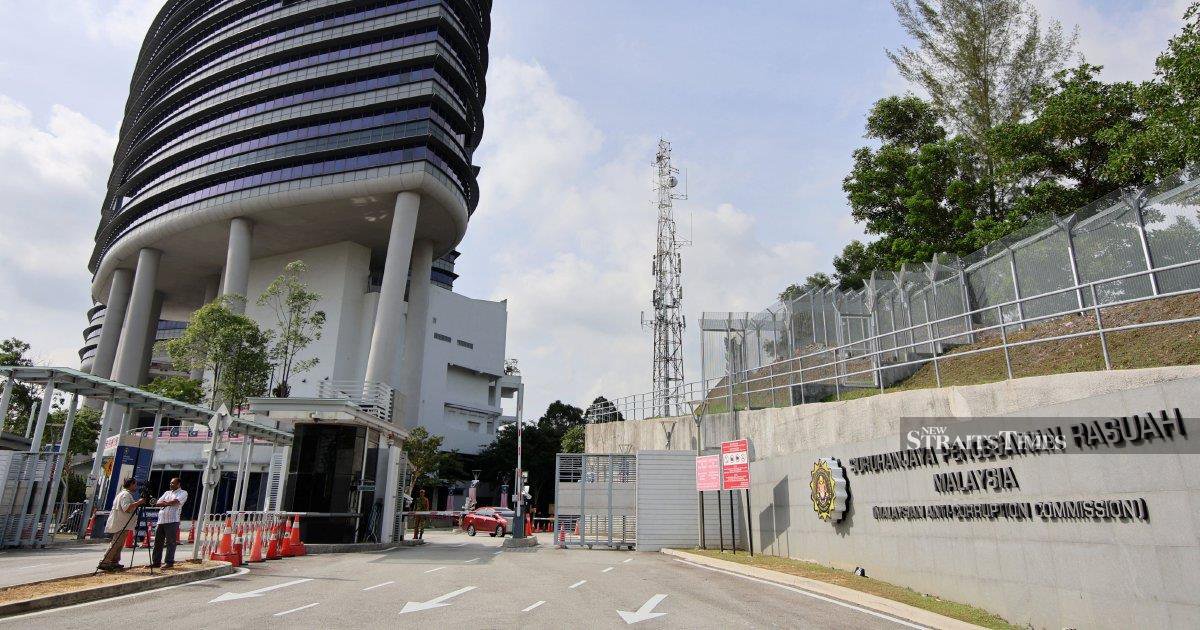
The Malaysian Anti-Corruption Commission has intensified its push for robust whistleblower protection mechanisms across the civil service, signalling that such safeguards are essential to the country's anti-corruption architecture and its international credibility on governance. In communications with senior bureaucrats, the MACC has stressed that ministry secretaries-general and department directors-general must place whistleblower protection among their governance priorities, framing this as integral to Malaysia's ambition to meaningfully improve its Corruption Perceptions Index ranking by 2030.
The call represents a significant strategic pivot within Malaysia's anti-corruption establishment. Rather than relying solely on enforcement actions and investigation capabilities, the MACC is acknowledging that sustainable progress against graft requires an environment in which public servants and private citizens feel secure in reporting misconduct without fear of retaliation. This shifts the emphasis from reactive prosecution to proactive reporting infrastructure, a recognition that many corruption cases remain hidden precisely because potential witnesses lack confidence in institutional protections.
Whistleblower protection carries particular importance within the Malaysian context, where concerns about job security, career advancement, and personal safety have historically discouraged individuals from coming forward with evidence of malfeasance. Public servants especially face unique pressures, given their hierarchical work environment and dependence on institutional goodwill for promotions, transfers, and professional reputation. The absence of robust protections means corruption often persists unchecked, with those in the know choosing silence over exposure and its consequences.
Malaysia's Corruption Perceptions Index position has been a source of ongoing debate among policymakers and civil society organisations. The country's ranking relative to regional peers—particularly Singapore, Brunei, and even Vietnam and Thailand—has motivated government pledges to strengthen anti-corruption frameworks. However, raw CPI scores do not move significantly without structural changes that alter the underlying landscape of corruption opportunities and reporting. Merely announcing investigations without demonstrating that whistleblowers remain protected and unharmed sends a weak signal to potential informants.
International evidence demonstrates that countries with comprehensive whistleblower protection laws experience higher rates of corruption reporting and lower levels of impunity for high-level officials. Jurisdictions like Hong Kong, with its Independent Commission Against Corruption, and South Korea, with its Public Interest Disclosure Act, have benefited from cultures of reporting that stem directly from statutory protections and institutional cultures emphasising whistleblower safety. For Malaysia to aspire to similar outcomes, it must institutionalise protection at every government level.
The MACC's directive to senior civil servants carries practical implications. It suggests that within each ministry and department, designated officers should be appointed with responsibility for receiving protected disclosures, documenting allegations confidentially, and ensuring that whistleblowers face no adverse personnel action. Clear protocols must govern how allegations move through the system without identifying the source prematurely, and internal investigation procedures must be insulated from political or supervisory interference. Without such mechanisms, protection remains theoretical rather than operational.
Implementing whistleblower protection also requires legal underpinning beyond the Whistleblower Protection Act 2010. While Malaysia has statutory protection, practitioners and civil society groups have highlighted gaps in coverage, particularly regarding private sector workers in government-linked companies and contractors delivering public services. The MACC's emphasis on this issue may signal that legislative amendments are being considered to close such loopholes and extend protections across the entire ecosystem in which government business is conducted.
The timing of this MACC intervention aligns with broader Southeast Asian trends. The region has witnessed growing attention to whistleblower frameworks as donor institutions, international rating agencies, and development banks increasingly factor governance metrics into funding decisions and investment classifications. For Malaysia, improving the CPI ranking by 2030 is not merely a matter of national pride; it carries real economic consequences for government borrowing costs, foreign direct investment flows, and the country's appeal as a regional business hub.
Civil society organisations and transparency advocates have largely welcomed the MACC's stance, though many emphasise that government rhetoric must translate into concrete action. This includes not only protecting whistleblowers from internal retaliation but also ensuring that their allegations are investigated with genuine vigour and that findings lead to consequential outcomes. If whistleblowers report wrongdoing only to see cases languish in bureaucratic limbo or investigations produce no results, confidence in the system erodes rapidly.
The challenge facing Malaysia's anti-corruption architecture is therefore multifaceted. Whistleblower protection is necessary but insufficient. It must exist alongside independent prosecution capacity, adequate investigative resources, transparent case management, and a political commitment to act on findings regardless of seniority or party affiliation. The MACC's message to ministry secretaries-general and directors-general carries weight precisely because these officials control substantial bureaucratic machinery and set the tone for ethics and accountability within their organisations.
Looking ahead to 2030, Malaysia's ability to elevate its CPI standing will depend significantly on whether this administrative directive translates into lived experience for potential whistleblowers. If civil servants and contractors begin reporting corruption with confidence that they will face neither termination nor transfer nor social ostracism, the volume and quality of allegations reaching anti-corruption authorities will increase substantially. This in turn will improve the perceptual indicators that feed into international rankings, which measure not only enforcement activity but also public awareness of anti-corruption commitment.
The MACC's framing of whistleblower protection as a governance priority reflects a mature understanding of how institutions actually function. Corruption thrives not because investigators lack determination but because information asymmetries allow misconduct to flourish hidden from public view. By lowering barriers to reporting and raising protections for those who speak up, Malaysia can begin to shift the calculus that currently incentivises silence and complicity across the civil service.

