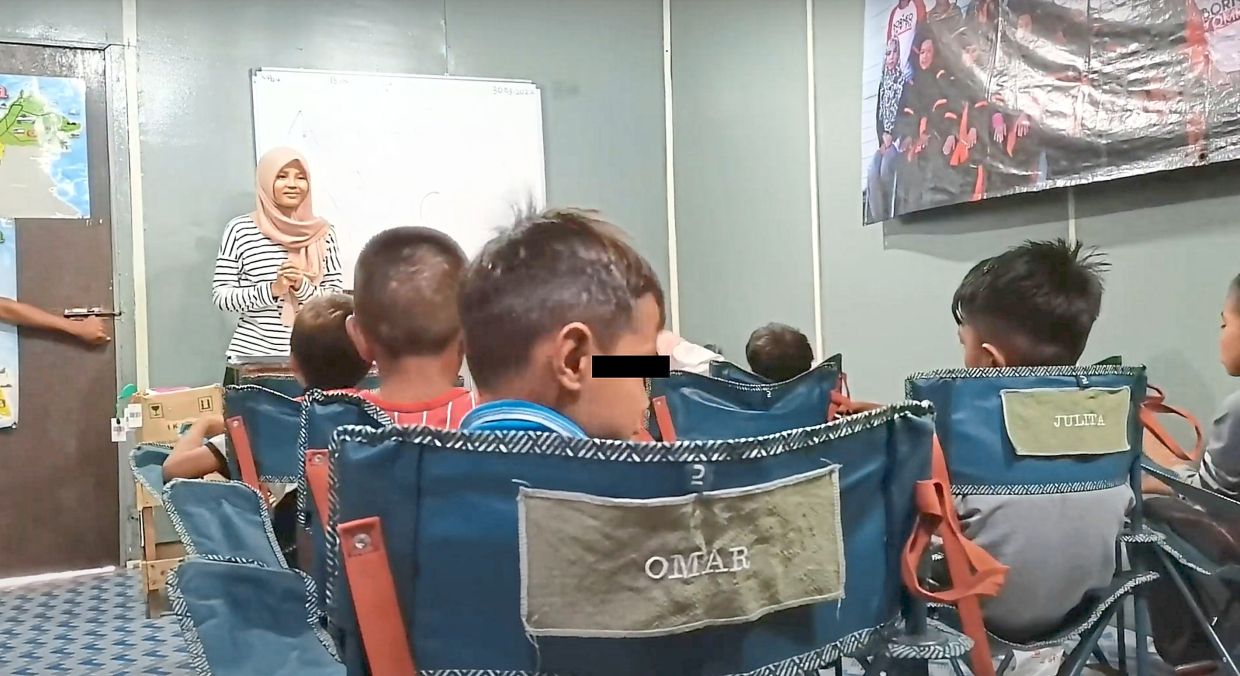
The question of who belongs in Malaysia became sharply focused recently when the Court of Appeal upheld a constitutional interpretation that denies citizenship to children born out of wedlock to foreign mothers, regardless of their biological connection to Malaysian fathers or their lifelong residence in the country. Two young people who have never known any home but Malaysia, who grew up speaking Malay, attending Malaysian schools, and building their futures here, found themselves legally stateless—not because they lack Malaysian parentage, which DNA testing has confirmed, but because a piece of paper called a marriage certificate was absent at their birth. The ruling invites a fundamental question about whether nationality laws should centre on the best interests of the child or whether procedural technicalities ought to take precedence over lived reality.
The constitutional framework underpinning the Court of Appeal's decision dates to Malaysia's founding era, when DNA testing did not exist and social structures were vastly different. The Federal Constitution stipulates that for children born outside a legal marriage, citizenship is determined through the mother rather than the father. This provision made sense in a different context, but its application today creates consequences that child rights advocates say are difficult to defend. The Court interpreted and applied the Constitution as written, which is the judiciary's proper function, yet the provision itself may no longer align with contemporary realities or the nation's professed commitment to safeguarding children's welfare.
The impact on these young people extends beyond symbolic belonging. Malaysia's civil society organisation DHRRA notes that Malaysia ranks among only two countries globally where fathers cannot confer citizenship in such circumstances, placing the nation in an increasingly isolated position as international norms have shifted. Over recent decades, most legal systems have moved away from penalising children for the marital status of their parents, recognising that such distinctions serve no protective purpose while inflicting lasting harm. Yet Malaysia's courts have consistently held the line on this constitutional interpretation, leaving children in legal limbo through no decision of their own.
The deeper issue concerns the purpose of citizenship law itself. Citizenship serves fundamentally different functions from marriage law. Marriage is a voluntary contract between consenting adults; citizenship is a legal identity conferred on a human being who had no choice in the matter. When the Court grounds citizenship denial in parental marital status, it effectively treats citizenship as a moral pronouncement on adult behaviour rather than as a protective framework for children. This represents a category error—using tools designed to regulate adult conduct to impose lifelong consequences on minors who played no role in their parents' choices.
Consider the practical reality. In the cited cases, the foreign mothers departed Malaysia when their children were very young. The children have no meaningful connection to their mothers' home countries, no family support networks there, and no familiarity with those nations' languages or cultures. Forcing them to seek nationality in such places amounts to rendering them strangers in lands they have never lived in. Conversely, they possess everything that typically marks genuine belonging to Malaysia: linguistic fluency, educational history, social networks, and memories formed entirely within the country. The constitutional rule effectively denies reality in favour of a legal abstraction.
Statelessness carries consequences that ripple across every dimension of life. Adults without citizenship struggle to access formal education, healthcare, and legal employment. They cannot obtain bank accounts, driving licenses, or stable housing without documentation. Many remain trapped in informal economy work, facing exploitation and uncertainty. They are unable to travel, vote, or participate fully in civic life. These barriers do not deter wrongdoing by adults; they simply transfer the cost of adult choices onto children, compounding inequality and social exclusion. Malaysia's aspiration to be a developed nation sits uncomfortably with policies that create unnecessary statelessness.
The broader context matters here. Throughout human history, people have moved across borders and cultures. Relationships form without prior reference to legal formality; some produce children; some relationships endure while others dissolve. These patterns are not aberrations but features of human experience. A citizenship framework that assumes all adults will marry before procreating is one that has simply lost touch with how the world actually functions. Laws that cannot accommodate normal human variation become instruments of unfairness rather than justice.
Recent parliamentary action suggests that thinking on these issues is evolving. In 2024, Parliament amended the Constitution to allow Malaysian mothers to automatically confer citizenship on children born overseas, recognising that citizenship laws should reflect contemporary realities and gender equality. That reform acknowledged that constitutional provisions drafted decades ago require updating. The same logic applies to citizenship through fathers. If the Constitution was amended once to recognise changed circumstances, it can be amended again—particularly when children's fundamental rights hang in the balance.
The question is not whether Malaysia can afford to confer citizenship more generously, but whether it can afford not to. The cost of statelessness—measured in human potential unrealised, in talent unable to contribute fully, in children growing into adults on society's margins—ultimately diminishes the nation. By contrast, enabling children with genuine Malaysian connection to secure citizenship formalises what is already true in practice and removes an arbitrary barrier to their participation in national life. Such reforms have not destabilised other nations; they have simply brought law into alignment with justice.
Child rights frameworks universally emphasise placing the best interests of the child at the centre of decision-making. Yet Malaysia's current citizenship rules invite the opposite approach: they subordinate the child's welfare to formal legal categories that serve no protective function. A child born and raised in Malaysia, whose father is Malaysian, whose life is entirely rooted here—such a child has a compelling claim to belong here legally. The absence of a marriage certificate at birth should not sever that bond.
Moving forward requires Parliament to revisit these provisions with fresh eyes. The Court of Appeal correctly applied the Constitution as written; the Constitution itself requires amendment. Such reform need not be sweeping or controversial. It could begin by permitting judicial discretion in cases involving proven paternity and lifelong Malaysian residence, allowing courts to weigh the best interests of the child against formal requirements. Or Parliament could amend the citizenship clause to treat fathers and mothers equally, recognising that gender equality in nationality transmission is now the global standard. Either approach would restore the priority that should govern all such questions: Does this child belong here? And will permitting citizenship help or harm the nation?

