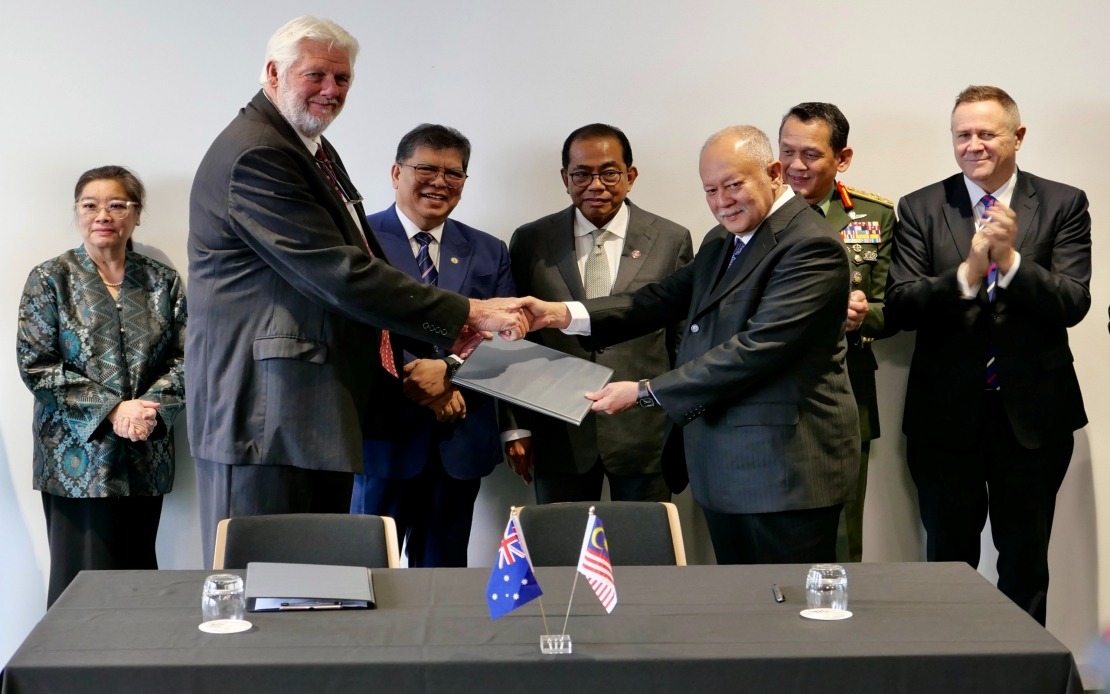
Malaysia's defence ambitions received a significant boost following a strategic partnership between local firm Weststar Defence Industries and Australian rocket technology company Rocket Technologies International, announced during Defence Minister Datuk Seri Mohamed Khaled Nordin's recent visit to Australia. The collaboration represents a carefully calibrated step in Malaysia's effort to develop indigenous rocket and missile capabilities while strengthening ties with a key regional security partner.
Defence Minister Mohamed Khaled characterised the agreement as pivotal for Malaysia's sovereignty and defence self-reliance. Speaking after the deal was signed at the National Convention Centre in Canberra by Weststar Group founder and group managing director Tan Sri Dr Syed Azman Syed Ibrahim and RTI founder Allan James Payne, the minister emphasised that the venture aligns squarely with Malaysia's National Defence Industry Policy, which prioritises building local expertise in defence system development and manufacturing. This alignment signals government determination to reduce reliance on foreign defence procurement and nurture a sustainable domestic sector capable of meeting future security demands.
The practical rollout of the partnership hinges on Weststar's establishment of a dedicated production facility within Malaysia. According to the announced timeline, rocket manufacturing operations are expected to commence within two years, with subsequent expansion into missile production. This phased approach reflects realistic planning around infrastructure, workforce development, and technology transfer requirements. The facility promises to generate substantial employment and technical skill development opportunities, particularly in advanced manufacturing sectors where Malaysia has been actively building expertise.
Australia's involvement extends beyond commercial interest. Deputy Prime Minister and Defence Minister Richard Marles met with Mohamed Khaled during the visit to discuss bilateral defence cooperation, signalling Canberra's strategic interest in the partnership. The Australian government's formal approval of the collaboration underscores broader defence alignments between the nations and reflects shared concerns about regional security architecture. For Malaysia, the arrangement leverages Australia's advanced technological capabilities while maintaining local control over manufacturing and supply chain integration.
Weststar's involvement in RTI's global supply chain represents a transformative opportunity for Malaysian defence industry competitiveness. By participating in international defence ecosystems, local companies gain access to sophisticated procurement networks and potential export markets previously unavailable to them. This integration into global value chains could catalyse broader industrial upgrading across Malaysia's defence sector, encouraging subsidiary businesses to meet international standards and quality benchmarks necessary for global competition.
The educational and research dimension of the partnership proved equally significant during Mohamed Khaled's delegation visit to the Institute for Space, Defence and Advanced Technologies at the University of Southern Queensland. The tour, which included Royal Malaysian Air Force chief General Tan Sri Muhamad Norazlan Aris and leadership from Universiti Pertahanan Nasional Malaysia, revealed the deliberate synergy between academic research institutions and defence contractors. Weststar's executives observed advanced composite manufacturing and hypersonics laboratories developed collaboratively with companies including RTI, demonstrating how industry-academia partnerships accelerate technological advancement in ways that isolated efforts cannot achieve.
This model of defence innovation holds particular relevance for Malaysian institutions like UPNM and the National Aerospace Industry Corporation Malaysia, represented by vice-chancellor Lt Gen Datuk Wira Arman Rumaizi Ahmad and chief executive officer Prof Shamsul Kamar Abu Samah respectively. Malaysia's emerging defence research ecosystem would benefit significantly from adopting similar collaborative frameworks, where university research groups work alongside private defence manufacturers to develop next-generation capabilities. Such arrangements can overcome the resource constraints that typically hamper indigenous defence research in developing economies.
The parliamentary engagement component of Mohamed Khaled's visit underscores the diplomatic and political dimensions underlying the defence agreement. Meetings with the House of Representatives Speaker Milton Dick and Australian parliamentarians, alongside Dewan Rakyat Speaker Tan Sri Johari Abdul and Malaysia's High Commissioner to Australia Datin Paduka Sharrina Abdullah, reflected efforts to embed the partnership within broader bilateral friendship frameworks. Such high-level engagement signals to both governments and defence establishments the importance placed on sustained cooperation beyond transactional defence procurement relationships.
For Malaysia specifically, the Weststar-RTI arrangement addresses longstanding questions about sovereignty and technological independence in defence procurement. Rather than remaining perpetually dependent on foreign purchases of complete systems, Malaysia now positions itself to develop critical indigenous capabilities. The focus on rockets and missiles recognises these platforms' strategic importance for territorial defence and deterrence credibility. Having domestic production capacity for such systems strengthens Malaysia's negotiating position with suppliers and reduces vulnerabilities associated with foreign policy divergences that could theoretically interrupt supply relationships.
Regional security implications warrant consideration as well. Southeast Asia's strategic environment has become increasingly complex, with rising great power competition and evolving maritime security challenges. Malaysia's enhanced defence industrial capacity, particularly in advanced systems, contributes to regional stability by strengthening individual member states' self-defence capabilities. When Southeast Asian nations reduce external defence dependencies through stronger indigenous production, they enhance collective regional stability and reduce pressures for external military balancing by extra-regional powers.
The timeline for rocket production within two years establishes realistic expectations while demonstrating genuine commitment. Technology transfer agreements with RTI will be crucial for success, requiring structured knowledge transmission that goes beyond simple equipment supply. Weststar must develop local engineering talent capable of understanding not merely how to operate manufacturing equipment but why specific technical approaches are employed. This depth of technological mastery determines whether Malaysia achieves genuine defence industrial capacity or merely assembles imported components.
Government investment and policy support will prove determinative for the partnership's long-term viability. Beyond approving the collaboration, Malaysian authorities must ensure coherent industrial policy, workforce development programs, and strategic procurement preferences that sustain demand for locally produced systems. Defence budgets inherently favour established suppliers unless deliberate policy choices privilege emerging domestic capabilities during their vulnerable development phases.
The partnership ultimately represents Malaysia's pragmatic approach to defence modernisation, combining international cooperation with locally rooted manufacturing and expertise development. By engaging Australian technological capabilities while building sovereign production capacity, Malaysia charts a course between technological autarky and perpetual dependence. Whether this arrangement achieves its ambitious objectives will significantly influence Malaysia's defence posture and regional strategic positioning throughout the coming decade.

