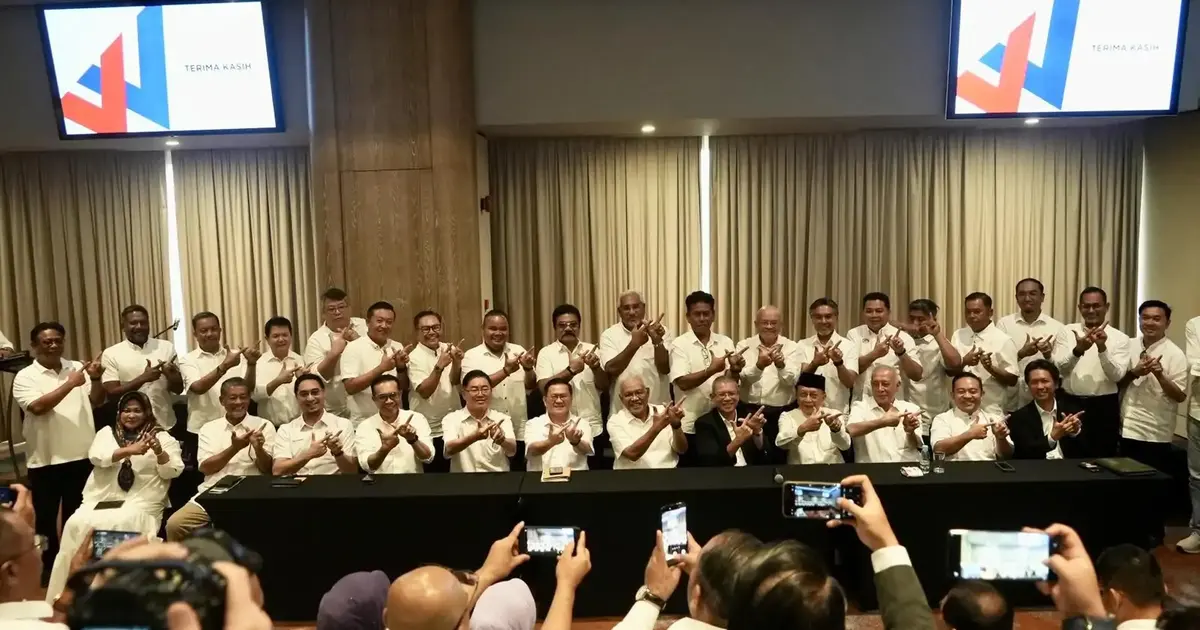
Perikatan Nasional's election director has moved to settle mounting questions about the coalition's recent expansion, confirming that Wawasan's admission was determined through a majority vote at the Supreme Council level. The clarification comes as the bloc continues to navigate internal tensions stemming from the decision to bring the newer political entity into its fold, with Bersatu's objections formally noted but ultimately overridden by the voting mechanism employed during the leadership body's deliberations.
Sanusi's statement represents an attempt to provide institutional legitimacy to a decision that has generated friction within the coalition's ranks. By emphasising the Supreme Council's involvement and the democratic nature of the voting process, the PN leadership is seeking to frame the matter as a settled institutional decision rather than an arbitrary action by particular factions. This procedural clarity becomes particularly significant in Malaysian coalition politics, where the perception of fairness in decision-making can affect party morale and unity. The reference to majority voting suggests that not all coalition members were aligned on the matter, underscoring the diverse viewpoints that exist even within ostensibly unified political blocs.
Bersatu's recorded objections carry particular weight given the party's status as one of PN's founding members and significant contributors to its electoral strength. The fact that Bersatu's concerns were formally acknowledged while still being overridden indicates that the coalition's leadership was aware of legitimate reservations but determined that the strategic benefits of Wawasan's inclusion outweighed these internal concerns. This dynamic reflects the balancing act that coalition leaders must perform—maintaining party autonomy and respecting dissenting voices while still pursuing collective strategic objectives.
Wawasan's integration into PN represents part of the coalition's ongoing effort to broaden its political base and electoral appeal. The decision to expand the coalition's membership typically involves calculations about voter demographics, geographic reach, and organisational capacity. For PN, which has positioned itself as an alternative to established power structures in Malaysian politics, incorporating additional political movements could potentially enhance its appeal to voters seeking fresh political options. However, such expansion also carries risks, including the dilution of ideological coherence and the emergence of competing agendas among member parties.
The internal objections from Bersatu likely stem from concerns about resource allocation, representation in coalition leadership, and the potential influence of new members on strategic direction. In Malaysian political coalitions, questions about seat allocation for elections, decision-making power distribution, and the promotion of party leaders are perpetual sources of tension. Bersatu's willingness to voice opposition publicly, even while being outvoted, suggests confidence in its standing within the coalition and its ability to resist unwanted outcomes without risking its continued participation. This reflects the delicate equilibrium that governs relationships among coalition members—sufficient interdependence to demand cooperation, but sufficient independence to permit dissent.
The transparency with which Sanusi addressed the matter, acknowledging Bersatu's position while defending the democratic legitimacy of the voting outcome, appears designed to preempt further escalation of the dispute. By emphasising that the decision was made through proper institutional channels rather than through backroom dealing or the dominance of a single faction, the PN leadership aims to establish that all member parties had opportunity for input, even if their input did not carry the day. This framing becomes important for maintaining the fiction of solidarity that coalitions require, particularly as they approach electoral cycles when internal divisions become especially damaging.
For Malaysian voters and observers monitoring PN's development, this incident illustrates both the coalition's capacity for autonomous decision-making and its vulnerability to internal disagreements. The ability to make significant structural decisions—such as admitting new members—demonstrates institutional functionality. However, the existence of notable objections from established members signals that consensus remains elusive on coalition direction, a concern that could resurface during more fraught political moments. The question of whether accommodating dissent through voting while proceeding despite objections will prove sustainable depends partly on whether Bersatu and other parties perceive the costs of continued coalition participation as worthwhile.
The broader implications for Southeast Asian coalition politics are worth noting. Malaysian political coalitions have historically served as laboratories for understanding how ideologically or personally diverse political actors can collaborate without destroying individual party identity or interests. The PN model, incorporating various entities with different historical origins and voter bases, tests whether modern coalition management can succeed despite—or because of—such diversity. Wawasan's admission, even amid objections, represents a test of whether PN can function as an evolving entity capable of strategic adaptation while maintaining coherence.
Moving forward, the management of Wawasan's actual integration into PN operations will likely prove more significant than the admission vote itself. Questions about how Wawasan representatives participate in coalition decision-making, what electoral constituencies they contest, and how party positions are coordinated across the coalition membership will generate the real tests of internal unity. Sanusi's statement represents the leadership's attempt to establish a clear institutional record that the decision was properly made, potentially forestalling further disputes about its legitimacy as circumstances evolve and new challenges emerge.