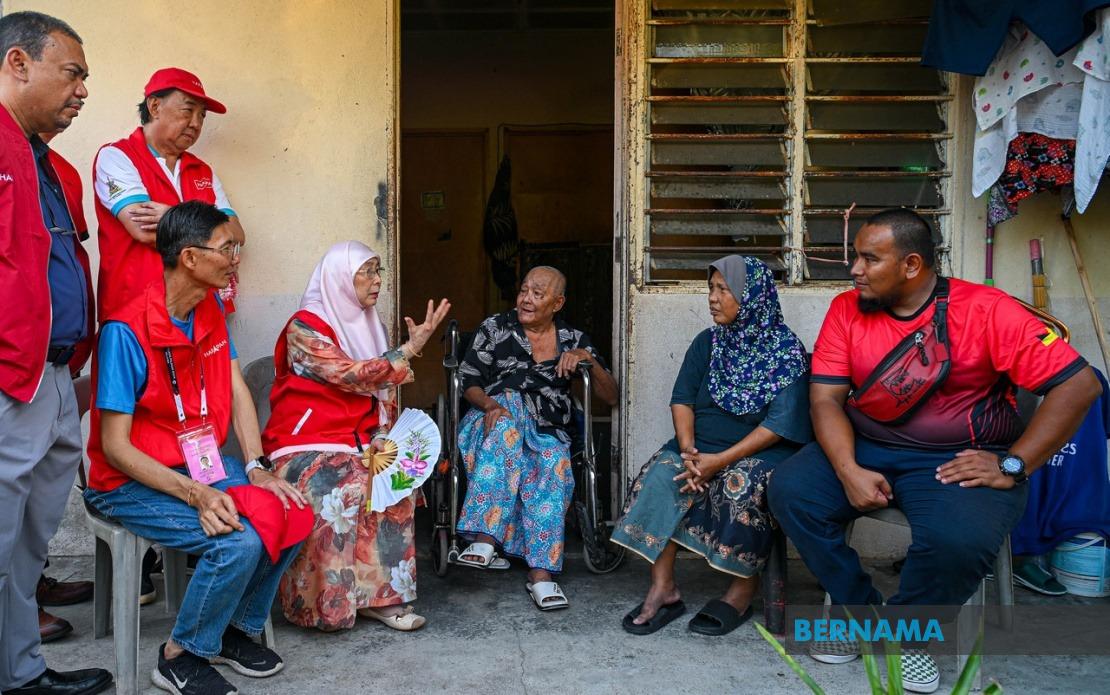
Pakatan Harapan leadership has stepped up grassroots engagement in the Chuah constituency ahead of the upcoming Negeri Sembilan state election, with a notable visit to residents grappling with the dual burdens of chronic illness and economic hardship. Wan Azizah spent approximately twenty minutes at the home of Zaiton Hasan, 60, and her husband Paimin Sapari, 71, during an outreach effort that underscores the coalition's effort to address everyday struggles faced by ordinary Malaysians in the state.
The visit, made alongside Pakatan Harapan's Chuah DUN candidate Datuk Yew Boon Lye, focused on direct engagement with the couple about their circumstances and health challenges. Zaiton manages high blood pressure while Paimin contends with diabetes, conditions that place ongoing financial and emotional strain on the household. Rather than relying on intermediaries or formal channels, the approach reflected a commitment to understanding constituent concerns at a personal level, a strategy gaining prominence in competitive electoral environments across Malaysia.
The emotional impact of the visit resonated deeply with both Zaiton and Paimin, who expressed surprise and gratitude at receiving attention from senior political figures. Zaiton later recounted to Bernama that the experience felt surreal, noting it was the first time a prominent leader had visited their residence. The couple's reaction highlights how such personal touches can forge political goodwill, particularly in communities where government outreach may be perceived as inconsistent or insufficient. In an era when voters increasingly scrutinize the authenticity of political engagement, direct home visits serve as tangible demonstrations of commitment.
Beyond the symbolic importance of the visit itself, the occasion resulted in practical assistance for the household. The Port Dickson People's Spirit Welfare Association presented Paimin with a wheelchair, a donation that directly addresses one of the couple's mobility challenges. This combination of high-level political attention and concrete material support represents a multifaceted approach to constituent care that appeals to both emotional and practical voter concerns. For households managing chronic health conditions on limited incomes, such assistance can measurably improve quality of life and independence.
The Chuah State Legislative Assembly seat is currently contested in a straightforward two-way race between Pakatan Harapan's Datuk Yew Boon Lye and Perikatan Nasional's Pau Jeou Ching. As Malaysia's political landscape remains deeply polarized between these two major coalitions, individual state seats carry significance far beyond local boundaries, with implications for how the broader coalitions balance power across the peninsula. Negeri Sembilan, traditionally a mixed constituency in terms of coalition support, has become a focal point for both camps' campaign efforts.
The 16th Negeri Sembilan State Election represents an important electoral moment for the state, testing voter sentiment on both national and local governance issues. Campaign schedules are structured to allow eligible voters maximum opportunity to participate, with the Election Commission establishing early voting on July 28 and designating August 1 as the primary polling day. This timeline compresses the official campaign period, placing pressure on candidates to maximize visibility and engagement with voters in the weeks leading up to these dates.
Visits to elderly and vulnerable constituents form a deliberate component of campaign strategy across Malaysian political parties, though the frequency and sincerity of such efforts vary considerably. Such engagements serve multiple purposes: they generate positive local media coverage, they allow candidates to understand bread-and-butter issues affecting voters, and they create opportunities for supporters to document and share personal interactions on social media. In Negeri Sembilan's competitive environment, where some constituencies may be decided by narrow margins, such targeted outreach to sympathetic voter blocs can carry tangible electoral consequences.
The couple's circumstances—managing multiple chronic health conditions while facing financial constraints—reflect challenges confronted by many Malaysian households, particularly retirees and those in lower-income brackets. Healthcare costs, especially for ongoing management of conditions like hypertension and diabetes, consume substantial portions of household budgets for families without comprehensive insurance or pension provisions. Mobility aids like wheelchairs, while seemingly modest, represent significant expenses that many households cannot easily absorb, making welfare organization donations and political attention to such needs politically salient issues.
For Pakatan Harapan, the visit signals continued investment in rural and suburban constituencies across Negeri Sembilan, areas that often receive less media attention than urban centers but remain crucial for electoral success. The coalition's strategy appears to encompass both high-visibility senior leadership visits and sustained ground-level campaigning through candidates like Datuk Yew Boon Lye. This tiered approach aims to build momentum through both establishment credibility and personal constituent relationships. Whether such efforts translate into concrete electoral gains will become apparent when results are announced following August 1 polling.
The broader political context surrounding this election involves questions about governance, service delivery, and which coalition better represents ordinary Malaysians' interests. Voters in Negeri Sembilan will weigh these considerations alongside personal interactions like the one Zaiton and Paimin experienced. The election occurs against a backdrop of ongoing discussions about cost of living pressures, healthcare accessibility, and social support systems—issues directly relevant to couples like those visited in Chuah. Political parties' demonstrated attention to such vulnerabilities, whether genuine or performative, shapes voter perceptions heading into polling day.

