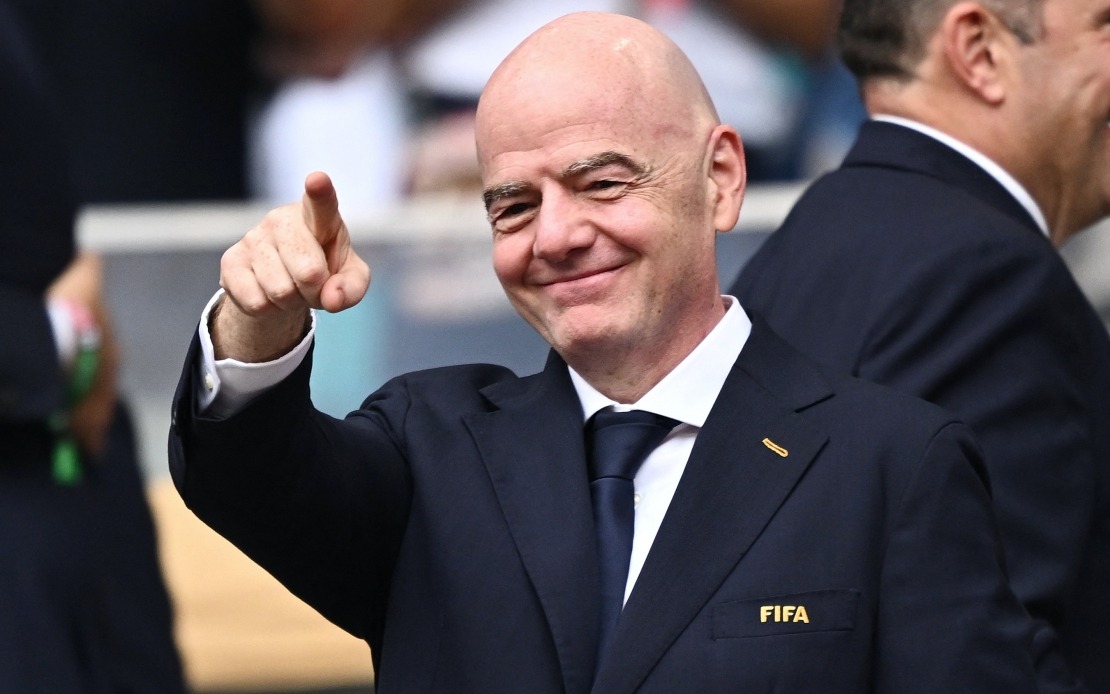
The Football Association of Wales has formally withdrawn its backing for FIFA president Gianni Infantino's anticipated re-election campaign, marking a significant blow to the embattled leader's political standing in world football. The decision follows the collapse of Infantino's controversial initiative to sell private stakes in the FIFA World Cup, a scheme that faced widespread condemnation from multiple continental confederations and national associations globally.
Infantino's announcement last week that he would shelve the FIFA Forward Enterprise proposal represented a tactical retreat, yet it has failed to arrest the erosion of confidence in his stewardship. The episode has exposed deep governance concerns within the world football body and triggered a reassessment among key stakeholders regarding his fitness to lead the organization. Despite his decade in the FIFA presidency, Infantino now confronts the most serious threat to his tenure since taking office.
The FAW's reversal is particularly noteworthy given that the Welsh federation had previously indicated willingness to support Infantino's re-election campaign. However, the governing body's statement issued on Monday articulated a comprehensive critique of his leadership, citing failures across governance frameworks, institutional processes, decision-making structures, stakeholder engagement, and public communication. The FAW emphasized that Infantino's inability to prioritize the interests of football itself represented a fundamental breach of trust that it could no longer overlook or accommodate.
Political pressure against Infantino has intensified across multiple jurisdictions. Andy Burnham, the Prime Minister, publicly characterized Infantino as the "wrong man" to lead FIFA, while England's Football Association demanded a comprehensive and rigorous examination of his presidential leadership. The English FA's position hardened further through correspondence sent to FIFA expressing its withdrawal of support, aligning itself with the mounting international consensus against Infantino's continued tenure.
Europe's football confederation has been particularly forceful in its response. UEFA released a statement on Saturday declaring that confidence in Infantino had fundamentally broken down due to the FFE initiative, while notably leaving the door open for more aggressive action. The confederation suggested that "no option should be off the table," a carefully calibrated phrase signaling that membership bodies might consider invoking mechanisms for removing the FIFA president through an Extraordinary Congress called by no-confidence vote.
The procedural pathway for Infantino's potential removal exists within FIFA's governance structure, though triggering it remains politically complex. A mere 43 of FIFA's 211 member associations could technically convene an Extraordinary Congress through a no-confidence motion. However, such a drastic step would likely require confidence among a substantial majority of member nations that they possess the votes to actually unseat Infantino at that Congress. This chicken-and-egg dynamic has thus far prevented more militant confederations from pushing the button on formal removal proceedings.
CONCACAF, the confederation governing football across North America, Central America, and the Caribbean, has similarly demanded a full review of Infantino's leadership. Combined with UEFA's position, these two confederations represent 96 member associations—nearly half of FIFA's total membership. Within CONCACAF's leadership, indications have surfaced that Victor Montagliani, the confederation president and current FIFA vice-president, would be willing to mount a presidential challenge if political conditions became favorable.
Yet Infantino retains meaningful support in other global regions, complicating any organized effort to remove him. Several African and Asian football associations have issued public statements backing the FIFA president, including federations from Morocco, Egypt, and Qatar. This geographic split underscores how football's global governance remains influenced by regional allegiances and political alignments, with developing football markets and nations seeking particular relationships with FIFA leadership showing greater reluctance to abandon Infantino.
The FFE scheme itself represented an unprecedented effort to restructure FIFA's revenue model by introducing private capital into World Cup operations. The initiative proved toxic with three continental confederations, which rejected the proposal outright. Critics argued that privatizing aspects of football's marquee tournament contradicted the sport's foundational principles and FIFA's stated commitment to football development globally. The speed with which Infantino retreated from the plan suggested even his closest advisors recognized its political untenability.
For Southeast Asian football, Infantino's vulnerability carries indirect but meaningful implications. The Asian Football Confederation's stance will prove crucial in determining whether sufficient momentum builds for formal removal proceedings. FIFA's presidency shapes investment priorities, development funding flows, and tournament allocation decisions that directly affect regional football infrastructure and opportunity. An extended period of leadership instability or contested legitimacy could complicate infrastructure investments and governance initiatives affecting Asian federations.
The crisis also exposes fundamental questions about FIFA's governance architecture and accountability mechanisms. That a sitting president could advance such a consequential scheme with apparently limited consultation of member associations suggests institutional structures remain inadequate for ensuring democratic legitimacy in world football's highest office. Reform advocates will likely use this moment to push for strengthened governance frameworks and expanded member consultation requirements.
Infantino's survival now depends substantially on whether confederation leaders calculate that removing him poses greater organizational risks than retaining him through the remainder of his current term. His re-election next year, previously assumed probable, now appears genuinely contested. The trajectory over coming weeks will signal whether the accumulated grievances and governance failures have finally breached the threshold required to trigger formal no-confidence proceedings.

