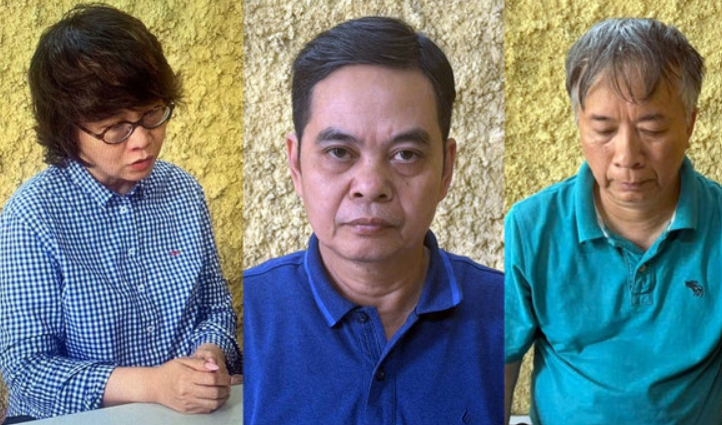
Vietnamese authorities have intensified their grip on public discourse by detaining three senior executives from the Vietnam Writers' Association Publishing House, marking an escalation in the government's efforts to control how the nation's founding father is portrayed in literature. The arrests, announced on Wednesday, stem from the May publication of "Stories with Thanh -- A New Account of Light", a biographical work about Ho Chi Minh that has triggered an unprecedented crackdown spanning authors, publishers, media outlets, and social media influencers across the country.
The book's author, Nguyen Thanh Nam, a former telecommunications executive, was arrested in early July alongside an influencer who used social media channels to promote the work. The three publishing house officials—identified as the director, editor-in-chief, and head of the editorial board—now face identical charges of producing and disseminating materials intended to oppose the Socialist Republic of Vietnam. All parties involved in the book's creation, editing, and distribution have been swept into a sprawling investigation that reveals the sensitivity surrounding Ho Chi Minh's legacy and the Communist Party's determination to control historical interpretations.
According to police statements, the book distorts revolutionary history and contradicts official party guidelines regarding Ho Chi Minh's policies and legacy. Rather than engaging in public intellectual debate about the biographical account, Hanoi's authorities opted for swift legal action and suppression. The publisher has already recalled the book under government pressure, effectively removing it from circulation and limiting its potential influence. This approach reflects a broader pattern in Vietnam where ideological conformity is enforced through criminal prosecution rather than open discourse, creating a climate where publishers and authors face substantial legal jeopardy for challenging official interpretations of history.
The government's response extended far beyond the immediate parties involved in publication. Vietnam's culture ministry announced sanctions against 23 news outlets that had published articles praising the book, demonstrating how deeply the authorities are willing to reach into the media ecosystem to suppress narrative dissent. These media organisations collectively paid almost US$2,500 in fines, while more than a dozen journalists and staff members were reassigned, suspended, or dismissed from their positions. The ministry claimed that the media outlets had acknowledged their errors and now possessed "a profound understanding of the lessons of source verification"—language that thinly veils ideological realignment under government pressure.
In a nationally televised address that underscored the degree of state control over public messaging, author Nguyen Thanh Nam issued a public apology for his work. His statement acknowledged what authorities characterised as factual errors and false assertions, claiming the book contradicted Communist Party guidelines and damaged Ho Chi Minh's reputation while confusing the public. This forced recantation—broadcast on state television—serves multiple purposes: it reinforces official narratives, demonstrates state power over intellectual output, and signals to other potential authors and publishers the consequences of straying from approved historical accounts. Such public confessions echo practices from earlier periods of authoritarian governance and illustrate how deeply the state intends to control national memory.
The crackdown carries significant implications for intellectual freedom across Southeast Asia and the broader region. Vietnam's actions send a clear signal to publishers, authors, and media operators that even sympathetic biographical accounts of revered national figures can trigger severe legal consequences if they deviate from state-approved narratives. For Malaysia and other neighbouring countries where press freedom and historical interpretation remain contested issues, Vietnam's approach demonstrates an extreme model of state control over memory and discourse. The case raises questions about how different regimes calibrate their management of historical narratives and the role of punishment versus dialogue in shaping public understanding.
The scale of the crackdown is particularly notable given that Ho Chi Minh remains an almost sacred figure in Vietnamese national consciousness. The government's sensitivity to alternative accounts suggests that official narratives may be more fragile than public displays of consensus indicate. By criminalising publication and media coverage rather than refuting claims substantively, authorities imply that the content poses a genuine threat to state legitimacy or party authority. This defensive posture contrasts with more confident regimes that might engage critics intellectually or simply ignore marginal challenges to established orthodoxy.
Human Rights Watch has documented that Vietnam currently imprisons more than 160 critics and dissidents, placing it among the world's most restrictive environments for free expression. The Ho Chi Minh book case is not an isolated incident but part of a consistent pattern where the government uses criminal law to suppress unwanted speech, journalism, and intellectual output. For Malaysian observers and policymakers, the case illustrates how quickly historical or biographical disagreements can escalate into serious legal jeopardy when state authorities perceive threats to national narratives or party legitimacy.
The international dimension of Vietnam's actions warrants consideration, particularly for countries sharing borders or close economic ties with Hanoi. Foreign publishers, journalists, and academics researching Vietnamese history or politics face potential legal exposure if their work reaches Vietnamese audiences or offends party sensibilities. This creates chilling effects that extend beyond Vietnam's borders, potentially discouraging balanced historical scholarship and international intellectual exchange. The arrest of publishers and media outlets demonstrates that Hanoi's reach extends throughout the domestic information ecosystem and that coordination between government ministries and law enforcement ensures consistent enforcement of ideological boundaries.

