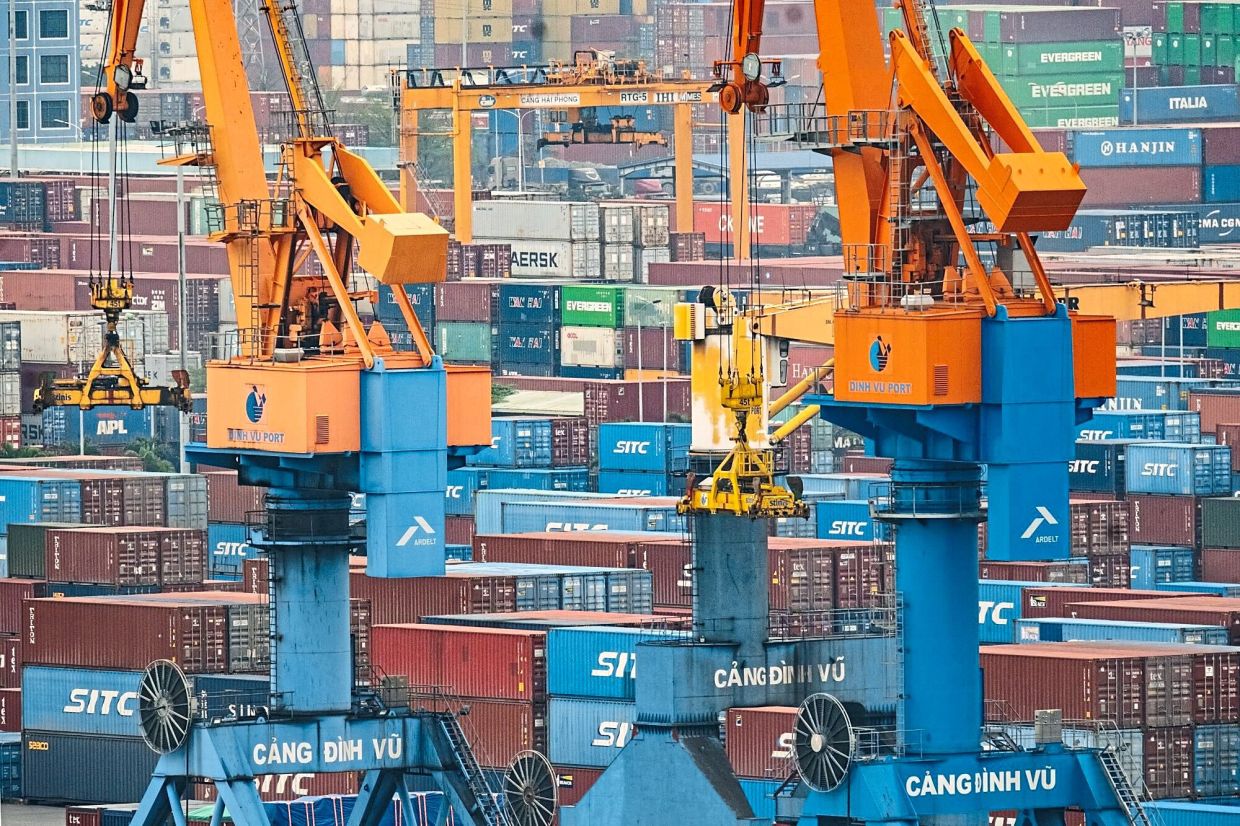
Vietnam's Deputy Prime Minister Nguyen Van Thang has travelled to Washington seeking to break the impasse in months-long trade negotiations with the United States, reaffirming Hanoi's commitment to pursuing "open, constructive" discussions with US Trade Representative Jamieson Greer. The high-level engagement reflects Vietnam's determination to move forward on a reciprocal trade agreement after the two countries reached a preliminary framework last October, though talks have since stalled amid disagreements over several key commercial and regulatory issues.
Thang's visit underscores the significance of the US relationship for Vietnam's export-dependent economy, which has become increasingly integrated into global supply chains serving American consumers. Beyond the formal trade negotiations, the Deputy Prime Minister seized the opportunity to meet with representatives from major multinational corporations including Qualcomm Inc., Visa Inc., Axon Enterprise Inc. and Caterpillar Inc., signalling Vietnam's broader aspiration to attract substantial foreign direct investment and strengthen commercial ties with American business interests.
At the heart of the stalled negotiations lie concerns that have grown more acute under the Trump administration's trade policy framework. US officials have launched three concurrent Section 301 investigations into Vietnamese trade practices, each targeting distinct areas of contention. The administration's primary worry centres on what it views as systemic transshipment—the routing of goods, particularly those of Chinese origin, through Vietnamese territory to reach American markets. This practice allows products to circumvent tariffs and trade restrictions that would normally apply, artificially inflating Vietnam's apparent exports while masking the true source of imported goods.
Thang's statements about willingness to address transshipment and other trade barriers represent a calculated diplomatic move to demonstrate responsiveness to US concerns. The acknowledgment signals that Hanoi recognises the gravity of these issues and is prepared to consider measures that could restrict the flow of products masquerading as Vietnamese goods. For Vietnam, however, tackling transshipment presents genuine policy challenges, as it requires strengthening customs enforcement and supply-chain transparency mechanisms that can impose costs on exporters and logistics providers who have long benefited from regulatory gaps.
Non-tariff barriers constitute another contested terrain in the negotiations. Such barriers—ranging from technical standards to certification requirements to regulatory procedures—can effectively impede market access even without explicit tariffs. US negotiators argue that Vietnam maintains unnecessarily restrictive practices that limit American goods from entering the market, whilst Vietnamese officials maintain that many measures serve legitimate consumer protection and quality assurance objectives. Resolving these disagreements requires nuanced discussions balancing market access with regulatory autonomy.
The intellectual property dimension adds further complexity to the discussions. In April, the US Trade Representative's office formally designated Vietnam a "priority foreign country" for intellectual property deficiencies, citing inadequate efforts to combat online piracy and the proliferation of counterfeit goods. The report also highlighted insufficient border controls that enable counterfeit products to enter and exit the country relatively freely. These findings carry significant weight because they inform investigations whose conclusions could trigger elevated tariff rates, making the intellectual property question not merely a matter of principle but one with direct consequences for Vietnam's export competitiveness.
The timing of these developments creates urgency for both parties. Greer has indicated that the US administration wishes to conclude negotiations expeditiously, suggesting that the Trump administration prefers resolution over prolonged trade friction. However, the November deadline for the Section 301 investigations' findings introduces a hard deadline: should Hanoi fail to demonstrate sufficient progress on addressing US concerns, the investigations' conclusions could authorise substantial tariff increases, fundamentally altering the bilateral trade relationship's economics.
Vietnam's trade position underscores why these negotiations matter greatly. The country posted a bilateral trade surplus of US$114 billion with the United States in the first half of 2026, exceeding the deficits the US maintains with China, Mexico and Taiwan. This outsized surplus reflects Vietnam's role as a manufacturing hub supplying American consumers with everything from electronics to textiles. However, the composition of this trade reveals a deeper structural issue: Vietnamese imports from China have surged dramatically as manufacturers ramp up production of goods destined for American markets, suggesting that much of Vietnam's apparent trade surplus may actually reflect value-added activities performed on Chinese inputs.
This dynamic matters for Malaysia and the broader Southeast Asian region because Vietnam's experience in trade negotiations with the Trump administration sets precedents that could influence how the US approaches relationships with other countries in the region. Malaysia itself maintains a substantial trade surplus with the United States and could face similar scrutiny regarding transshipment, intellectual property protection, and non-tariff barriers. The resolution Vietnam reaches—whether through concessions, investments in enforcement infrastructure, or negotiated compromises—will likely inform how the Trump administration engages with other Southeast Asian trading partners.
Moreover, Vietnam's challenge of addressing transshipment whilst maintaining its appeal as a manufacturing destination illustrates the tension at the heart of global supply chains. If Vietnam tightens controls too aggressively, manufacturers may relocate to competitors. If it moves too slowly in implementing reforms, US tariffs could devastate its export economy. This bind reflects broader structural questions about how developing countries can modernise their regulatory frameworks without sacrificing the competitive advantages that attracted investment in the first place.
Thang's engagement with American corporations during his Washington visit also carries symbolic weight. By facilitating meetings with technology firms, financial services providers, and industrial equipment manufacturers, he aims to demonstrate that strengthening the bilateral relationship serves American business interests. This approach appeals to the commercial constituency within the Trump administration, potentially creating political space for negotiated settlements rather than punitive tariff action.

