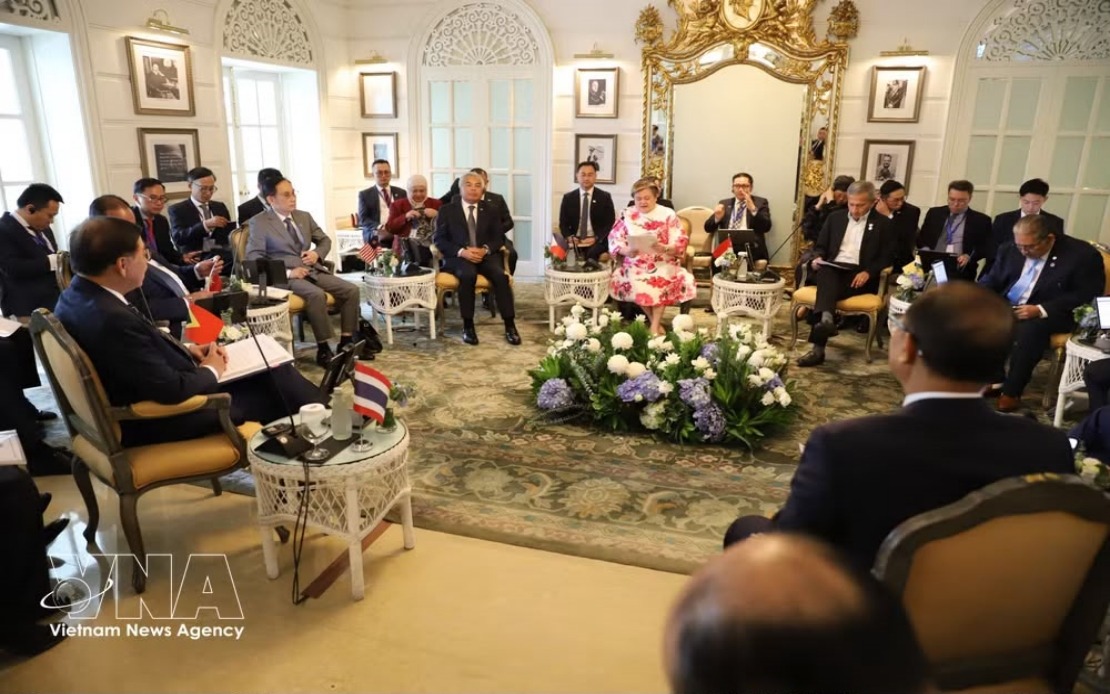
Hanoi has signalled its readiness to deepen engagement with Myanmar alongside other ASEAN partners, with Vietnamese Foreign Minister Le Hoai Trung emphasising that his country views Myanmar as an integral member of the regional bloc deserving sustained diplomatic and practical support. Speaking at a Bangkok meeting on July 12 convened by Philippine Foreign Secretary Maria Theresa P. Lazaro, Trung reaffirmed Vietnam's commitment to implementing the Five-Point Consensus, ASEAN's principal diplomatic tool for assisting Myanmar navigate its political and economic transition since 2021.
The gathering marked a watershed moment in regional diplomacy—the first in-person assembly of multiple ASEAN foreign ministers alongside Myanmar's Foreign Minister Tin Maung Swe since the military takeover three years ago. This symbolically significant engagement underscores ASEAN's determination to maintain its centrality in Myanmar affairs and demonstrates the bloc's unified approach to supporting the country's path toward stability. The timing reflects broader directives issued by ASEAN leaders at the 48th ASEAN Summit in Cebu, Philippines, instructing member states to continue exploring collaborative mechanisms that uphold Myanmar's recovery while respecting the organisation's founding principle of non-interference in sovereign matters.
Vietnamese officials acknowledged the incremental progress Naypyidaw has demonstrated in recent months, particularly measures aimed at political stabilisation and economic revitalisation. Trung specifically cited Myanmar authorities' actions against transnational criminal networks—particularly drug trafficking operations and cybercrime enterprises that destabilise the region—alongside efforts to fortify border governance and security architecture. These acknowledgements carry weight for Southeast Asian stability, given Myanmar's geography as a crucial narcotics transit corridor and the spillover risks that regional organised crime networks pose to neighbouring economies including Malaysia and Thailand.
Beyond recognising past achievements, Hanoi articulated an expansive vision for ASEAN's role moving forward. Rather than confining engagement to diplomatic rhetoric, Vietnamese leadership argues that the bloc must translate the Five-Point Consensus into concrete, implementable initiatives. This includes institutionalising frequent, direct communication channels with Myanmar's administration to track developments, identify emerging challenges, and facilitate tangible progress on economic rehabilitation and social stability. For regional observers, particularly those in Malaysia concerned with cross-border security dynamics, this approach signals that ASEAN intends to move beyond ceremonial support toward substantive capacity-building and coordination.
The Vietnamese foreign minister positioned his country as an active facilitator, pledging to work alongside the Philippine ASEAN chair and other member states on multiple fronts. These encompass economic recovery initiatives, addressing Myanmar's pressing social challenges including internally displaced populations and humanitarian needs, and coordinating counter-transnational crime operations that benefit the entire region. Vietnam's emphasis on bilateral and subregional cooperation reflects recognition that Myanmar's stability cannot be achieved through ASEAN engagement alone but requires parallel efforts by individual nations to build trust and operational partnerships with Naypyidaw.
Myanmar's Foreign Minister Tin Maung Swe presented a 100-day action plan at the meeting, detailing specific initiatives intended to promote peace, foster national reconciliation, and enhance stability. While details of this roadmap remain opaque, the presentation itself signals Naypyidaw's willingness to engage transparently with ASEAN partners and demonstrate commitment to dialogue with relevant domestic and international stakeholders. For Malaysia, monitoring this plan's implementation matters considerably given bilateral border management concerns and Myanmar's role in broader Southeast Asian supply chain resilience.
The ministers conducted frank and constructive discussions regarding contemporary challenges, moving beyond platitudes to examine practical coordination mechanisms. This candour reflects evolution in ASEAN's Myanmar approach—the bloc now operates with clearer-eyed recognition that progress requires sustained pressure, consistent engagement, and willingness to support Myanmar authorities in tangible ways without endorsing all governmental actions. This calibrated approach acknowledges the limitations of isolation as a policy tool while maintaining principled positions on democratic governance and human rights.
Central to discussions was reaffirming ASEAN's commitment to supporting a Myanmar-owned, Myanmar-led resolution process. This formulation matters because it preserves Naypyidaw's agency while establishing that external partners remain invested in outcomes. The emphasis on long-term solutions rather than quick fixes reflects sobering recognition that Myanmar's challenges—institutional rebuilding, ethnic reconciliation, economic reconstruction—resist rapid resolution. Regional stability therefore depends on patient, consistent engagement rather than episodic diplomatic interventions.
For Malaysia and other Southeast Asian economies, stable Myanmar serves multiple strategic interests. The country remains crucial to regional trade routes, serves as a buffer state in broader geopolitical competition, and hosts populations whose security directly affects Malaysian border regions. Vietnam's commitment to collaborative support, channelled through ASEAN mechanisms, suggests that the bloc may prove more effective than historical patterns of isolated bilateral engagement in promoting the conditions necessary for Myanmar's gradual recovery and integration into regional economic and security architectures.
The meeting's outcome also reflects broader pattern of ASEAN adaptation. Rather than surrendering relevance in the face of Myanmar's 2021 upheaval, the bloc has repositioned itself as a persistent, engaged facilitator committed to working with Myanmar's current administration while maintaining dialogue with diverse stakeholders. This pragmatic approach contrasts with external powers that have largely isolated Myanmar, positioning ASEAN as a potential bridge between Naypyidaw and the international community.
Moving forward, Vietnam's pledge to enhance cooperation signals that member states possess political will to sustain engagement even as immediate crises fade from international headlines. This sustained attention matters because Myanmar's trajectory over the next two to three years will determine whether the country stabilises sufficiently to manage ongoing challenges or instead deteriorates further, creating humanitarian emergencies and security vacuums that destabilise the entire region. For Malaysia, remaining invested in ASEAN's collective Myanmar strategy offers better long-term returns than unilateral approaches.

